
The Complete Bible Map Library
SALE Original price was: $80.00.$75.00Current price is: $75.00.

Haggai – Bible Map Collection
$15.00
Haggai Tells Jerusalem, “Stop Stalling. Get Back to Work.”
Jerusalem is still scarred from the Babylonian invasion. The temple is a ruin. The people are discouraged, frightened, and busy rebuilding their own lives.
Haggai says God has not brought them home simply to make themselves comfortable while his house remains a pile of rubble.
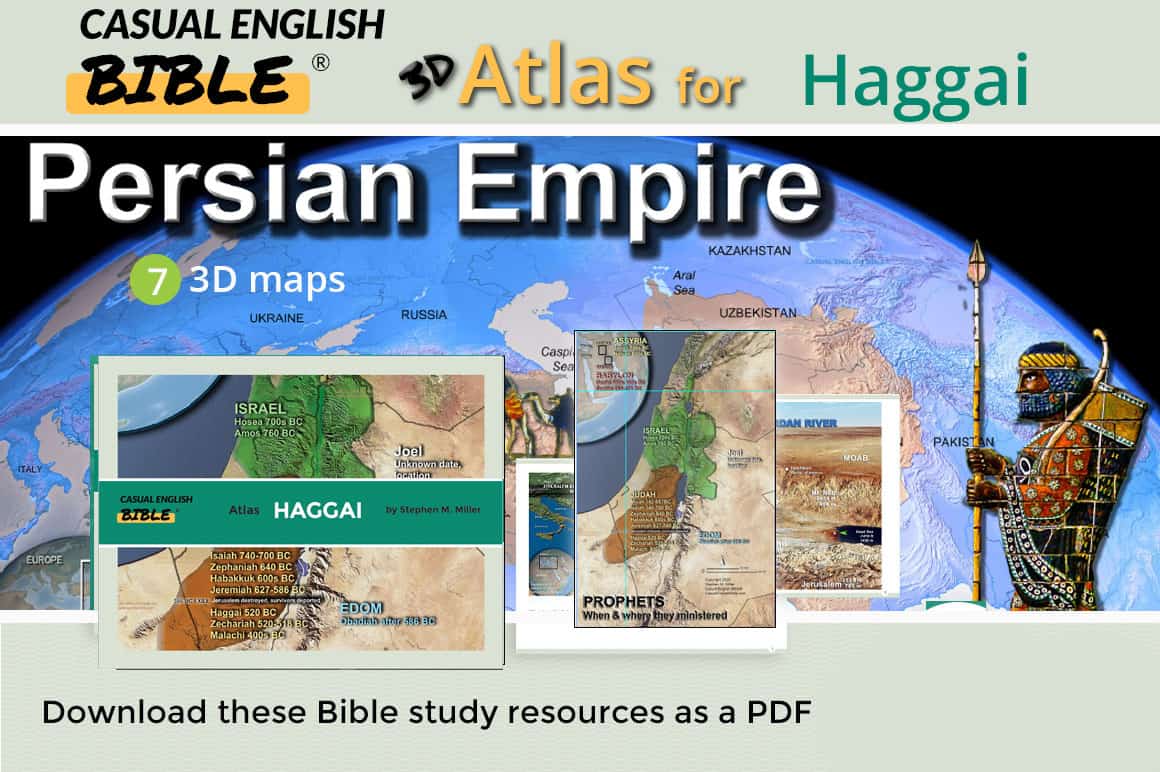
This Bible map collection helps readers follow Haggai’s world of Jerusalem, Judah, Babylon, Persia, returning Jewish exiles, the ruined temple, and the small community trying to rebuild after national disaster.
Description
Why Haggai Matters
Haggai is the prophet who tells the people of Jerusalem, “Stop stalling. Get back to work.”
The Jewish people have survived invasion, exile, and the destruction of their nation.
Babylonian soldiers tore down Jerusalem’s walls, burned homes, destroyed the temple, and deported many survivors to what is now Iraq.
Then history changed.
Persia conquered Babylon. The Persian government allowed exiled Jews to return home and rebuild.
Some went back to Jerusalem.
They rebuilt houses. They planted crops. They tried to restart ordinary life in a city that still looked wounded.
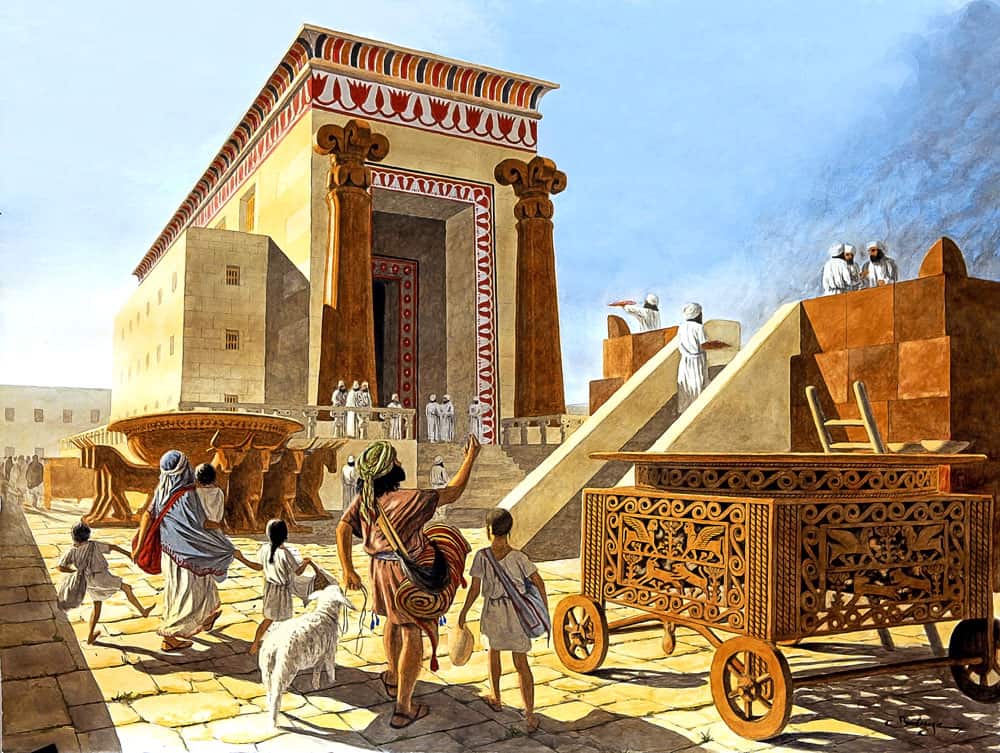
They also started rebuilding the temple.
Then the work stopped.
People living around Jerusalem opposed the rebuilding effort. They warned Persian officials that the Jewish people had a long history of rebellion. Eventually, an order came down telling the Jews to stop construction.
So they stopped.
Years passed.
The people had reasons.
The political situation was dangerous. Money was tight. Crops were failing. The community was small. The new temple would never match the glory of Solomon’s Temple.
Besides, everyone had a house to repair, a field to plant, and a family to feed.
Haggai says those reasons have turned into excuses.
He asks why people are living in finished houses while God’s house remains in ruins.
That is the uncomfortable center of Haggai’s message.
The problem is not that people have homes.
The problem is that they have decided their own comfort matters more than the work they returned to Jerusalem to do.
Haggai tells them to look carefully at their lives.
They plant plenty but harvest little.
They eat but never feel full.
They drink but stay thirsty.
They earn money and put it into a bag full of holes.
The economy is not working. The land is not producing. Everyone is working hard, but no one seems to be getting ahead.
Haggai says the people should not treat that as bad luck.
They have neglected the work God gave them.
So he delivers the message plainly:
“Don’t be discouraged…. I am with you. So, get back to work” (Haggai 2:4).
Haggai is one of the easiest prophets to place on a calendar.
He dates his messages by the reign of Darius the Great, king of Persia. He preached during a four-month period in 520 BC, from late August through the middle of December.
That gives the book an unusual sense of movement.
Haggai speaks.
The leaders listen.
The people begin working.
Haggai speaks again.
He is not preaching into a fog for 40 years. He shows up at a critical moment, delivers a handful of short messages, and the people respond.
The two main leaders are Zerubbabel and Joshua.
Zerubbabel is the governor of Judah and a descendant of King David. Joshua is the high priest.
One represents the royal line.
The other represents the priesthood.
Together, they lead the rebuilding effort.
Haggai’s first message comes in late summer.
He tells the people to stop making excuses and rebuild the temple.
Within weeks, construction begins.
Then another problem appears.
Some of the older people remember Solomon’s Temple.
They remember how magnificent it was before Babylon destroyed it. The new structure looks small and unimpressive by comparison.
Their disappointment spreads.
Haggai does not pretend the new building looks just as grand.
He tells them not to be discouraged.
The value of the temple does not depend entirely on its size, its gold, or the memories of people who saw the old one.
God says:
“I am with you.”
That is Haggai’s answer to fear, disappointment, and limited resources.
Not, “You are stronger than you think.”
Not, “The job will be easy.”
Not, “Everyone will support you.”
God is with them.
So they should work.
Haggai also tells the people that rebuilding a temple does not automatically make them holy.
Religious work cannot cover a corrupt life.
A person can touch something unclean and spread uncleanness. But touching something holy does not make that person holy.
The people need more than a building project.
They need changed priorities and renewed faithfulness.
Yet Haggai promises that the day they truly return to the work will mark a change:
“Starting today, I will bless you” (Haggai 2:19).
The book ends with a message to Zerubbabel.
Persian governors were not kings. Judah was no longer an independent nation. A descendant of David was leading the people, but he ruled under the authority of Persia.
Still, Haggai says God has not forgotten the promises connected to David’s family.
God calls Zerubbabel his chosen servant and compares him to a signet ring—the royal seal a king used to mark something with his authority.
Zerubbabel never became king.
But his family line continued.
The New Testament later includes him among the ancestors of Jesus.
That gives Haggai’s small rebuilding story a much larger horizon.
The people are stacking stones in a damaged city.
They are rebuilding a temple that looks disappointing beside the one they lost.
They are a tiny community living under foreign rule.
Yet Haggai says their work matters.
Haggai matters because he speaks to people who have survived disaster but become stuck during recovery.
They are home, but home is broken.
They have freedom, but not security.
They have started rebuilding, but fear and discouragement have drained their energy.
Haggai does not give them a complicated plan.
Remember why you came back.
Put first things first.
Do the work in front of you.
And do not confuse a small beginning with a meaningless one.
Maps for Teaching Haggai
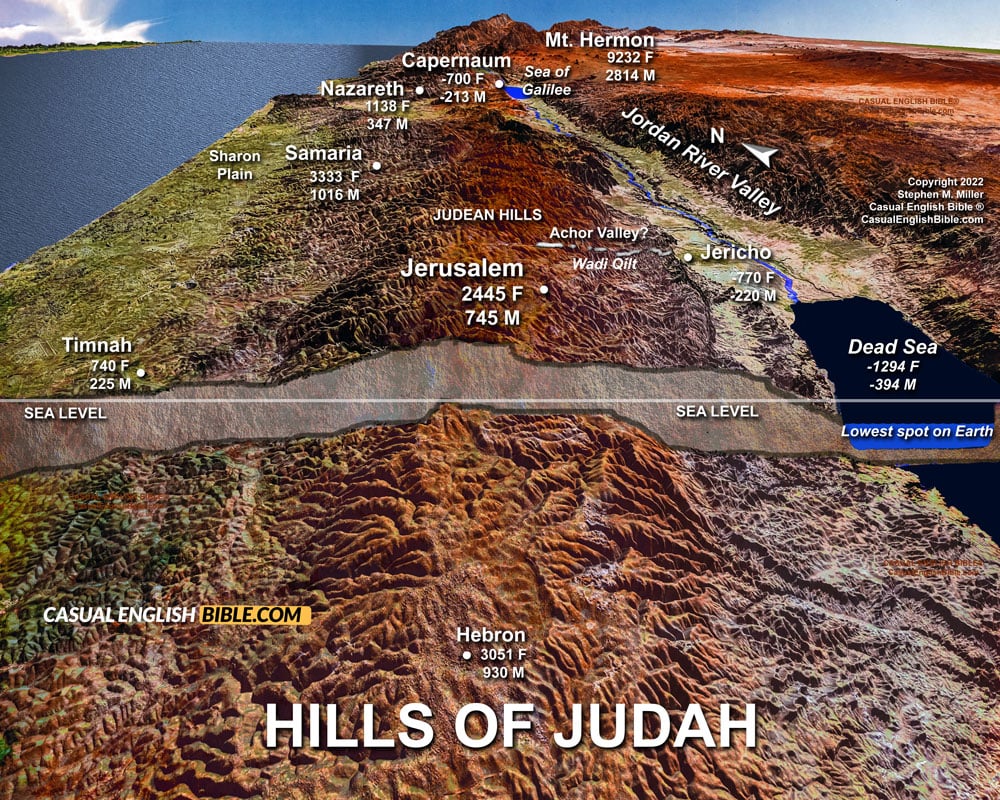
This Bible map collection gives readers geographic and historical context for Haggai, including Jerusalem, Judah, Babylon, Persia, the route home from exile, the ruined temple, and the small restored Jewish province governed by the Persian Empire.
The maps help teachers and students visualize Haggai’s world: a destroyed capital slowly coming back to life, returning Jewish exiles surrounded by political opposition, Persian rulers controlling the region, and a discouraged community trying to rebuild the temple decades after Solomon’s Temple was burned.
This collection is designed for pastors, Bible teachers, small groups, Sunday school classes, homeschool families, and readers who want help teaching Haggai with clear maps, historical context, and plain-English visual support.
Haggai Bible Map Collection
- Maps: 7 high-resolution Bible maps in 3D style
- Instant PDF download
- Optional licensing available for broader use
The product includes two files for immediate download:
Maps optimized for use in mobile devices; file size 2 MB
Maps in higher resolution, 14 MB
Click to view all maps in the Haggai Bible Map Collection
Haggai Bible Atlas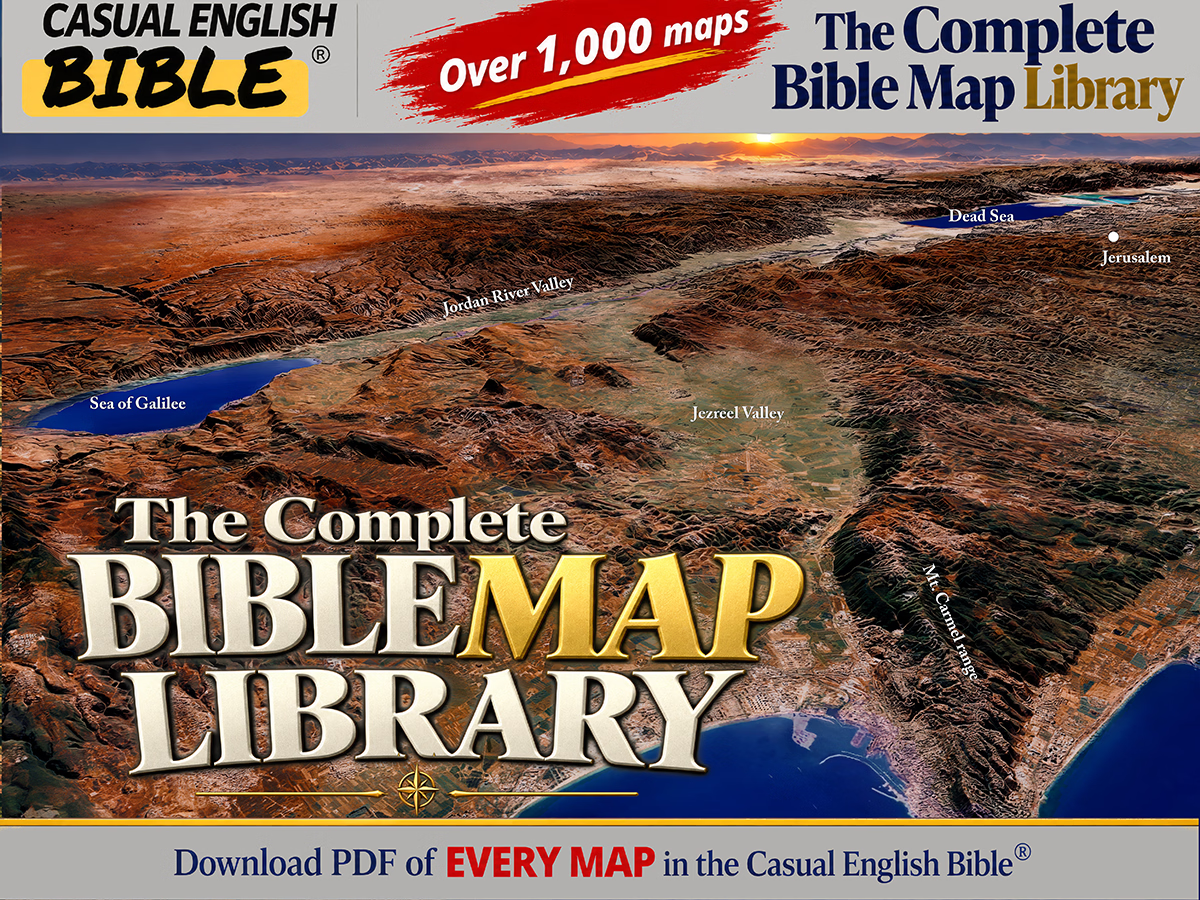
The Complete Bible Map Library
- 1,000+ Bible maps
Many in immersive 3D-style terrain so you can visualize the land, not just read about it - 1,298 pages
A massive, chapter-by-chapter visual companion to the Bible - Two versions included
- 📱 Mobile-optimized (157 MB) — fast, smooth, and easy to use on phones & tablets
- 🖥️ Full-resolution (1.2 GB) — maximum detail for deep study and large screens
- Covers the entire Bible
Every book with meaningful geography—from Genesis to Revelation
SALE Original price was: $80.00.$75.00Current price is: $75.00.


