
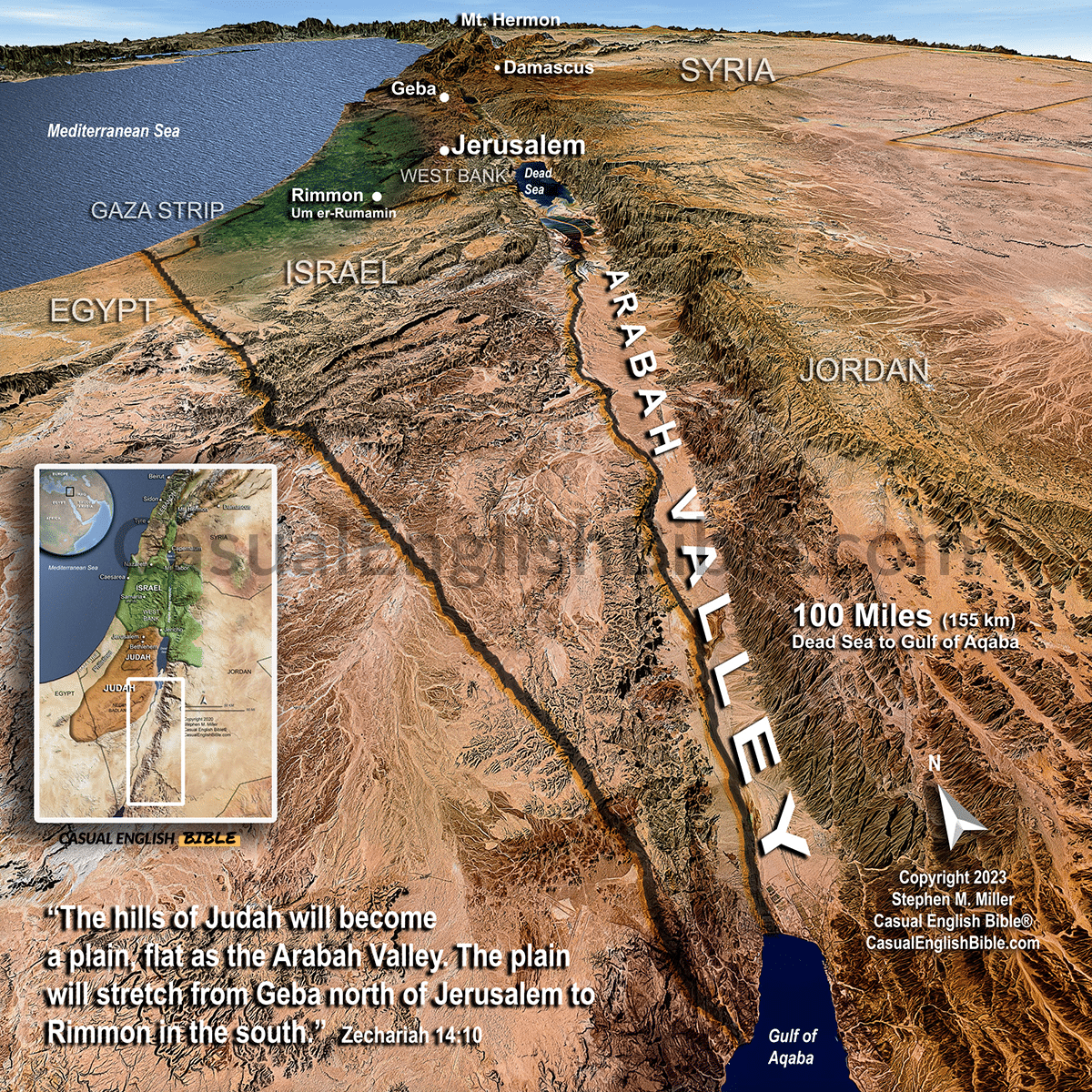
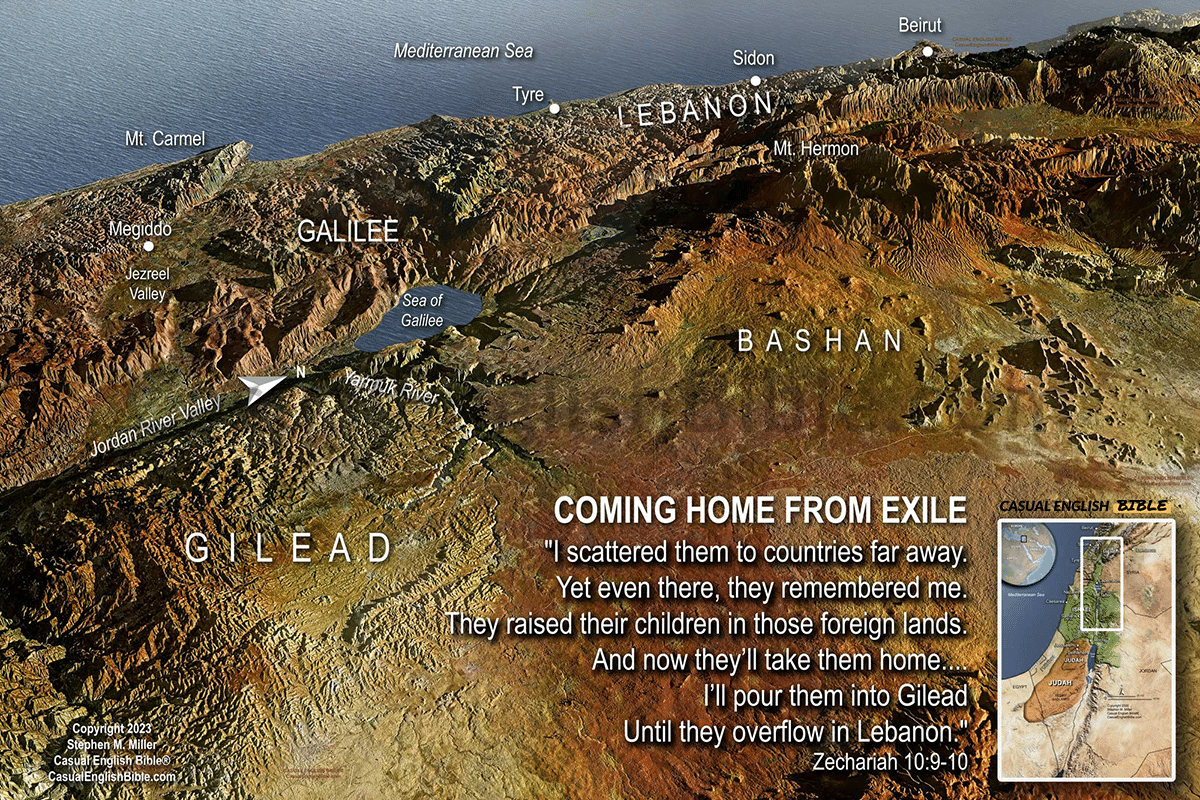
Zephaniah – Bible Map Collection
Original price was: $19.00.$10.00Current price is: $10.00.
Zephaniah Tells Judah, “You Are Running Out of Time”
Judah has a reforming king, a famous temple, and a capital city filled with people who assume disaster will never reach them. Zephaniah says they are wrong. God is about to sweep through the nation and expose the violence, corruption, false worship, and comfortable indifference hiding behind Jerusalem’s religious life.
This Bible map collection helps readers follow Zephaniah’s world of Judah, Jerusalem, Assyria, Nineveh, Philistia, Moab, Ammon, Cush, Babylon, and the nations caught in the approaching Day of the Lord.
Description
Why Zephaniah Matters
Zephaniah is the prophet who tells Judah, “You are running out of time.”
The nation still exists. Jerusalem still stands. The temple still operates. King Josiah is trying to clean up the country’s religious mess.
But Zephaniah says the damage runs deeper than a few pagan shrines.
Judah has spent generations worshiping other gods, copying the nations around it, mistreating people, and ignoring its agreement with God. Some people bow to the Lord and then turn around and swear loyalty to another god. Others have stopped caring about religion altogether.
They assume God will not do anything.
Zephaniah says that may be the most dangerous belief of all.
He describes people sitting comfortably at home, telling themselves:
“God won’t do anything good.
He won’t do anything bad” (Zephaniah 1:12).
In other words, God does not matter. Life will keep moving along as usual. Business will continue. Houses will sell. Vineyards will produce grapes. Powerful people will stay powerful.
Zephaniah says no.
The Day of the Lord is coming.
That phrase appears throughout the prophets. Sometimes it describes a military invasion. Sometimes it points toward a future day when God judges the world. In Zephaniah, it begins with disaster coming to Judah, but the message quickly expands until it includes surrounding nations and, finally, the whole earth.
Zephaniah opens with language that sounds like God is undoing creation:
“I’m going to kill everything.
I’m going to sweep the earth clean.
I’ll kill all the people and animals,
birds of the sky, and fish of the sea” (Zephaniah 1:2–3).
Genesis describes God creating fish, birds, animals, and people. Zephaniah lists them in reverse order, as though human sin has become so destructive that creation itself is being taken apart.
That is not subtle.
Zephaniah wants people to understand that Judah’s crisis is not a temporary political problem. The nation has pushed rebellion as far as it can go.
The prophet may have had royal blood.
He climbs four generations up his family tree and identifies himself as the great-great-grandson of a man named Hezekiah:
“Zephaniah was the son of Cushi, grandson of Gedaliah, great-grandson of Amariah, and great-great-grandson of Hezekiah” (Zephaniah 1:1).
Some readers think this was King Hezekiah, one of Judah’s best-known kings. If so, Zephaniah belonged to the royal family and was related to King Josiah.
Other scholars are not convinced. Hezekiah was a common name, and Zephaniah does not call him king.
Either way, Zephaniah seems to know Jerusalem well. He names neighborhoods, gates, markets, government officials, priests, merchants, and wealthy families. He sounds like someone walking through the capital and pointing at the people who think their money, position, or religion will protect them.
They will not.
Zephaniah preached during the reign of King Josiah, who ruled Judah from 640 to 609 BC.
Josiah became famous for religious reform. He repaired the temple, destroyed pagan shrines, removed idols, and tried to bring the nation back to the worship of God.
But reforming a nation is harder than smashing statues.
A king can tear down a shrine. He cannot force people to love justice, stop cheating, or care about God.
Zephaniah suggests that many people changed their religious habits without changing their hearts.
The prophet also looks beyond Judah.
He announces judgment against Philistia on the Mediterranean coast. He condemns Moab and Ammon east of the Jordan River. He mentions Cush, a region associated with lands south of Egypt. Then he turns toward Assyria, the empire that had terrorized the Middle East for generations.
Assyria had destroyed the northern kingdom of Israel in 722 BC. Its armies deported many survivors and repopulated parts of the land with people from other conquered nations.
By Zephaniah’s time, Israel had been gone for roughly 80 years.
Assyria still looked powerful, but Zephaniah said its capital would fall:
“God will destroy Assyria.
He’ll turn Nineveh into an abandoned ruin,
as dry as desert sand” (Zephaniah 2:13).
That prediction came true in 612 BC when Babylonian and Median forces captured Nineveh.
The fall of Assyria did not save Judah.
Babylon replaced Assyria as the dominant empire. Babylonian armies invaded Judah, destroyed Jerusalem and the temple in 586 BC, ended the kingdom, and deported many survivors to what is now Iraq.
Zephaniah’s warning was not exaggerated.
The nation really was running out of time.
Yet Zephaniah does not end with destruction.
He tells humble people to seek God, do what is right, and perhaps survive the coming disaster. He speaks of a remnant—a smaller group left after judgment—who will stop lying, stop cheating, and live without fear.
Then the book changes tone completely.
The prophet who began by saying God would sweep the earth clean ends by telling Jerusalem to sing.
God will gather the scattered. He will bring the wounded home. He will remove shame. He will live among his people.
Zephaniah says God will even sing over them:
“God will celebrate you with singing.
His love will quiet your fears” (Zephaniah 3:17).
That may be the most surprising line in the book.
Zephaniah begins with creation coming apart. He ends with God restoring people and singing because they are home.
The judgment is real, but it is not the final word.
Zephaniah matters because he challenges people who feel safe simply because disaster has not happened yet. He warns against confusing religious activity with faithfulness. He says comfortable indifference can be as dangerous as open rebellion.
But he also says God does not destroy for the pleasure of destruction.
God wants people back.
Maps for Teaching Zephaniah
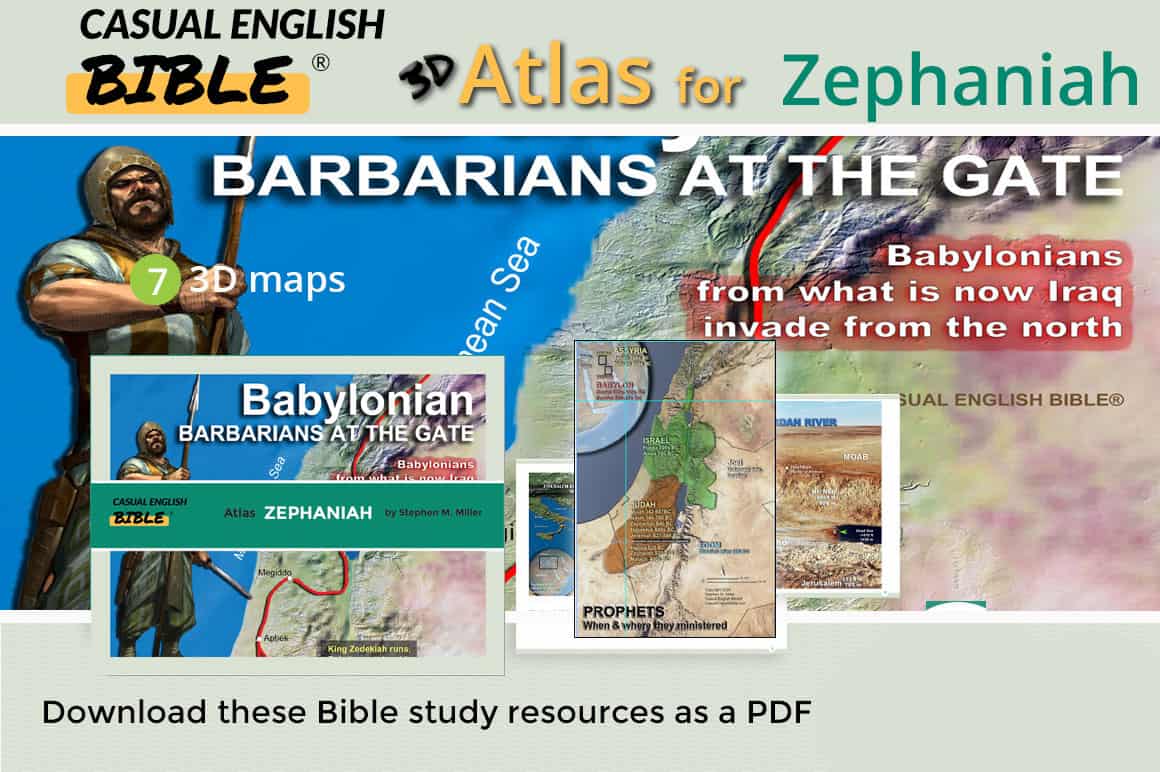
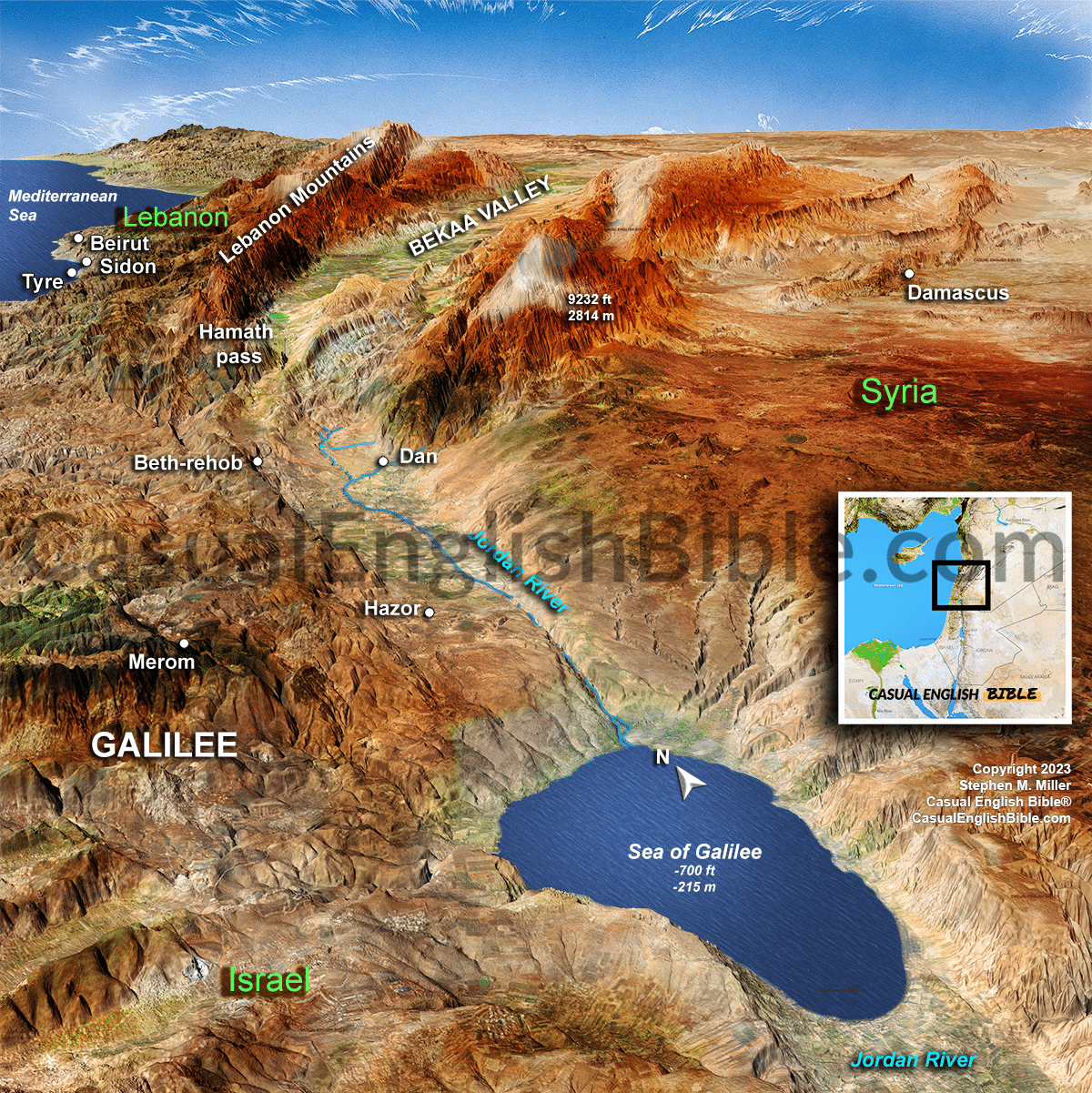
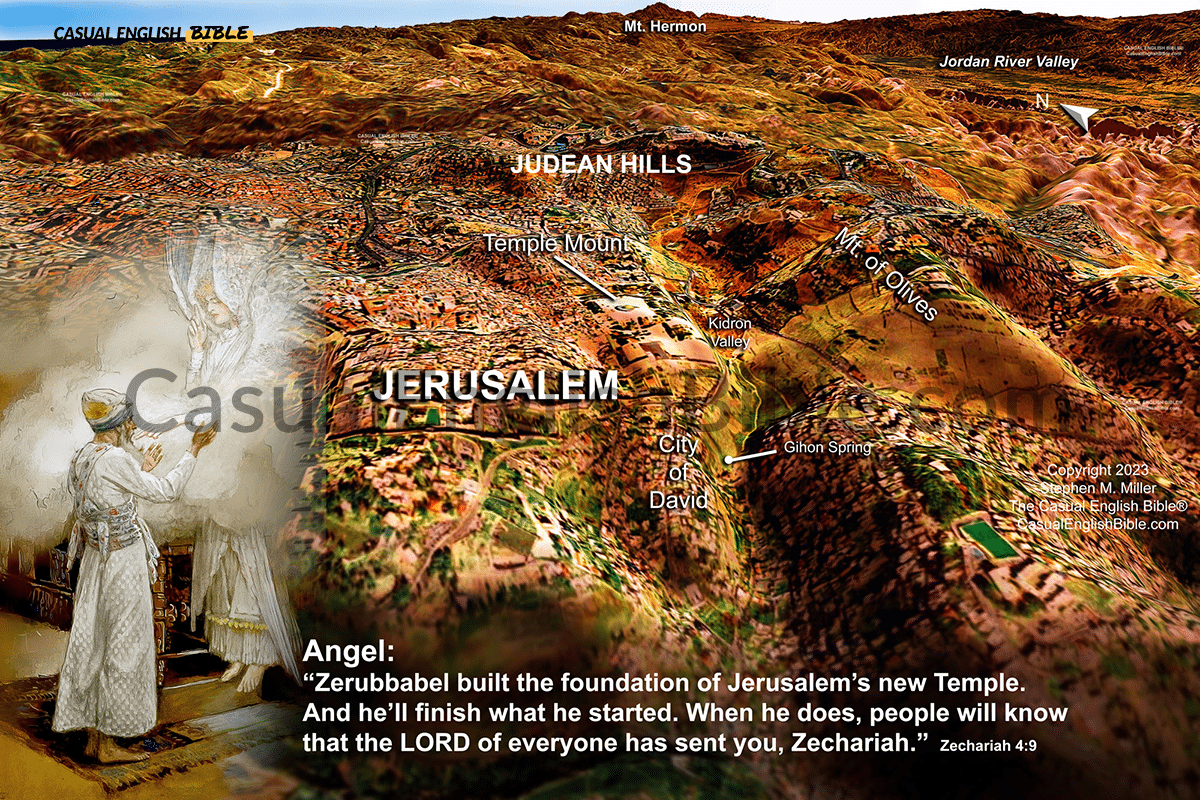
This Bible map collection gives readers geographic and historical context for Zephaniah, including Judah, Jerusalem, Israel, Assyria, Nineveh, Philistia, Moab, Ammon, Cush, Babylon, and the nations named in Zephaniah’s warnings.
The maps help teachers and students visualize Zephaniah’s world: a small Jewish kingdom trying to reform, a fallen northern kingdom that had already disappeared from the map, Assyria beginning to collapse, Babylon rising in its place, and surrounding nations about to experience the same judgment Zephaniah announced against Judah.
The collection includes seven high-resolution maps in a clear 3D style, provided as downloadable PDF files for immediate use.
It is designed for pastors, Bible teachers, small groups, Sunday school classes, homeschool families, and readers who want help teaching Zephaniah with clear maps, historical context, and plain-English visual support.
Zephaniah Bible Map Collection
- Maps: 7 high-resolution Bible maps in 3D style
- Instant PDF download
- Optional licensing available for broader use
The product includes two files for immediate download:
📱 Maps optimized for use in mobile devices; file size 2 MB
🖥️ Maps in higher resolution, 12 MB
Click to view all maps in the Zephanian Bible Map Collection
Zephaniah Bible Atlas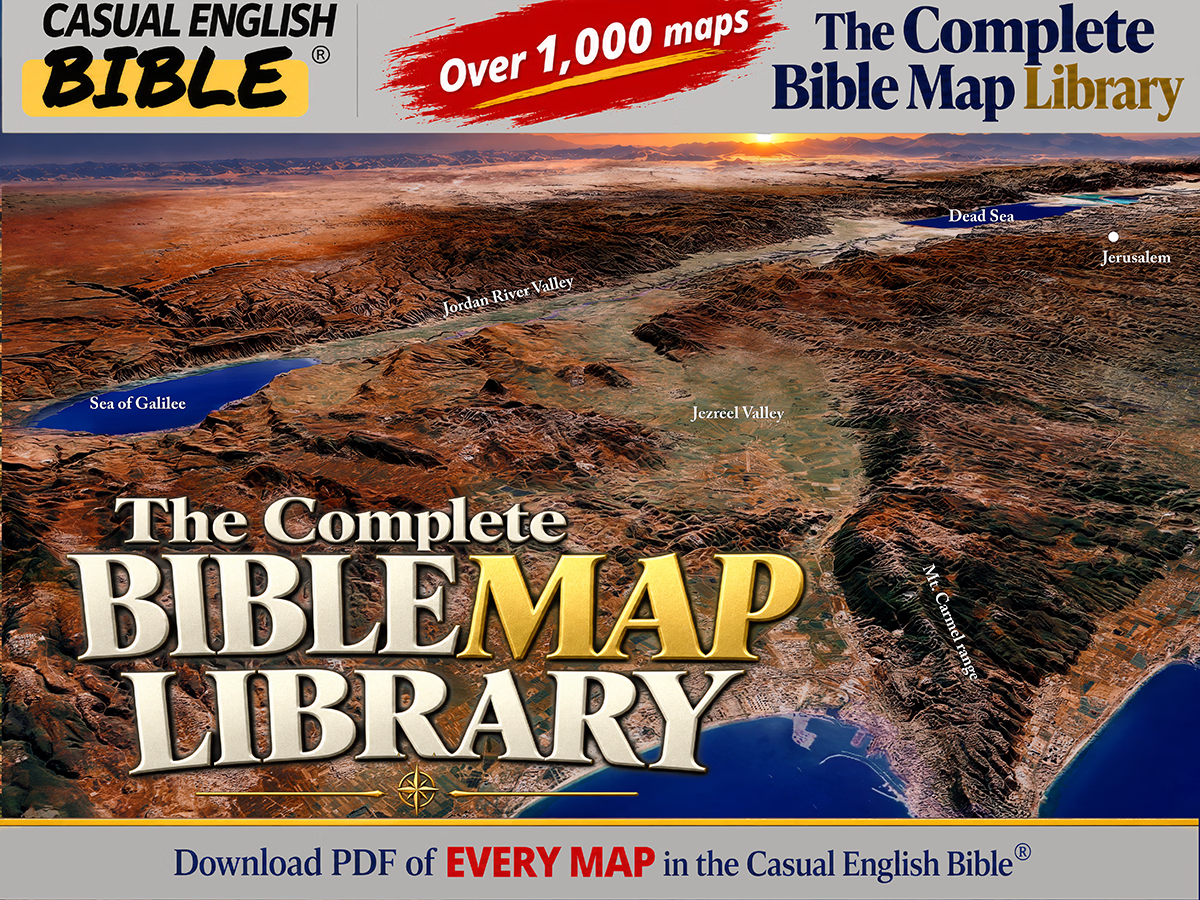
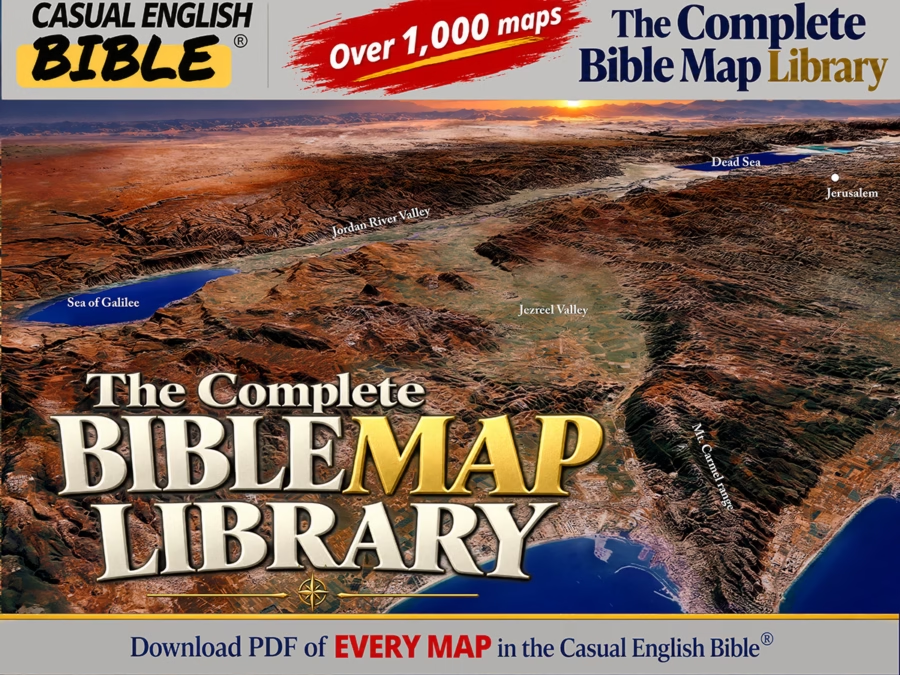
The Complete Bible Map Library
- 1,000+ Bible maps
Many in immersive 3D-style terrain so you can visualize the land, not just read about it - 1,298 pages
A massive, chapter-by-chapter visual companion to the Bible - Two versions included
- 📱 Mobile-optimized (157 MB) — fast, smooth, and easy to use on phones & tablets
- 🖥️ Full-resolution (1.2 GB) — maximum detail for deep study and large screens
- Covers the entire Bible
Every book with meaningful geography—from Genesis to Revelation
SALE Original price was: $80.00.$75.00Current price is: $75.00.