

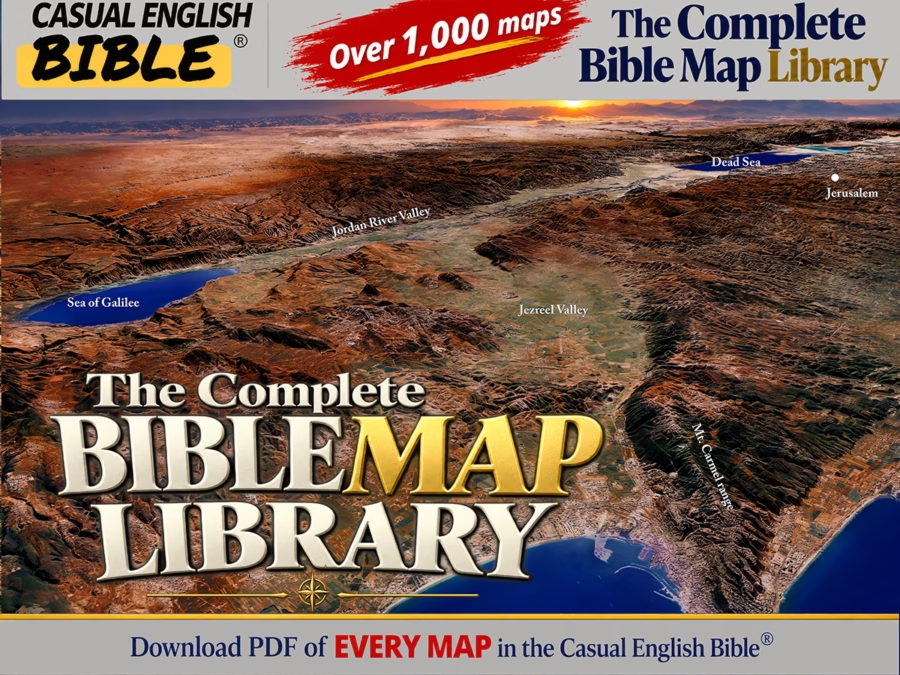
The Complete Bible Map Library
SALE Original price was: $80.00.$75.00Current price is: $75.00.


Micah – Bible Map Collection
Original price was: $29.00.$15.00Current price is: $15.00.
Micah Tells Jerusalem, “You Killed the Country”
Micah looks at Judah’s leaders, judges, prophets, merchants, and rich land-grabbers and says the nation is not dying by accident. It is being murdered from the inside.
This Bible map collection helps readers follow Micah’s world of Judah, Jerusalem, Samaria, Assyria, Babylon, Bethlehem, village after village under threat, and the cities Micah names as warning signs on the road to disaster.
Description
Why Micah Matters
Micah is the prophet who tells Judah’s leaders they have killed the country.
He does not say it gently. He does not treat corruption as an unfortunate management problem. He says the people in power have turned the nation into a crime scene.
Micah preached to Judah, the southern Jewish kingdom with Jerusalem as its capital. The northern kingdom of Israel was also in trouble, with Samaria as its capital. Assyria was the terrifying superpower of the day, swallowing smaller nations and threatening everyone in its path.
But Micah says Judah’s biggest problem is not Assyria. The enemy outside the walls is dangerous, but the rot inside the nation is worse.
The leaders are abusing power. Judges are taking bribes. Prophets are preaching for pay. Merchants are cheating customers with dishonest scales. Rich people are grabbing land from families who cannot fight back. Violent people are getting comfortable. Liars are getting good at lying.
Micah’s language can be brutal. He says some leaders treat people like meat, tearing skin from bone and chopping them up for the pot. That is not polite political commentary. It is a prophet saying, “You are eating your own people alive.”
And the poor are the ones getting chewed up.
Micah also names towns and villages in a wordplay-filled warning march. In Hebrew, the place names sound like jokes, threats, and funeral bells all at once. Dust House rolls in the dust. Beauty Town walks away in shame. Entitlement Town loses everything. The poetry is sharp, but the point is deadly serious: disaster is moving through the land, town by town.
Micah says Jerusalem itself will fall. That was shocking. Jerusalem was the city with the temple. Many people assumed God would never let the city be destroyed. Micah says they are wrong. If the nation keeps breaking its agreement with God, the land will not protect them, the capital will not protect them, and religious confidence will not protect them.
One of the strange things about Micah is that he also mentions Babylon. Assyria was the major threat in Micah’s time, but Babylon would become the empire that destroyed Jerusalem more than a century later. Some readers take that as prophecy. Some scholars think later editors may have shaped parts of the book after Babylon became the great enemy. Either way, Micah points toward the disaster that eventually came: Jerusalem destroyed, survivors exiled, and the nation shattered.
But Micah is not only doom.
The same prophet who says Jerusalem will become a heap of ruins also says God will not stay angry forever. He says God will gather what is left of his people, forgive sin, and throw their failures into the deepest sea.
Micah also gives one of the Bible’s clearest summaries of what God wants from people: do justice, love mercy, and walk humbly with God. In plain language, stop cheating people, stop pretending religion covers cruelty, and live like you are not the center of the universe.
Micah matters because he refuses to separate worship from ethics. He says a nation can sing, sacrifice, pray, and still be rotten if it crushes the weak. He also says God’s love is stubborn enough to outlast judgment.
That makes Micah a fierce book, but not a hopeless one. The nation may be guilty. The punishment may be real. But God would rather love than stay angry forever.
Maps for Teaching Micah
This Bible map collection gives readers geographic and historical context for Micah, including Judah, Jerusalem, Samaria, Assyria, Babylon, Bethlehem, the Shephelah towns, invasion routes, and the villages named in Micah’s warning speeches.
The maps help teachers and students visualize Micah’s world: a small kingdom under pressure from empire, corrupt leaders in Jerusalem, threatened towns across Judah, and a prophet using geography, poetry, and blunt accusation to explain why judgment was coming.
This collection is designed for pastors, Bible teachers, small groups, Sunday school classes, homeschool families, and readers who want help teaching Micah with clear maps, historical context, and plain-English visual support.
Micah Bible Map Collection
- Maps: 17 high-resolution Bible maps in 3D style
- Instant PDF download
- Optional licensing available for broader use
The product includes two files for immediate download:
📱 Maps optimized for use in mobile devices; file size 4 MB
🖥️ Maps in higher resolution, 30 MB
Click to view all maps in the Micah Bible Map Collection
Micah Bible Atlas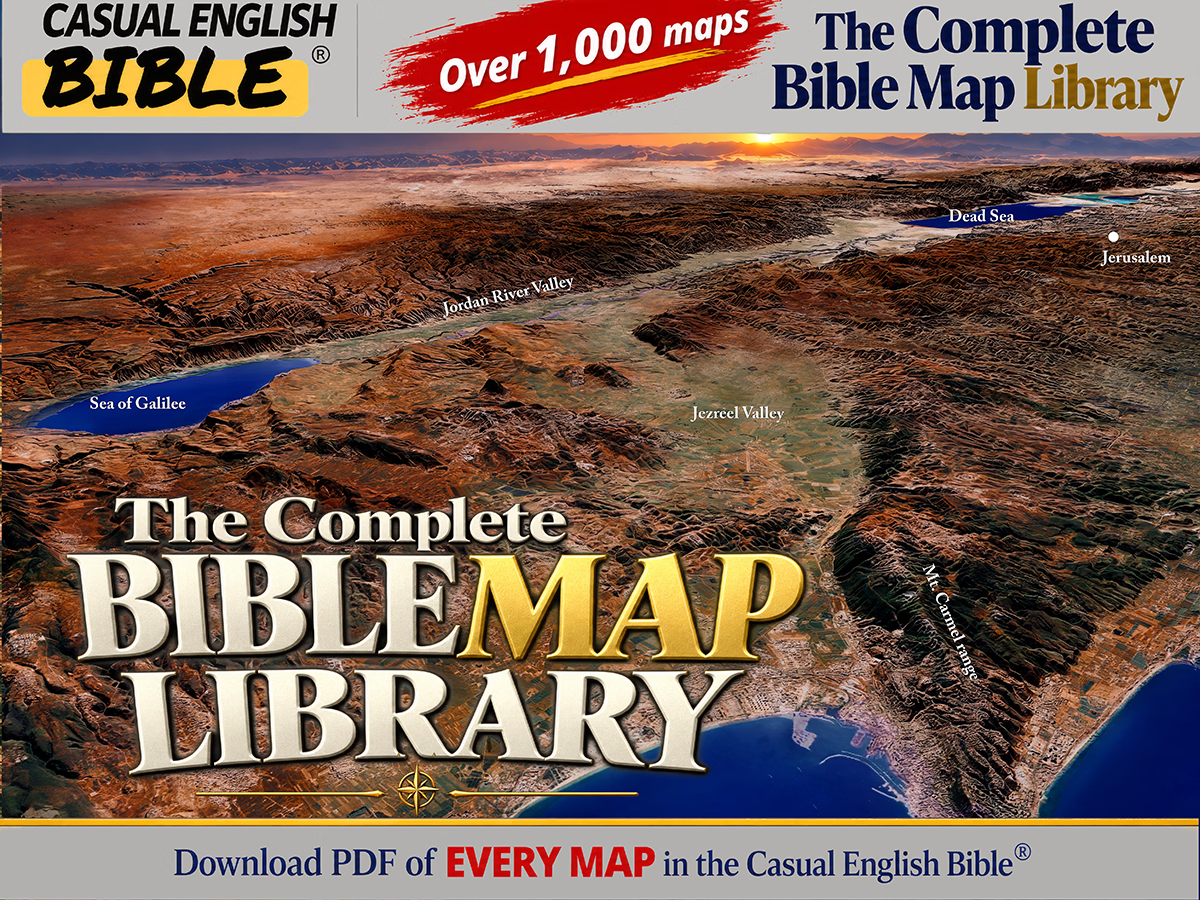
The Complete Bible Map Library
- 1,000+ Bible maps
Many in immersive 3D-style terrain so you can visualize the land, not just read about it - 1,298 pages
A massive, chapter-by-chapter visual companion to the Bible - Two versions included
- 📱 Mobile-optimized (157 MB) — fast, smooth, and easy to use on phones & tablets
- 🖥️ Full-resolution (1.2 GB) — maximum detail for deep study and large screens
- Covers the entire Bible
Every book with meaningful geography—from Genesis to Revelation
SALE Original price was: $80.00.$75.00Current price is: $75.00.


Reviews
There are no reviews yet.