

Zechariah – Bible Map Collection
Original price was: $39.00.$21.00Current price is: $21.00.
Zechariah Tells Jerusalem, “Your King Is Coming”
Jerusalem is still broken. The temple is unfinished. The Jewish people have returned from exile, but they are poor, discouraged, and living under Persian rule.
Zechariah tells them to keep building because their small beginning is part of a much larger story. One day a king will ride into Jerusalem on a donkey, God will defeat the enemies of his people, and peace will reach far beyond the city.
This Bible map collection follows Zechariah chapter by chapter through Jerusalem, Judah, Babylon, Persia, the surrounding nations, the rebuilding of the temple, and some of the Bible’s most vivid prophecies.
Description
Why Zechariah Matters
Zechariah is the prophet who looks at the ruins of Jerusalem and says, “This is not the end of the story.”
The city is broken.
Babylonian invaders destroyed Jerusalem in 586 BC. They burned the temple, tore down the walls, flattened homes, ended the kingdom of Judah, and deported many survivors to what is now Iraq.
About 66 years later, Zechariah lives among the ruins.
Persia has conquered Babylon. Persian rulers have allowed exiled peoples, including the Jews, to return home and rebuild.
But going home is not the same as getting your life back.
Jerusalem is no longer the capital of an independent Jewish nation. It is a small city inside the Persian province of Judah. A Persian king rules the empire. A Persian governor oversees the region.
The people have freedom, but not independence.
They have returned home, but home is a wreck.
They begin rebuilding the temple, but opposition, poverty, fear, and disappointment slow the work. Eventually, construction stops.
That is when Zechariah begins preaching.
He and the prophet Haggai deliver their messages in 520 BC. Both tell the people to rebuild the temple.
Haggai speaks plainly: get back to work.
Zechariah does that too, but he also gives the people visions.
Strange visions.
Horses patrol the earth.
Horns rise against God’s people.
A craftsman comes to smash the horns.
A man walks through Jerusalem carrying a measuring line.
The high priest stands in filthy clothes while Satan accuses him.
An angel replaces the dirty clothes with clean ones.
A golden lampstand supplies its own oil.
A giant flying scroll carries a curse across the land.
A woman representing wickedness is sealed inside a basket and carried away.
Four chariots race out between mountains of bronze.
Zechariah’s book can feel like a collection of dreams seen during a fever.
But the images carry a consistent message.
God has not forgotten Jerusalem.
The nations that destroyed Judah will answer for what they did.
God will forgive his people, cleanse their leaders, rebuild the city, and live among them again.
The temple may look small, but the work matters.
Zechariah tells the governor, Zerubbabel, that the project will not succeed through military strength, political power, or human determination alone:
“You won’t win with armies.
You won’t win with strength.
You’ll win with my Spirit” (Zechariah 4:6).
Zerubbabel had started rebuilding the temple.
Zechariah says he will finish it.
The prophet also tells the people not to despise “the day of small things.”
That may be one of the most practical messages in the book.
The workers are comparing their unfinished temple to Solomon’s magnificent temple, which stood for nearly four centuries before Babylon destroyed it.
The comparison leaves them discouraged.
Zechariah tells them to stop judging the importance of their work by its present size.
They see stones, dust, shortages, and slow progress.
God sees the beginning of something larger.
Zechariah also turns his attention toward the nations surrounding Judah. He speaks about Syria, Phoenicia, Philistia, Egypt, and other lands that had threatened or controlled God’s people.
But the book’s most memorable prophecy may concern a king.
Zechariah says:
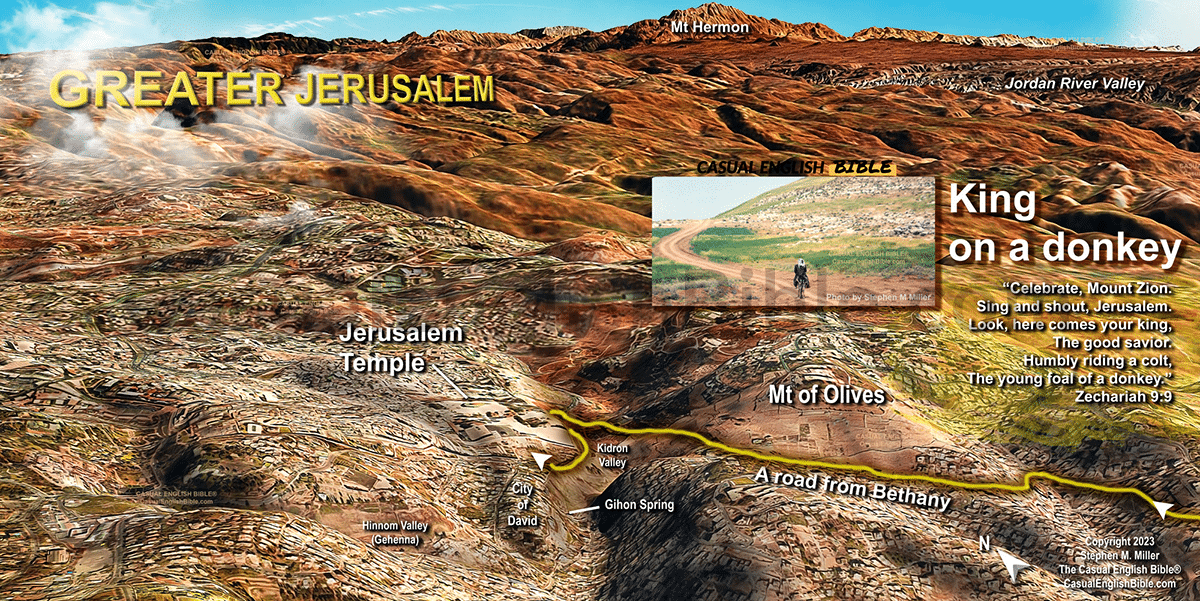
“Celebrate, people of Jerusalem.
Your king is coming to you.
He is good and victorious,
yet humble,
riding on a donkey” (Zechariah 9:9).
Kings normally arrive on warhorses or in chariots.
This king comes on a donkey.
He does not arrive to start another war. Zechariah says he will remove weapons, end conflict, and announce peace to the nations.
About 500 years later, Jesus rode into Jerusalem on a donkey.
The Gospel writers describe the event as a fulfillment of Zechariah’s prophecy.
Christians also connect other parts of Zechariah to Jesus.
The prophet writes about a shepherd rejected by the people and valued at 30 pieces of silver.
He says people will look at someone they pierced and mourn.
He speaks of a shepherd being struck and the sheep scattering.
The New Testament writers use these passages while telling the story of Jesus’ betrayal, arrest, crucifixion, and death.
That makes Zechariah one of the Old Testament books most often connected to the final days of Jesus.
But Zechariah is not easy to interpret.
Some passages seem to describe events close to the prophet’s own time.
Others seem to look toward a future king.
Still others describe a final conflict in which nations attack Jerusalem, God intervenes, and the world recognizes him as king.
Readers disagree about how literally to understand some of these scenes and when they take place.
The images are difficult, but the main message is easier to see.
God has not abandoned his people.
Their enemies will not rule forever.
Jerusalem’s ruins will not remain ruins.
Sin can be forgiven.
Failure does not cancel God’s promises.
And a humble king is coming.
Zechariah’s final chapters move toward a dramatic vision of Jerusalem surrounded by enemies.
The city suffers.
God intervenes.
The nations that attacked Jerusalem face judgment.
Living water flows out from the city.
And God becomes king over the whole earth.
The book ends with an image of holiness spreading into everyday life. Even ordinary cooking pots become holy.
In other words, holiness will no longer belong only inside the temple.
God’s presence will reach everywhere.
Zechariah matters because he speaks to people who feel as though the best part of their story is behind them.
They remember what Jerusalem used to be.
They remember the temple they lost.
They remember having a king and a country of their own.
Now they have ruins, foreign rulers, limited money, and an unfinished building.
Zechariah tells them that small beginnings are not failed endings.
Build what is in front of you.
Trust God with what you cannot see.
Your city still matters.
Your work still matters.
And your king is coming.
Maps for Teaching Zechariah
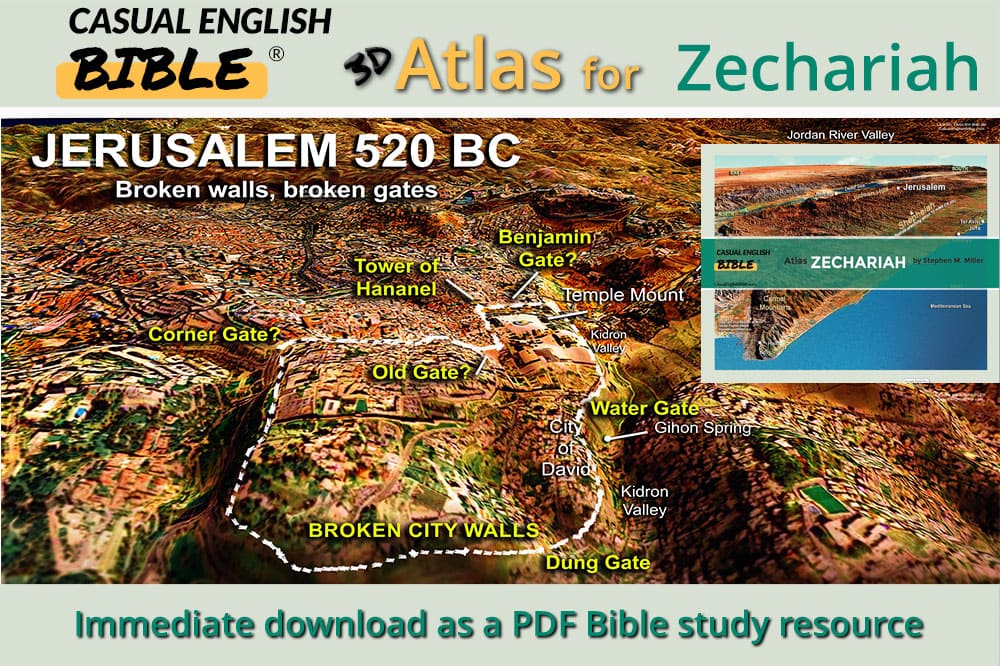
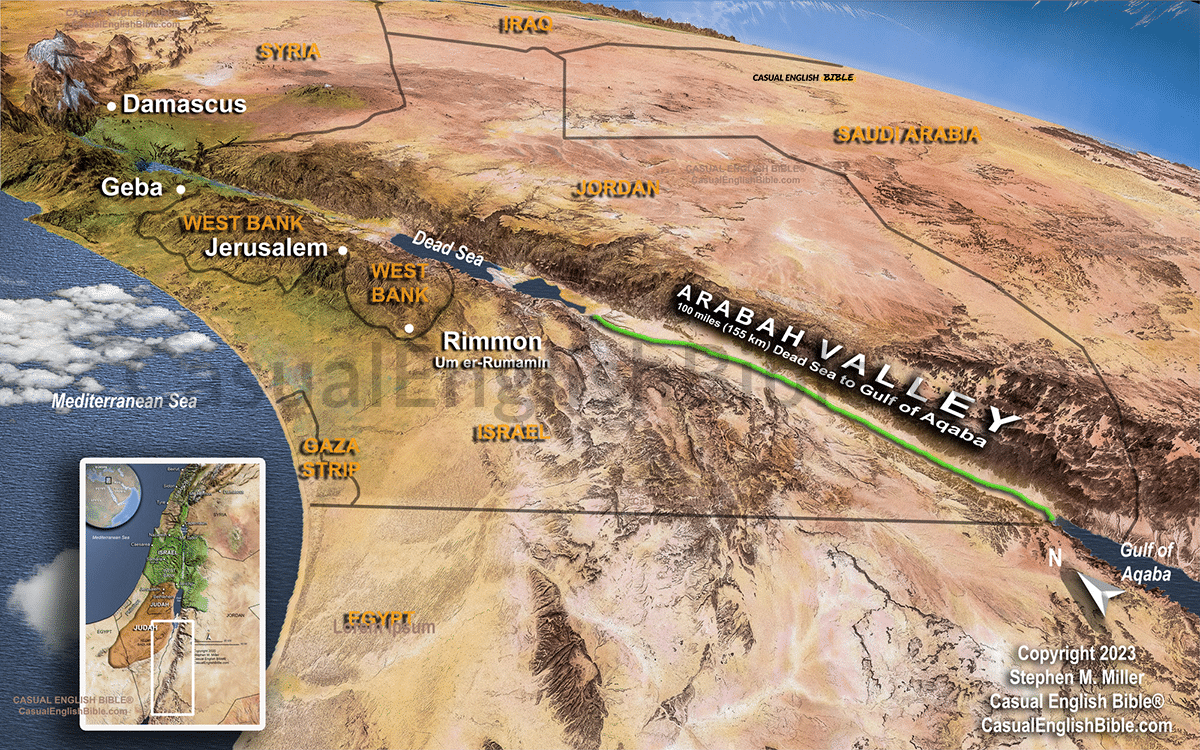
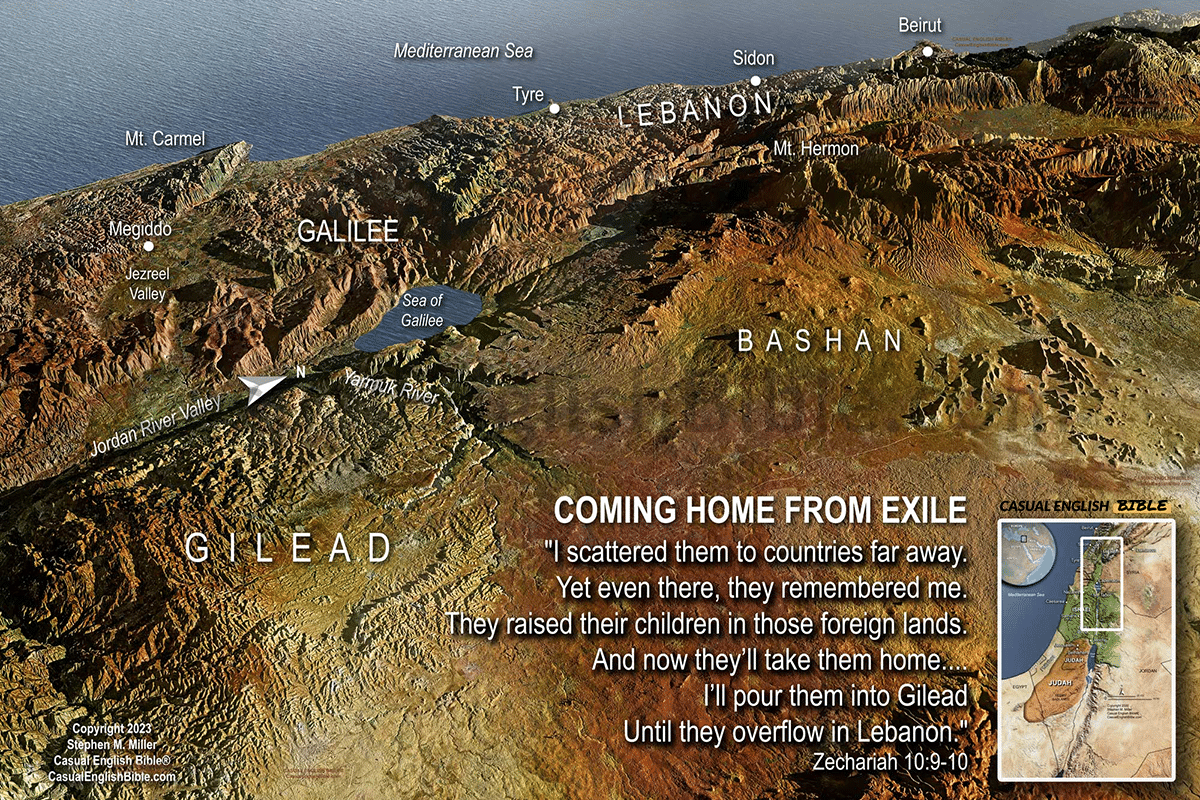
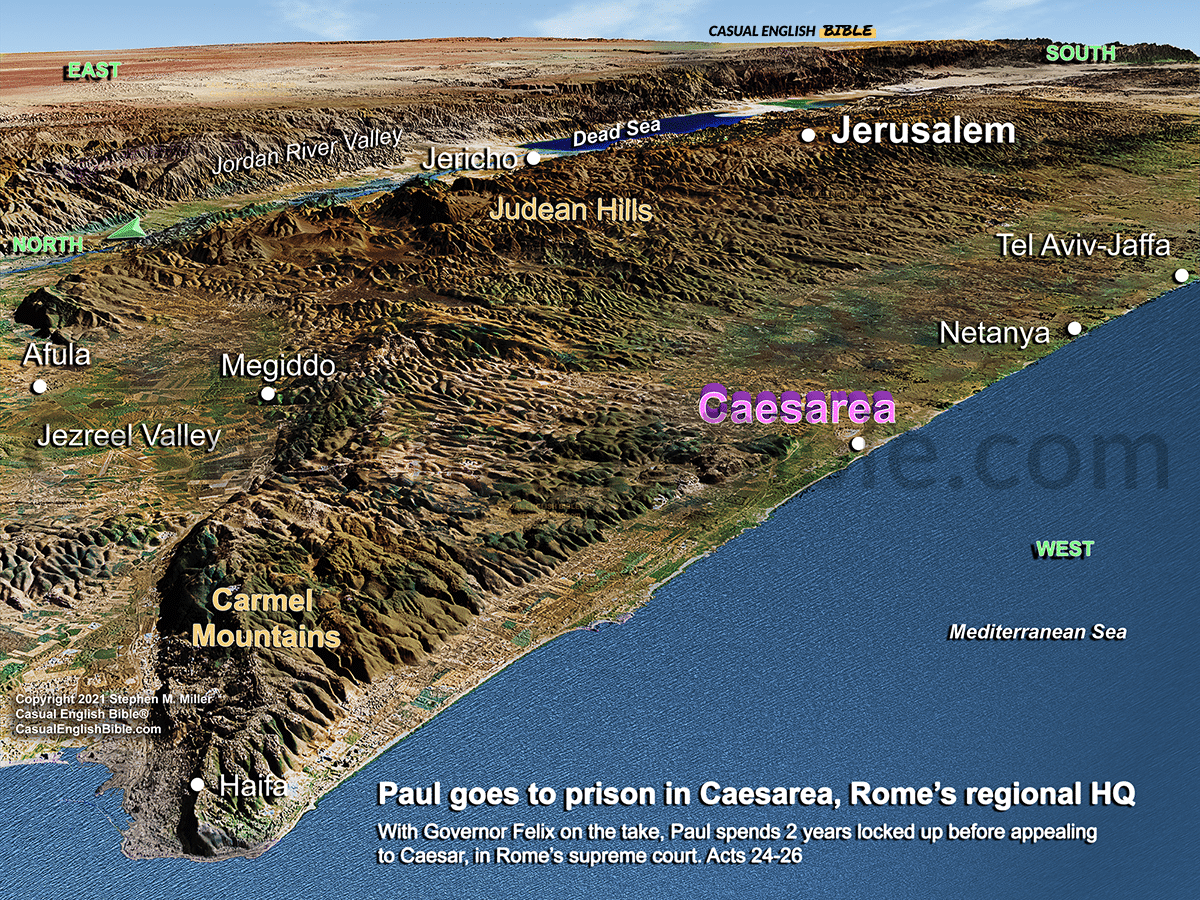
This Bible map collection follows Zechariah’s prophecies chapter by chapter, giving readers geographic and historical context for Jerusalem, Judah, Babylon, Persia, Syria, Phoenicia, Philistia, Egypt, and the nations named throughout the book.
The maps help teachers and students visualize Zechariah’s world: Jewish exiles returning from Babylon, Jerusalem still lying partly in ruins, the temple under reconstruction, Persian rulers controlling the region, hostile nations surrounding Judah, and prophetic visions reaching far beyond the prophet’s own generation.
The collection includes 30 high-resolution maps for this 14-chapter Bible book. The maps help explain the return from exile, the rebuilding of Jerusalem and the temple, the Persian Empire, Zechariah’s symbolic visions, the nations named in his warnings, and the prophecy of a king riding into Jerusalem on a donkey.
It is designed for pastors, Bible teachers, small groups, Sunday school classes, homeschool families, and readers who want help teaching Zechariah with clear maps, historical context, and plain-English visual support.
Zechariah Bible Map Collection
- Maps: 30 high-resolution Bible maps in 3D style
- Instant PDF download
- Optional licensing available for broader use
The product includes two files for immediate download:
📱 Maps optimized for use in mobile devices; file size 7 MB
🖥️ Maps in higher resolution, 33 MB
Click to view all maps in the Zechariah Bible Map Collection
Zechariah Bible Maps
The Complete Bible Map Library
- 1,000+ Bible maps
Many in immersive 3D-style terrain so you can visualize the land, not just read about it - 1,298 pages
A massive, chapter-by-chapter visual companion to the Bible - Two versions included
- 📱 Mobile-optimized (157 MB) — fast, smooth, and easy to use on phones & tablets
- 🖥️ Full-resolution (1.2 GB) — maximum detail for deep study and large screens
- Covers the entire Bible
Every book with meaningful geography—from Genesis to Revelation
SALE Original price was: $80.00.$75.00Current price is: $75.00.


Reviews
There are no reviews yet.