
Books of the New Testament: What All 27 Books Are About
A teaser tour for people new to the Bible
If you’re new to the Bible, the New Testament can confuse you the moment you look at the table of contents.
You pick it up thinking it’s a book. Think again. It isn’t one book. It’s a collection of 27 separate writings—stories about Jesus, a history of the early Christian movement, letters and visions.
- Four Gospels (gospel means “good news”): Matthew, Mark, Luke and John—stories about Jesus
- One history: Acts—followers of Jesus start the Christian movement
- Twenty-one letters: Romans through Jude
- One book of prophecy and visions: Revelation
Before you launch into these books and letters, take a few minutes to scout the trail ahead. Get a feel for the lay of the land.
Here’s a simple guide to all 27 books of the New Testament: what each writing is about, why it matters and where it fits in the larger story.
What Is the New Testament?
Let’s start with what it’s not. It’s not a new and improved version of the Jewish Bible, which Christians usually call the Old Testament or the First Testament. That collection includes books about Creation, the rise and fall of the Jewish nation, poetry, wisdom and the prophets.
The New Testament isn’t a replacement for the Old Testament, either. Christians respect both volumes. They say the New Testament is a continuation of the story of the Jewish people and the Christian movement that grew out of the Jewish religion. Jesus paved the road for that approach:
The New Testament is the second major section of the Christian Bible. It begins with the birth and ministry of Jesus and follows the story through his death and resurrection, the growth of the early Christian movement, letters that church leaders wrote to the first churches, and finally the visions described in Revelation.
If you want a detailed snapshot of all 66 books of the Bible—including the writer, setting, biggest scene and biggest idea—you can also visit our Beginner’s Bible Guide to all 66 Bible Books.

The Four Gospels: Four Views of Jesus
Matthew, Mark, Luke and John all tell the story of Jesus, but they do not tell it in the same way. Each writer takes a different angle, choosing events and teachings that emphasize what the writer wants to report.
That means a newcomer does not have to read all four before understanding who Jesus is. You can begin with whichever one interests you most.
Matthew
Matthew works extra hard to convince readers that Jesus was the Jewish Messiah—the promised king Israel had been waiting for.
Many times over, the writer shows how Jesus fulfilled Old Testament prophecies about the Messiah. Some of the connections may seem a bit of a stretch to modern readers.
Read Matthew →Mark
Mark is the shortest Gospel and probably the easiest one for many newcomers to read first.
It moves quickly from one event to another: healings, confrontations and miracles, with people trying to decide who Jesus really is.
Read Mark →Luke
Luke gives the most comprehensive account of the life of Jesus. Luke, a physician according to ancient tradition, pays special attention to the poor and the sick—people easy to ignore. He alone reports the angel’s visit to Mary, the journey to Bethlehem, the manger and the shepherds.
Luke also tells some of Jesus’s most famous stories, such as the Good Samaritan and the Prodigal Son. This is a book that blends naturally into Acts, written by the same author.
Read Luke →John
John is the most layered and thoughtful of the four Gospels.
Instead of simply telling what Jesus did, John spends more time reporting what Jesus said. He does this to explore who Jesus is and what people should make of him.
John says he wrote the book “to help you believe that Jesus is the Messiah, the Son of God—and that by putting your trust in him, you can have a life that never ends” (John 20:31, Casual English Bible).
Read John →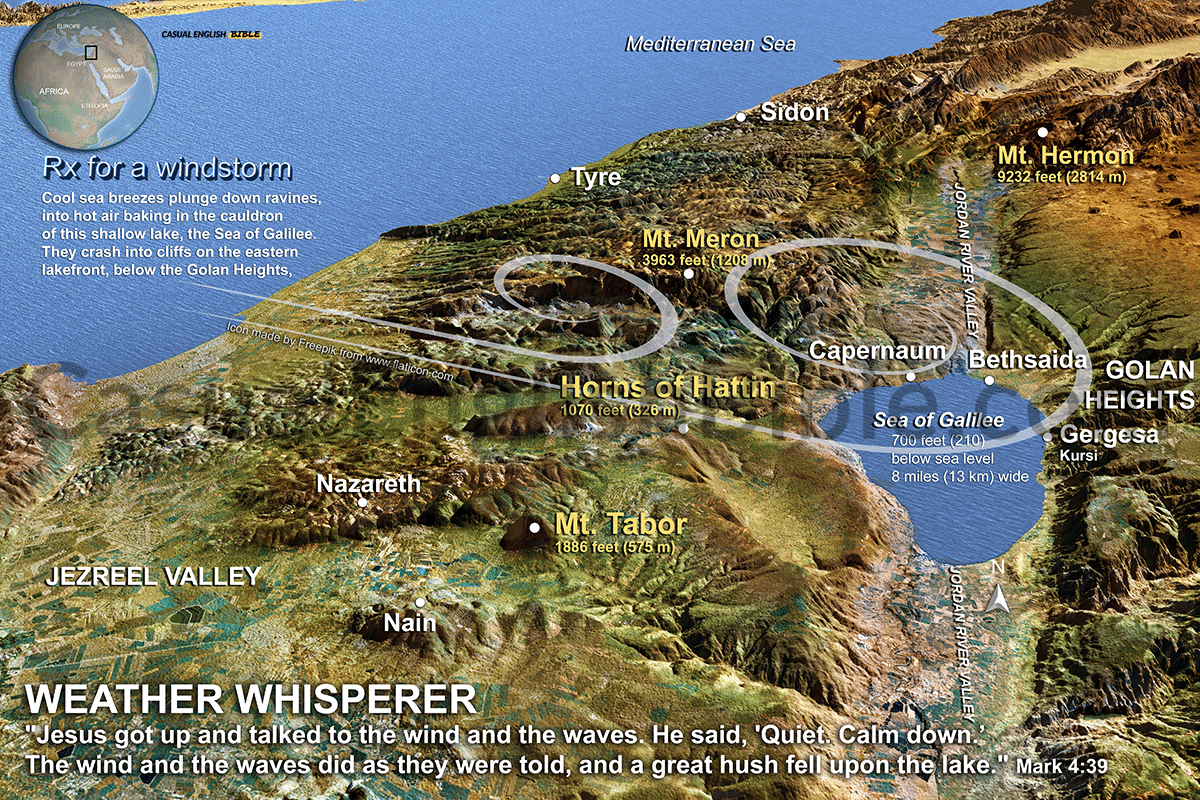
Acts: What Happened Next?
Acts
Acts picks up where the story of Jesus leaves off.
His followers begin in Jerusalem. Then the Christian movement spreads through the territories of Judea and Samaria, into what is now Turkey and Greece, and eventually all the way to Rome.
Peter, one of Jesus’s disciples, dominates the first part of the book. Paul takes over much of the second.
If you want to understand how Christianity spread from a small Jewish movement into the wider Roman world, Acts is the book that tells that story.
Read Acts →
Paul’s Letters
After Acts, the New Testament changes style completely.
Instead of a continuing story, you begin reading letters.
Paul wrote to churches and individuals dealing with real problems: arguments, persecution, questions about sex and marriage, confusion about worship, worries about death, disagreements about theology and the ordinary messiness of trying to live as Christians.
That is why these books often make more sense once you know who Paul was writing to and why.
Romans
Romans is Paul’s fullest explanation of what he believed about sin, faith, the kindness of God and salvation.
He also teaches that the Christian movement has room for both Jewish and non-Jewish lovers of God. Many Bible scholars today call it Christianity’s first theology book.
Read Romans →1 Corinthians
The church in Corinth was fighting about almost everything.
Paul writes to deal with division, sex, marriage, lawsuits, worship, spiritual gifts and communion.
It is one of the best books in the New Testament for seeing what early Christian churches were actually like—because they were far from perfect. At least this one was.
Read 1 Corinthians →2 Corinthians
This is one of Paul’s most personal and defensive letters.
He defends his ministry, talks openly about suffering and personal weakness, and tries to repair his strained relationship with the Corinthians.
Read 2 Corinthians →Galatians
Galatians centers on one major question:
Do people become right with God through faith, or by keeping religious rules?
Paul’s answer is emphatic—and angry as all get out about some believers insisting that Christian males follow the Jewish tradition of circumcision. Paul says no to that. He insists that salvation comes through faith, not through earning it.
Read Galatians →Ephesians
Ephesians begins with big ideas—God’s kindness, our salvation and unity among believers—and then moves into everyday Christian living.
It ends with the famous image of putting on the “armor of God” to stand against evil. Paul says the struggle is not against flesh and blood, but against spiritual forces.
Read Ephesians →Philippians
Paul writes this warm and encouraging letter while imprisoned.
He talks about humility, joy, perseverance and learning to live at peace whether we have all we need or not as much as we’d like.
Read Philippians →Colossians
Colossians urges Christians to keep Jesus at the center of their faith rather than getting distracted by competing religious teachings.
Read Colossians →1 Thessalonians
Paul writes to a young church that is being persecuted and has questions about what happens when believers die before Jesus returns.
Read 1 Thessalonians →2 Thessalonians
The Thessalonians remain confused about the return of Jesus. So Paul writes this second letter, telling them not to panic and not to believe every alarming claim they hear.
Read 2 Thessalonians →
1 Timothy
Paul gives his younger coworker Timothy practical advice about church leadership, worship, teaching and caring for people.
Read 1 Timothy →2 Timothy
Second Timothy reads like a private and intimate farewell letter.
Paul is imprisoned in Rome. And he’s asking Timothy to stay faithful and to continue the work even when it becomes difficult and even dangerous.
Read 2 Timothy →Titus
Paul gives Titus instructions about organizing and leading Christian communities on the island of Crete. Titus has the job of finding and appointing ministers to lead churches throughout the island.
Read Titus →Philemon
Philemon is a one-chapter personal letter about a runaway enslaved man named Onesimus. Paul sends him home to his owner, Philemon, with a letter that all but tells Philemon to free Onesimus and send him back to help Paul in ministry.
It raises difficult questions about slavery, forgiveness, power and what it means for Christians to treat one another as equals.
Read Philemon →Letters From Other Early Christian Writers
Hebrews
Hebrews is one of the most thoroughly Jewish books in the New Testament. It explains Jesus through images from ancient Jewish worship—priests, sacrifices, covenants and the Tabernacle.
The writer describes Jesus as the ultimate high priest and his self-giving as the sacrifice that does not need repeating. It’s a great book for seeing how early Christians connected Jesus with the Old Testament.
Read Hebrews →James
James is the practical book. Do this. Don’t do that.
It talks about anger, money, speech, temptation, playing favorites and putting faith into action.
Read James →1 Peter
First Peter encourages Christians who are suffering and feel like outsiders.
Its central message is about hanging onto hope in hard times, staying true to our beliefs and remaining loyal to God.
Read 1 Peter →2 Peter
This letter is addressed to Christians everywhere. It warns about false teachers and answers questions about why Jesus has not yet returned:
1 John
First John repeatedly connects faith with love.
The writer insists that what people believe should show up in the way they treat other people.
Read 1 John →3 John
Third John gives us a peek at an early church power struggle involving a man named Diotrephes, who apparently liked being in charge just a little too much.
Church politics apparently got an early start.
Read 3 John →Jude
Jude warns Christians about teachers who have worked their way into churches and are using God’s kindness as an excuse for immoral behavior and exploiting others.
Read Jude →Revelation: Visions, Beasts and Hope
Revelation
Revelation is the strangest book in the New Testament and gives the book of Ezekiel in the Old Testament a run for the money.
It contains visions of heaven, angels, disasters, dragons, beasts, Babylon, battles and judgment.
Christians have disagreed for centuries about exactly how to interpret many of its symbols. Is it about the future or the past, about end times or Roman times?
Yet the main message is clear enough: evil doesn’t get to win. It’s a loser.
Revelation was written to encourage Christians to stick with the faith, even under the hammer of a powerful and oppressive empire.
The Bible ends not simply with destruction, but with renewal—a new heaven, a new earth and God living among his people.
Read Revelation →What New Testament Book Should I Read First?
You don’t have to start at the beginning, with Matthew’s report about the life and teachings of Jesus.
If you’re clueless about the Bible, Mark may be the easiest place to begin because it’s short and it moves quickly through the story of Jesus.
If you want to know everything you can about Jesus, try Luke. Follow it with the writer’s second book, Acts, which tells how the Christian movement grew after the reported death and resurrection of Jesus.
Try James if you want practical advice about how Christians should behave.
Philippians is great if you need encouragement.
Romans is the go-to book for what Paul taught about Christian beliefs and behavior. Some call it Christianity’s first theology book. It can be heavy, but it’s readable and understandable in the Casual English Bible.
Why not Revelation first? Whoa. It’s heavy for a first-timer, even in the Casual English Bible. It has lots of strange symbols whose meaning no one can pin down with certainty, with plenty of guessing among Bible scholars and wannabes. You might want to get acquainted with the rest of the New Testament before you click into this book.
Revelation will be there when you’re ready. Given what we just said, it’s pretty certain many people will go there first just because.
Want More Than a Short Summary?
This page is designed to give you the teaser tour of the New Testament.
If you want more detail, our Beginner’s Bible Guide to all 66 Bible Books gives you a fuller snapshot of every biblical book, including:
- Who wrote it?
- What is it about?
- When did it happen?
- Where did it happen?
- Why was it written?
- Most famous quote
- Biggest scene
- Biggest idea
See Where the New Testament Happened
Stories of the New Testament played out in real locations, many that you can still spot on a map.
Jesus traveled through Galilee and Judea, in what are now the northern and central parts of the Holy Land—in Israel and the Palestinian Territories. Paul crossed mountains and seas through what is now Turkey and carried the story of Jesus into Greece. Acts follows the Christian movement from Jerusalem all the way to Rome.

Read the New Testament in Everyday English
The Casual English Bible® (TCEB) is written especially for people who find traditional Bible language hard to follow and not at all like people talk today.
TCEB’s goal is simple: help readers understand what the Bible writers were trying to say. And do that without requiring readers to come with a knowledge of Bible vocabulary, ancient culture and Bible geography.
Each book includes an introduction, info notes and other resources to help put the story into context. Matthew’s introduction, for example, gives readers information about the writer, date of writing, setting and intended readers. You get all that before you start reading the book.
Take a look at Matthew in the Casual English Bible →
Pick a book that seems interesting to you, based on the teaser tour we’ve provided here.
Start reading.
Whenever you get curious, follow the trail.
