Micah - Bible Map Collection
Original price was: $29.00.$15.00Current price is: $15.00.
Micah’s Towns in Trouble: Judah’s Cities and the Prophet’s Warning
$10.00
When Judah’s Towns Become a Warning
Micah names the towns of Judah as he warns that trouble is coming. Their names, locations, and even their wordplay help paint a picture of a nation facing judgment because of injustice and unfaithfulness.
Description
Micah’s Warning Across the Towns of Judah
Micah was a prophet from Moresheth-Gath in Judah who spoke during the 700s BC, when Assyria threatened the kingdoms of Israel and Judah. His message was aimed at people who had grown comfortable while the powerful took advantage of the poor. In Micah 1, he moves through towns in Judah, announcing that disaster is coming and using their names to add meaning to his warning.
The geography makes Micah’s message especially vivid. Moresheth-Gath, his hometown, sat in the western foothills of Judah near the Philistine territory. From there, the warning moves through places such as Lachish, Mareshah, and Adullam before reaching Jerusalem. These were real communities spread across the hills and lowlands of Judah, showing that Micah’s warning was not just about Jerusalem. The entire region was facing a crisis.
Several of the town names become part of Micah’s wordplay. Shaphir, meaning something like “beautiful,” is told that it will face shame. Lachish, associated with horses, is pictured as preparing to flee. Mareshah sounds like “possession,” while Adullam recalls the place where people once hid. Micah turns familiar places into memorable warnings about what is coming.
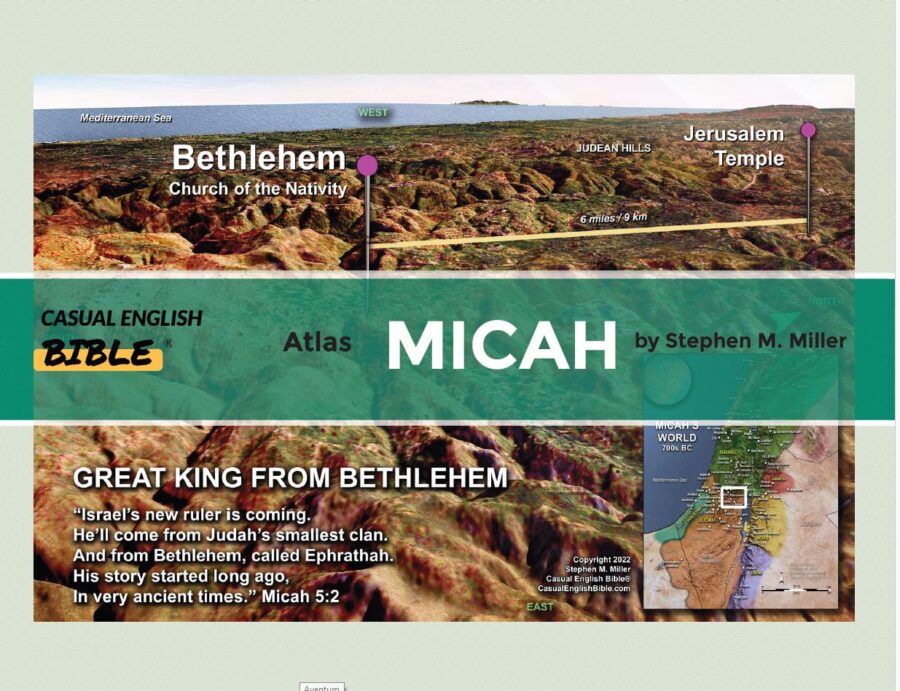
This map helps put Micah’s prophecy on the ground. Instead of seeing his message as a list of unfamiliar names, you can see how these towns were connected to Jerusalem, the Philistine coast, and the surrounding countryside. The geography makes clear why Micah’s words would have felt so close to home: he was warning his own people about the future of their towns and their nation.