


Exodus – Map Collection
SALE Original price was: $39.00.$20.00Current price is: $20.00.
Horned Altar at Beersheba: Biblical Worship in Ancient Israel
$10.00
A Stone Altar That Tells a Story of Ancient Worship
What can a weathered stone altar reveal about worship in biblical times? At Beersheba, in the southern land of Judah, archaeologists uncovered the remains of an altar built from carefully shaped stones, including distinctive horn-shaped corners. Discover how this ancient structure connects to the Bible’s descriptions of sacrifice, worship, and the religious life of Israel.
Description
Narrative Description
Beersheba was an important town in the southern part of ancient Israel, a place associated with Abraham, Isaac, and Jacob. The Bible describes Beersheba as a place where the patriarchs lived, made agreements, dug wells, and called on God. Later, it became part of the biblical landscape of Judah, where people gathered to worship and offer sacrifices.
The stone altar associated with Beersheba offers a glimpse into the religious practices of ancient Israel. In the Bible, altars were places where people presented offerings to God. Some biblical altars had horns at their corners, features that became important symbols in descriptions of Israelite worship. The book of Exodus gives instructions for building an altar with four horns, while other passages describe people seeking refuge by taking hold of an altar’s horns.
Archaeologists discovered stones from a large horned altar at Beersheba that had been dismantled and reused in the construction of another building. The remains help researchers investigate how worship practices changed during the kingdom period. Although the altar itself cannot be tied directly to a specific biblical event, it provides valuable evidence of the religious world in which the stories of the Bible took place.
Beersheba’s location also matters. Situated near the edge of the Negev, it connected settled communities with the drier lands farther south. Its long history, from the stories of the patriarchs to the kingdom of Judah, makes it an important place for understanding the geography and archaeology of biblical Israel.
What You Get
- A detailed photograph of the horned altar remains at Beersheba
- A closer look at an archaeological discovery connected to ancient Israelite worship
- Biblical and historical context about altars, sacrifices, and religious practices
- A visual resource for exploring the connection between biblical history and archaeology
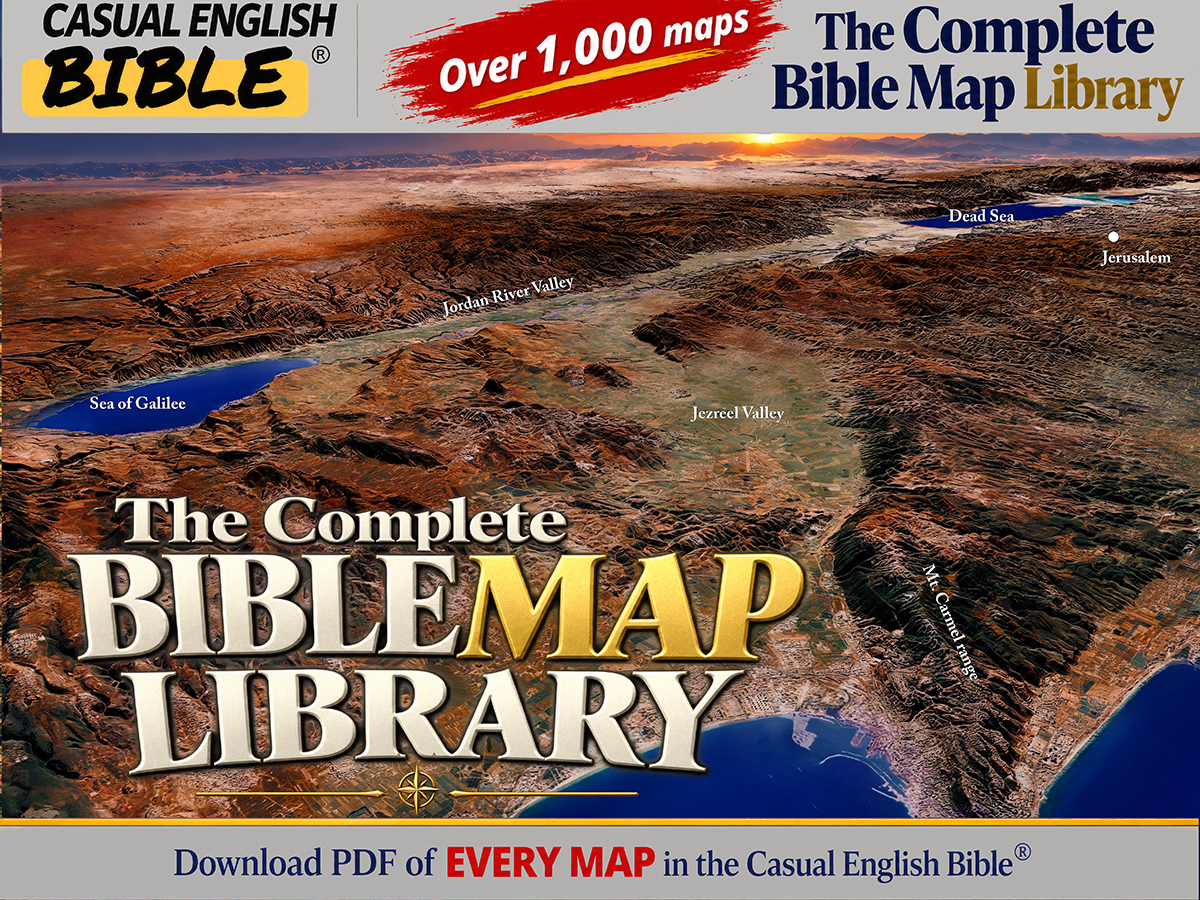
The Complete Bible Map Library
More than 1,000 Bible maps: Get a feel for the lay of the land
What if you could follow the entire Bible on a map—chapter by chapter?
This is every map we’ve created for the Casual English Bible®, all in one place. If geography shows up in a chapter, there’s a map for it. And as new maps are added, they’re included—no extra cost.
You’re not just reading the story anymore. You’re seeing where it happened.
SALE Original price was: $80.00.$75.00Current price is: $75.00.


Reviews
There are no reviews yet.