
Ezekiel’s Visionary Temple
$10.00
Ezekiel’s Visionary Temple
$10.00
What you get
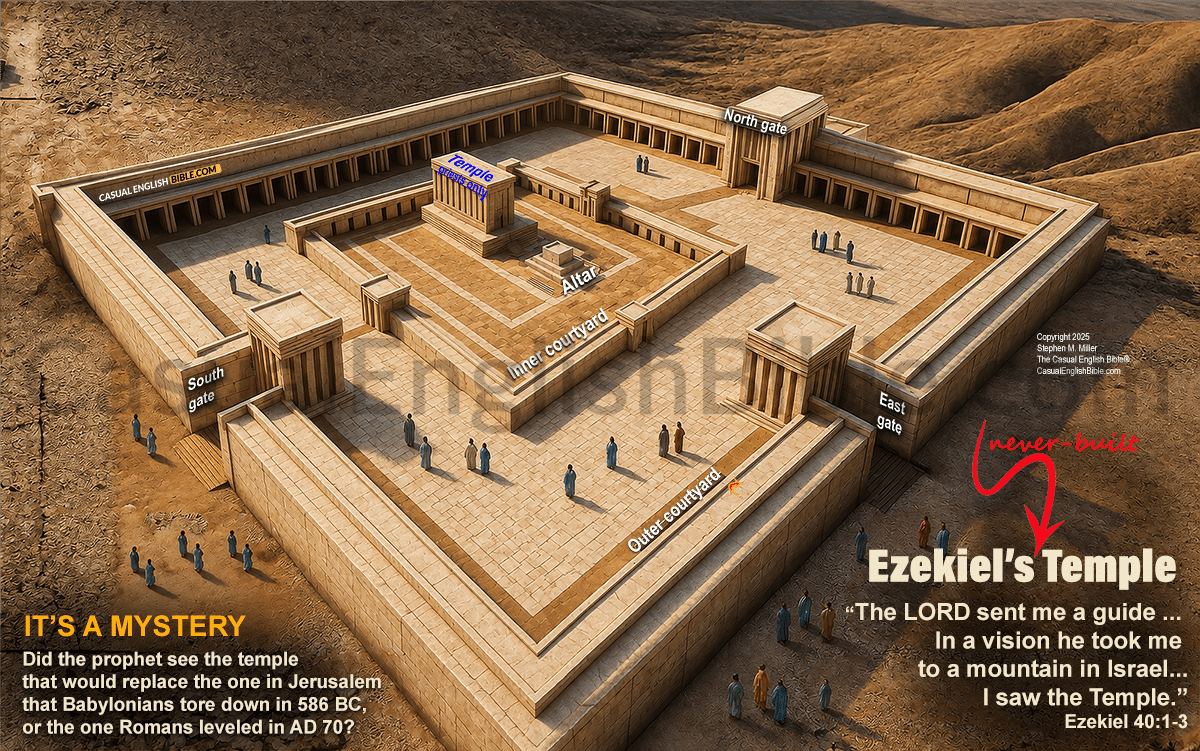
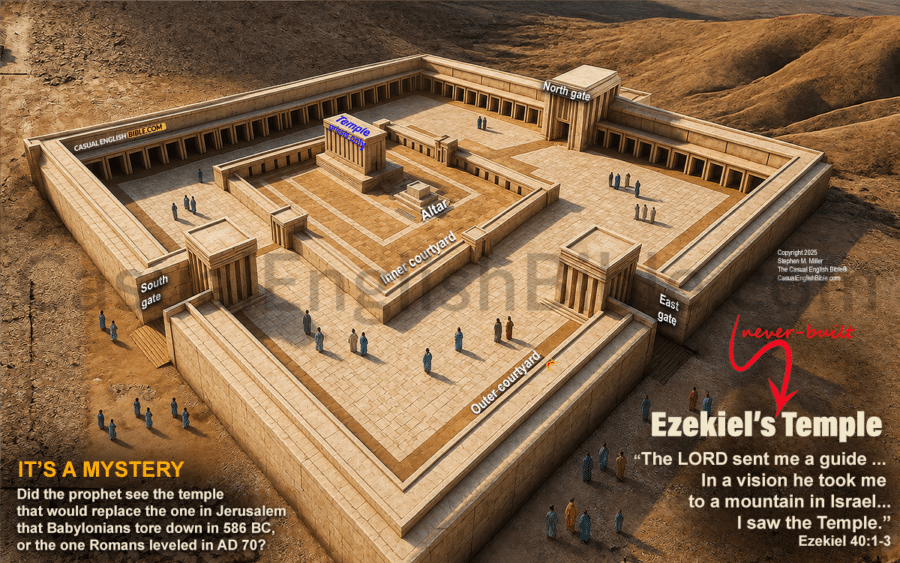
- Custom-made for The Casual English Bible,® a model of the Temple Ezekiel saw in his vision in Ezekiel 40.
- PDF image 2000 pixels
- Available for immediate download
- To license for publication, see Licensing.
Description
Ezekiel’s Temple: A Blueprint of Hope
A Guided Tour with a Measuring Rod
Ezekiel’s vision of the temple (Ezekiel 40–48) is unlike anything else in the Bible. A heavenly guide appears with a measuring rod in hand and walks the prophet through every gate, hallway, courtyard, and chamber—rattling off dimensions like a contractor checking off a punch list. It’s orderly, precise, and far larger than Solomon’s Temple. Priests have dedicated rooms. Sacred spaces are clearly defined. Worship flows with structure instead of chaos.
A Vision Born in the Ruins
This vision wasn’t given in peaceful times. Ezekiel’s audience were exiles living in the wreckage of their old life. Jerusalem had been burned. The Temple—the symbol of God’s presence—was gone. Into that despair comes this detailed blueprint, God’s way of saying, “Your story isn’t over. I can rebuild what you think is finished.”
The Return of God’s Presence
One moment becomes the heartbeat of the whole vision: the return of God’s glory. Earlier in the book, Ezekiel watched the glory of the Lord leave the old Temple. In this vision, he watches that glory come back. The prophet collapses to the ground as God’s presence fills the new house. The architecture matters, but only as the setting for the main message: God comes back to live among his people.
A River That Brings Life
The vision widens into a river—starting as a trickle from the Temple threshold, then swelling into deep water no one can cross. It flows east toward the Dead Sea, turning salty water fresh, filling the banks with fruit trees that heal and nourish. It’s a picture of renewal that starts with God and spreads into the world, making dead places alive again.
Literal Temple or Living Symbol?
Christians and Jews interpret this temple differently. Some see it as a literal future building. Others read it as a symbolic picture of restored worship and a renewed world. Either way, Ezekiel’s message rises above blueprints. It imagines a world where holiness is normal, leaders are trustworthy, land is shared fairly, and worship shapes character—not just calendars.
Hope With a New Address
Ezekiel ends with a new name for the city: “The Lord Is Here.”
That’s the headline.
After loss, exile, and long nights, hope has an address again.


Reviews
There are no reviews yet.