When Jews wanted a worship song to sing at the Jerusalem Temple, or alone at home, or on the road to Jerusalem, or at a celebration honoring the king, they could find one in this collection of 150 Hebrew poems.
These were poems written in lyrical style—fit to sing, chant, or think about while humming for those who couldn’t carry a tune.
There are songs:
of joy and thankfulness to God.
of complaint, about people, God, and life in general. The blues.
of dismay, confusion, and disappointment. Fear, too.
that tell about Jewish history
celebrating the Jewish Law.
of Wisdom, in the ancient style of Wisdom literature
Whatever the songs say, they say it as Hebrew poetry. It’s easy to recognize Hebrew poetry when we read it. Here’s the clue. One line says whatever it says, and the next either repeats that idea, contrasts it with an opposite idea, adds more to the idea, or in some other way builds on the bedrock of that first line.
For example:
“Be kind, LORD, because I’m sick. Heal me, LORD, for I hurt all over” (6:2).
The second line says pretty much what the first line said.
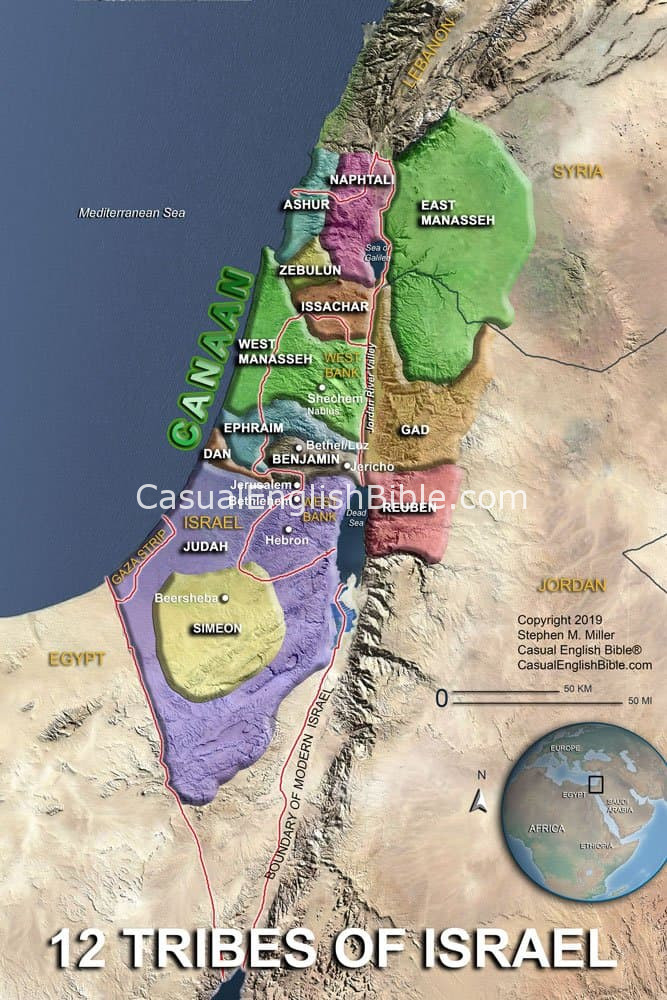
Some English poetry is easy to spot because it rhymes. But as far as anyone has been able to tell, ancient Hebrew poetry didn’t rhyme at all. It did the rerun thing instead, working with parallel ideas compared, contrasted, or extended. Sometimes, to make the parallelism work, the writer uses different names for a place to avoid repeating the name. So, Jerusalem became Zion and Jacob (whose 12 sons produced extended families that became the 12 tribes of Israel) became Israel.
Knowing this can come in handy when we’re trying to figure out what to do with the lyrics the songwriter wrote. If it’s poetry, we might be less inclined to take the writer literally and more inclined to recognize the writer was driving with a poetic license.
Perhaps the most famous song of all is one we recite as someone approaches “the valley of the shadow of death,” Psalm 23. We remind ourselves that “the LORD is my shepherd.”
Jews call this songbook Tehilim, Hebrew for “songs of praise.” That’s half right.
Certainly there are a lot of praise songs in this 150-song playlist. But nearly half of the songs are complaints. People are calling on God for help because they’re sick, under attack, disappointed, or lonely.
You name the feeling, they sang it.
Some songs rip God a new face, expressing angry dissatisfaction with him:
“Why did you leave me… For all of my life, you have been my God” (22:1, 10).
Yet by song’s end, in most cases, the writer is back on good terms with God.
The lyrics often reflect life, telling the story of a faith journey with highs and lows, and of a God who is always there and always on the side of goodness.
Writer
King David gets what appears to be a byline for almost half the psalms, 73 of the 150. But that doesn’t mean he wrote them.
Subtitles that give the credit are vague: “A psalm of David.” The word “of” is the problem. It could mean he wrote it. But it could also mean someone merely wrote it about him or dedicated it to him.
Other Bible stories do confirm that Dave wrote songs and played music on a lyre, a harp that looks like it got wet and shrunk. When moody King Saul was feeling spooked and spooky, he called for David to come and play him some calming music on the lyre (1 Samuel 16:14-23). That usually settled his nerves.
David later wrote a song of mourning about the battlefield death of King Saul and Saul’s sons: “How have the mighty fallen!” (2 Samuel 1:19-27 New American Standard Bible). An ancient Jewish scroll from about the time of Jesus, discovered among the famous Dead Sea Scrolls, reports that David wrote 3,600 songs.
Despite all the attention paid to David in the Book of Psalms, most scholars seem to agree that it’s unlikely that David personally wrote more than a handful of its 150 psalms. Other psalm writers probably included professional musicians associated with David and his successors. In addition, some of the laments (psalms that express complaints, dismay, confusion, or general misery) may have been written by individual worshipers, who left copies of their anguished prayers in the Temple, where musicians later adapted them for use in worship services.
What it all comes down to is that we really don’t know for sure who wrote any of the individual psalms.
Timeline
These songs are nearly impossible to date because they don’t usually tell a story with characters from history. They express timeless feelings, struggles, and hopes.
Some may have been written in David’s lifetime, some 3,000 years ago.
Some songs talk about life in Babylonian exile in what is now Iraq; and that happened 500 years after David, in the 500s BC.
Other songs go back to the time of Moses, some 200 to 400 years before David (scholars debate when Moses lived, 1200s BC or 1400s BC). But there’s no way to tell when those songs were written. They could have been written long after Moses by someone reflecting on Israel’s ancient history.
Location
Most psalms seem set in what is now Israel and Palestinian Territories, also called the Holy Land. Some are set in Egypt. Others talk about Jews in exile in ancient Babylon, which is now Iraq.
Intended readers
Jews used these songs to worship, much like Jews and Christians today use music to express their faith and their feelings.
Some songs were used in coronation rituals to crown a new king or to honor the anniversary of his reign.
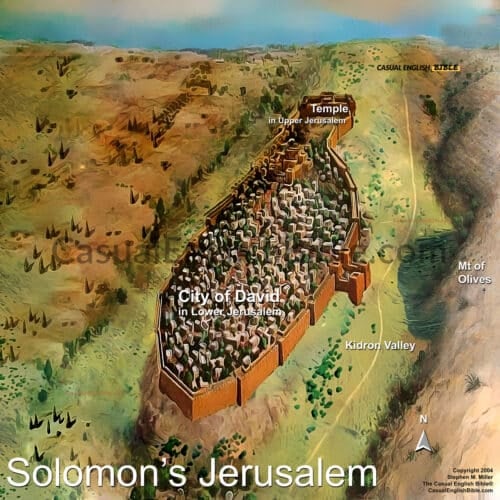
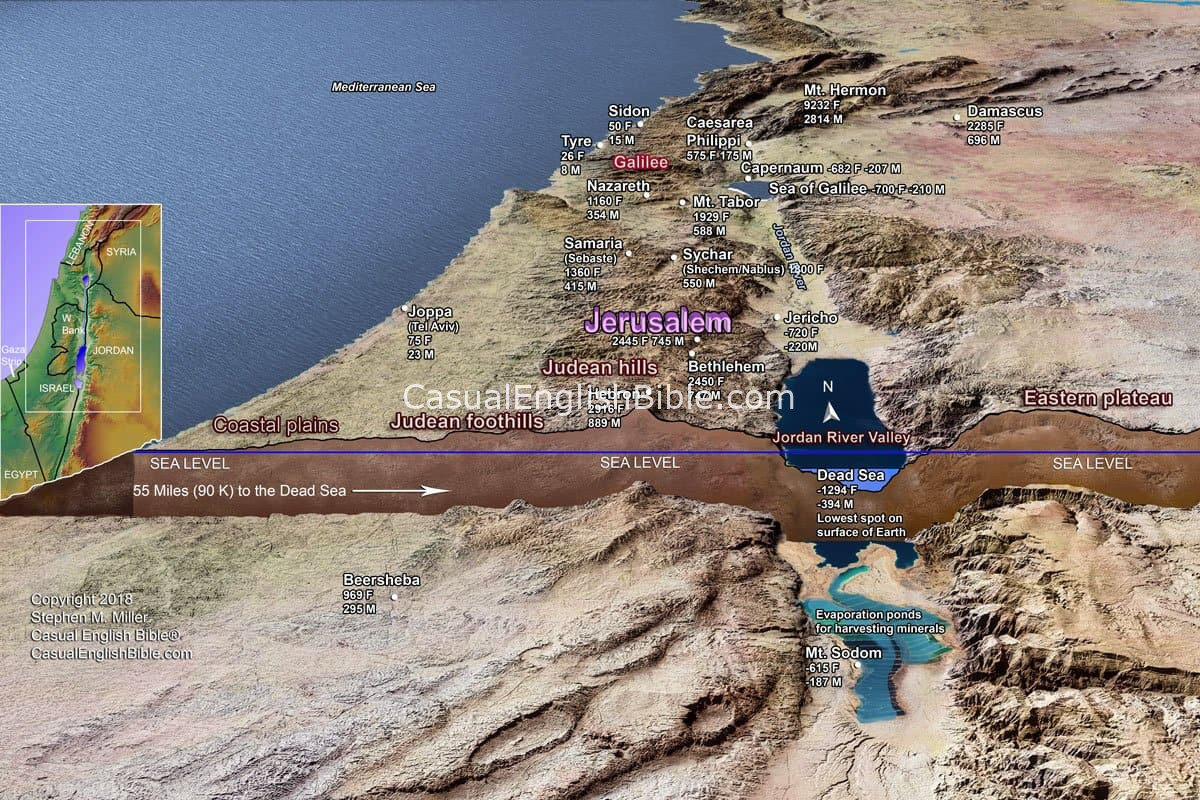
Fifteen songs are called “songs of ascent” (Psalm 120-134). Jewish travelers sang these songs as they walked to Jerusalem to celebrate one of the religious holidays, such as Passover. The songs became known as songs of “ascent” because Jerusalem was in the Judean hills on top of a ridge next to the Mount of Olives ridge. No matter what direction travelers came from, they had to climb to reach Jerusalem.
Introduction to Psalms, book 1. Yes, Psalms Book 1 is just part of the book of Psalms, which makes it a book in a book.
But both books are part of the book called the Bible, which makes Book 1 of Psalms in the Bible a book in a book in a book.
There are five books in Psalms, each ending with a song of praise often called a doxology (from the Greek, meaning "words of praise"):
Book 1 (Psalms 1–41)
Book 2 (Psalms 42–72)
Book 3 (Psalms 73–89)
Book 4 (Psalms 90–106)
Book 5 (Psalms 107–150)
Chinese Book Boxes
What are all these books? It’s like a set of Chinese boxes, one inside the other, except that these boxes are books.
But that’s the way it is. The Book of Psalms is not a single work, like Genesis or Jeremiah. It is a collection of 150 individual psalms that are used in Jewish and Christian worship. The psalms were not written by a single author or even during a single period of time. They were created as needed and sung or chanted during worship services in Bible times, just as hymns are sung during Christian church services today. In fact, the biblical psalms are often included among the hymns Christians sing.
Early Hymnals
At some point in time, probably in the days of King Solomon, workers at the newly built Temple began gathering groups of popular psalms together onto single scrolls, forming the first Jewish hymnals. Because these early collections were probably made by different people, some psalms ended up appearing in more than one collection. Much later, sometime after the Babylonians conquered Jerusalem and brought the Jewish people into exile in the area that is now Iraq, psalms from various collections were brought together into the five books we have today. Some Bible scholars see these five books as reflecting the five books of the Pentateuch (the first five books of the Old Testament, which Jews consider their Law.) Although there seems to be no sure organization within these five books, each book ends with verses or entire psalms that simply praise God.
Be Wise and Love the Law
Book 1 of the Psalms starts off with a psalm that acts as a general introduction to the entire Book of Psalms and is more Wisdom Literature than prayer or hymn. It announces in poetic style that we must think about God’s Law all the time and follow it. If we do, we will be blessed. If we don’t, we will be doomed. This same theme will be picked up in Psalm 19, later in Book 1, and in Psalm 119, the longest of all the Psalms, which is placed at the center of Book 5.
David is the Man
Books 1–3 of the Book of Psalms present devotion to God as seen through King David. In Book 1 many of the psalms center on David and his successors, holding David up as God’s chosen one. In fact, Book 1 includes just over half the psalms associated with David (37 out of 73) and of these, four address incidents in David’s life (Psalms 3, 7, 18, and 34). However, all these associations with David are made in the psalms’ subtitles, which were added later and may not reflect the intentions of the original authors.
The first of these ‘Davidic’ psalms, Psalm 2, which seems to be a celebration of the coronation of David, asserts that God himself has chosen David and made him king. Then, echoing the opening psalm, it warns rival kings to “Respect the LORD and do what he asks. If you don’t, be afraid.” (Psalm 2:11).
Because it is also found in 2 Samuel 22, Psalm 18 seems to be more genuinely Davidic than the others. Many Bible scholars believe that both this psalm and the beloved Psalm 23 (“The Lord is my shepherd”) may have actually been written by David.
The other psalms associated with David are of various types, including psalms that were part of Temple service rituals. For example, Psalm 15 asks: “LORD, who’s allowed in your worship center?” Psalm 24 seems to have been sung or chanted in processions going to the temple, as it calls out “Open up, city gates.” The greatest number of psalms associated with David in Book 1, however, are laments.
Nobody Knows the Troubles I’ve Seen
We have all been there at one time or another. We’ve all felt at times that everything has gone wrong and that God has deserted us. It is easy to get angry with God for not giving us what we think we want. More than a third of the psalms in the Book of Psalms express such feelings. A large number of them ask God why he seems to be ignoring our prayers. Psalm 31 begins by crying out, “LORD, how long are you going to keep this up? / Are you going to ignore me forever?” In fact, the words “how long” appear repeatedly in these psalms, which are generally known as laments. Psalm 3 is the first of the laments found in the Book of Psalms.
The reasons for the pain expressed in the laments range from serious illness to people are out to get me. Some of these psalms vent their anger at God and even blame him for the troubles we’re in. And that is the beauty of these psalms. They show us that it is not wrong to complain to God or be angry with God. Nor is it a sign of lack of faith in God. After all, why would we ask for help from someone if we didn’t believe they existed and could help?
Songs expressing timeless ideas
Although these psalms of lament were written by individuals who lived in Bible times, and are sometimes attributed to specific individuals, such as David, the feelings they express can be felt by anybody at any period in time. The enemies referred to in the psalms don’t have to be political opponents or enemies in a war we are fighting with swords and spears. They can be quarrelsome neighbors or disagreeable fellow workers, or even a best buddy who has betrayed us (see Psalm 41:9).
In short, people have been using these psalms of lament for thousands of years to open their hearts to God. Even Jesus himself, as he hung on the cross, called out the opening words of Psalm 22: “My God, my God, why did you leave me? / You’re too far away.” In other psalms of lament, the person at prayer admits being a sinner and asks God for both forgiveness and help. Generally, each lament tells God what is going wrong, asks God for help, gives reasons why God should help, and promises to praise God and thank him once he has given that help.
Thanks, God, You’re Great
Finally, a number of the psalms In Book 1 celebrate the greatness of God, praising him as Creator, wondering at his great might, and asking why he bothers with us insignificant human beings. Others thank God for protecting us and for showering us with wonderful gifts.
Psalm 41, which brings Book 1 to a close, thanks God for helping good people. It also begs God to forgive our sins and asks him for help in warding off enemies. The final stanza brings Book 1 to a close by urging us to praise of God “from eternity past to forever.”
By Robert V. Huber
editorial advisor
retired Reader's Digest Bible Books editor
Co-author, with Stephen M. Miller, of The Bible: A History
Many of the individual psalms in Book 2 are laments, as in Book 1, but there are also psalms that call down blessings on a human king and psalms that insist that God is king over both Israel and other lands. Again, like Book 1, Book 2 contains a number of psalms associated with David, but it also includes psalms that are associated with various guilds, such as the Korahites.
Choirs of Korahites
Music at the Temple was generally overseen by a number of guilds made up of members of the tribe of Levi, one of the twelve tribes that made up the original nation of Israel. Levite families worked as priests and worship leaders and assistants for the Jewish nation. It is not clear whether the guild members composed the psalms or merely preserved them and sang them. Subtitles to some individual psalms give instructions to these guild members about how to sing and accompany particular songs, sometimes even assigning a certain tune.
Psalms 42–49 are credited to the Korahites, as are Psalms 84, 85, 87, & 88 in Book 3. The Korahites were members of a guild of singers descended from Korah (2 Chronicles 20:19). The psalms in Book 2 that are ascribed to the Korahites include three laments, the first of which (Psalm 42), speaks of panting for God in the way that a thirsty deer pants for water. (A similar image is found in Psalm 63:1, attributed to David, where the psalmist thirsts for God “Like parched land thirsts for water.”) In contrast, the Korahite psalm 45 is a royal wedding hymn, addressed to a king and queen on their wedding day.
Other Korahite psalms celebrate God as commander of the nations and protector of Jerusalem and its Temple. Psalm 47 asserts that God is king not only of Israel but of all peoples, the people of the kingdom that is to come, which is evoked in the Lord’s prayer.
Psalm 49, the last psalm attributed to the Korahites in Book 2, stresses that all of us will die, rich and poor alike. We can buy up all the real estate in the world, but in the end, we’ll give up all those lands “for a cemetery plot.” (Psalm 49:11).
More about David
Book 2 ends with a collection of 18 Davidic psalms (51–65, 68–70). Of these, eight psalms address incidents in David’s life: Psalms 51, 52, 54, 56, 57, 59, 60, and 63. Another, Psalm 53, is nearly identical to Psalm 14. This repetition indicates that the five books of Psalms were put together separately, not by a single editor at one given point in time.
The psalms tied to incidents in David’s life need not be thought of as historical pieces but may be turned into personal prayers. For example, the subtitle of Psalm 51, a kind of sinner’s song, claims that this lament was written in response to David’s sin of seducing Bathsheba then having her husband killed. However, there is nothing in the psalm itself that ties it to David or anyone else. It is simply the impassioned plea of a sinner for forgiveness. And it can certainly be used by any of us to ask forgiveness for whatever sins we may have committed. (The blood mentioned can be thought to represent any injuries we have caused to others.)
A number of psalms praise God and thank him for his many gifts and for the mighty deeds he has performed to save his people. Psalm 68 praises God because he looks after orphans and widows, the lonely, and prisoners; It also praises God for leading Israel to victory and rescuing Israel when needed. It then describes a procession of Israel’s tribes into the Temple and concludes by praising God, who is mighty, majestic, and the source of strength for his people.
Get the bad guys
Other psalms ask God for his protection from all sorts of danger and insult. In particular, Psalm 69 calls out,
“Please God, “save me
I’m neck-deep in rising water
I’m sinking in the mud.” (Psalm 69:1–2).
It goes on to complain that
“I don’t have enough hairs on my head
To represent people who hate me for no good reason.” (Psalm 69:4).
These spiteful people, the psalmist continues, have been falsely accusing him of theft and making fun of him for fasting and praying. Furthermore, gossips gossip about him and drunks sing about him. Finally, when the psalmist was desperately searching for compassion, his foes “seasoned my food with poison. And they tried to quench my thirst with vinegar.” (Psalm 69:21) Some Christians see the giving of vinegar to the thirsty as a prophecy of Jesus on the cross. The psalm concludes with a promise to praise God in return for help.
Psalm 70, which calls for God to stop the people who laugh at the psalmist and want him dead, is very similar to Psalm 40:13–17 in Book 1, but the subject of old age is added here. Psalm 71:18 pleads, “God, don’t ignore me when I’m old and gray.” It then alternates calls for help in old age with lavish praises of God’s goodness.
Psalm 52 remembers that God can be trusted to punish those who do wrong, telling these villains that God is going “to beat you into the dirt forever . . . deport you from the land of the living” (Psalm 52:5). Psalm 58 is even harsher. Forgetting all about “love your neighbor,” it is a bitter curse on those who do evil, asking God to “smash the teeth / Right outta their mouths” (Psalm 58:6) and let evildoers “die slowly, like snails dissolving into slime” (Psalm 52:8).
Dying kings and newly crowned kings.
Kings are also the subject of a few of the psalms in Book 2. Psalm 61 is a lament by a king who is gravely ill. A request is made in verse 6 of this psalm to “Let the king live a long life. / Let him see grandkids and great-grandkids.” This brings to mind the story of Hezekiah in 2 Kings 20, where the dying king is granted 15 more years of life in answer to his prayer.
In contrast, Ps 72, the final psalm in Book 2, seems to be celebrating the coronation of a new king. The psalm calls down blessings on the king, asking that his reign to be peaceful and prosperous and predicting that the king will be just and will care for the needy. Then, at the end of verse 16, the psalm breaks off from its main subject, the king, and ends with a doxology (a call to praise God). This doxology was probably added to the original psalm by the person compiling the collection to give it the traditional ending for a Book of the Psalms.
The end, except it’s not
Psalm 72 is followed by a note that says that the psalms of David, the son of Jesse, are ended. As Psalm 72 itself seems to come to an end with verses 18–19, It is possible that an earlier collection of psalms ‘of David’ ended with this note. It is not, however, the last of the psalms associated with David. Eighteen more will follow, 15 of them in Book 5. This fact bolsters the argument that the five books of psalms were not put together at the same time. When this note was added at the end of Book 2 the editor probably expected no more psalms to follow. The final three books of psalms, then, were probably added at a later date.
By Robert V. Huber
editorial advisor
retired Reader's Digest Bible Books editor
Co-author, with Stephen M. Miller, of The Bible: A History
There are only 17 psalms in Book 3, most of which are attributed to one of the musicians’ guilds that had originally been established by King David. Book 2 contained a number of psalms associated with the family of Korah and four additional Psalms of Korah appear in Book 3. In addition, 11 psalms are assigned to Asaph. And so, Book 3 of Psalms belongs almost exclusively to the families of Asaph and Korah.
Choirs of Asaphites
Eleven of the 12 Psalms of Asaph in the Book of Psalms appear at the beginning of Book 3 (Psalms 73–83). Like Korah, Asaph headed a musical family in the tribe of Levi, one of the 12 tribes that made up the original nation of Israel. Moses’ brother, Aaron, a descendant of Levi, was the first priest and, from his time on, Levi’s descendants (the Levites) formed the priestly tribe. But while some Levites worked as priests, others filled lesser positions having to do with worship, such as taking responsibility for the music during worship services.
Asaph himself was appointed leader of worship music by King David in the 990s BC (1 Chronicles 16:4–37). Members of Asaph’s family continued to carry on the music tradition for centuries. In fact, according to Ezra 2:41, Asaphites showed up as singers as late as the 400s BC, when the priest Ezra was calling for religious reforms while Jerusalem was being rebuilt after Babylonian invaders from what is now Iraq had leveled Jerusalem. Psalm 50, the only Psalm of Asaph not in Book 3, may date to the time of Ezra’s religious reforms.
What the Asaphites sang
In Psalm 73 the psalmist admits that he sometimes envies the evil rich and he asks God why he does not punish them. Then he comes to realize that God does undermine the wicked in his own way and that he always protects the good person. In its way, the psalm recertifies the lesson taught in Psalm 1, which asserts that the good will flourish and evildoers will perish. In other psalms of Asaph the psalmist:
Tells us that God alone is judge and he will deal with the bad guys in his own time,
reminds us that God will rescue the needy and urges earthly rulers to do the same,
tells us to remember all God has done for us when things seem to go wrong, and
calls upon us to keep God’s law and play music and sing for joy.
Community laments: Let’s all cry together
As in every other section of the Book of Psalms, Book 3 features a number of laments. But there is a bit of a difference here. Most laments are voiced by individuals asking help for personal problems, but a small number of them are recited or sung by all the people gathered at the Temple to ask God for help for the entire nation. Five of these community laments, or national laments, appear in Book 3 (Psalms 74, 79, 80, 83, & 85).
Psalm 83 is general, asking God for help against unnamed enemies of the nation. This is also the case with Psalm 44 in Book 2, the first of the community laments. The more practical Psalm 85 is, in part, kind of a rain dance, asking God to forgive his people their sins and begging him to restore their prosperity and to relieve them from a devastating drought.
The remaining community laments are more specific. Psalm 80 seems to be a plea to God by the people of the Northern Kingdom of Israel to save them from the Assyrians, who were sweeping in to destroy them in the 700s BC. The people beg for God’s help, peppering their cries for help with a repeated request for God to smile on them so that they will be saved.
Psalms 74 and 79 seem to be laments by the people over the havoc brought in 586 BC, when Babylonian invaders from what is now Iraq overran the Jewish nation, destroyed the Temple, and took many of the people into exile. Psalm 74 asks how long before God intervenes and puts down Israel’s enemy, which is also God’s enemy. It goes on to remind God of the great works he has done for Israel. Psalm 79 asks:
How long are you going to keep this up, LORD?
Are you going to stay mad forever?
Has your jealousy blown up into wildfire? (Psalm 79:5)
The people go on to ask God to punish the enemy who destroyed Jerusalem. Don’t punish us; forgive us our sins, they pray.
Alone in the dark
Trailing all these community, or national, laments is an individual lament that gets most people’s vote as the most dismal psalm in the Bible. Psalm 88 seems to be a desperate cry for help from a man dying alone. The psalmist here is a Job-like figure who, despite his love of God, is losing everything he has and plummeting into total darkness, where the end of the psalm leaves him. Three times he calls out to God, but he gets no answer. Some Christian readers associate the psalmist’s sufferings with both the sufferings of Jesus and their own sufferings, drawing comfort from being associated with Jesus in this way.
Although the psalm seems to offer no hope, the fact that in verse 14 the psalmist intends to pray again in the morning suggests that he may finally be answered in the morning (Easter morning for Christians). And so even though the psalm ends in bleak darkness, readers today can use it to take comfort in the knowledge that they are neither the first nor the last to suffer deeply and cry out in pain to God, who seems not to care. The psalm holds out the hope that God will respond in the future. If there is no such hope, there would be no reason to pray.
On the road to Jerusalem
The city of Jerusalem is celebrated in two of the Psalms of Korah found in Book 3. Psalm 87 is a straightforward hymn of praise for Jerusalem. Psalm 84 is either a song sung on the road by pilgrims on their way to the Holy City or a kind of processional hymn sung by worshippers as they entered the Temple grounds. It reads, in part:
People find happiness
When they find their strength in you
And when they travel the roads to Jerusalem. (Psalm 84:5)
David remembered and removed
The great King David, who is named so often in the subtitles of the psalms in the first two books of psalms is somewhat diminished in Book 3, where he is named in the subtitle of only one psalm (86). There, the psalmist asks God to save his life and promises to thank God for his help in the future. Psalm 78, however, deals (briefly) with David himself. It retells the history of the Israelites from the Exodus through God’s choosing David as king over his people.
Psalm 89, which ends Book 3, also tells of David’s kingship, but with a twist. It begins as a lament over an unnamed king’s losing a battle. It then reiterates that God chose David as king and promised he would reign forever. The psalmist notes how much the people love God and rely on him. It then repeats that God had chosen David and anointed him as king, promising that his kingdom would last forever through his successors. But suddenly, God has allowed David’s kingdom to perish at the hands of the Babylonians. How long before God makes things right again in fulfilment of his promise? How long?
By Robert V. Huber
editorial advisor
retired Reader's Digest Bible Books editor
Co-author, with Stephen M. Miller, of The Bible: A History
Book 4, like Book 3, contains only 17 psalms. However, the general tone of the two books is different. Most of the psalms in Book 4, even the laments, stress praise of God rather than dwelling on the troubles that prompt the lament, and this more upbeat tone seems to respond to the question often asked in Book 3: “How long?’ Many of the psalms in Book 4 suggest that God won’t stay hidden from us for long, that he is indeed always there for us when we really need him. Six psalms assure us that the LORD is king (93 and 95–99). In fact, he has been our refuge since long before earthy kings existed, and he would be so again and again and again.
Moses makes an appearance
Book 4 begins and ends with Moses. Psalm 90 stands out as the only one of the 150 psalms to be attributed to Moses, though it was almost certainly not written by him and says nothing about him. (The subtitles that link the psalms to biblical figures were added long after the psalms were composed and may not reflect the original intentions of the psalmists.) Psalm 90 is actually a meditation on the brevity of human life, which consists of work and worry. It asks God, who has been God since before he created the universe, to show mercy and to teach us to use our time wisely so we may be happy and succeed in all we do
Psalms 105 and 106, on the other hand, though not attributed to Moses, relate events that occurred under his leadership. In addition, in Psalm 99, near the center of Book 4, Moses is mentioned briefly, telling us that he spoke to God and God answered.
Someone to watch over me
Two psalms portray God as nurturing. Psalm 91 expresses trust in God who keeps us safe under his wings and surrounds us with his care. Psalm 92 is a call to sing praises to God from morning to evening, for he cares for good people all their lives, even into old age.
Psalm 94 looks to God as protector. It not only asks God to punish our enemies but trusts that he will do so. It concludes that if our enemies think God doesn’t hear or see the evil they do, they’re dead wrong:
God will use their injustice
To teach them a lesson in justice.
The evil things they’ve done
Will turn on them and destroy them.
The LORD our God will see to it. (Psalm 94:23)
King God
Psalm 93 celebrates God as king over everything, “Side to side, front to back, up and down.” He rules over even the primal forces of nature. Then, in Psalms 95–99, sometimes referred to as Royal Psalms, we are reminded over and over that God is king over everything and we are asked to sing songs of praise to God, the creator, because God the king:
is great and holy.
is seated on a throne of goodness and justice, and wields lightning and causes the earth to quake and the mountains to melt.
runs the world and there is no king above him.
will bring justice into the world.
watches over and protects those who love him and hate evil.
has saved his people.
In short, we are told to play lyres, blow trumpets, and sing out the praises of God for all the marvelous things he has done. We should sing until the hills are alive with the sound of music.
Psalm 100 is a hymn sung while entering the court of the Temple, possibly for a thanksgiving service. Although the psalm does not state that God is king, its language is similar to that of the royal psalms. Its main message is unmistakable. Never stop thanking and praising God:
When you talk to him, thank him.
When you come to him, praise him.
Thank him.
Then thank him again for the God he is. (Psalm 100:4)
Psalm 102 is a mixed bag. It starts off as an individual lament, in which the psalmist, who is dying in misery, begs God for help. Then the lament seems to turn into a royal psalm, which tells us that God, who sits on his throne, will restore the fallen city of Jerusalem. In another turnaround the psalm ends by lamenting that the lifespan of us humans is nothing, while God will live forever.
David pops up briefly
In Book 4 only two of the psalms (101 and 103) are said to be ‘of David.’ Psalm 101 may have to do with a Davidic king, though probably not David himself. It seems to represent the promise of a king (perhaps at his coronation) as he vows to always promote good and fight evil. Psalm 103 seems to have nothing to do with David or any Davidic king. It is a straightforward hymn of thanksgiving offered by an individual who could be anyone.
Praise God, thank him, then praise him again
Book 4 ends with a series of hymns of praise and thanksgiving. Psalms 103 and 104 both begin and end with the words “I’m thanking the LORD with all my heart.”
Psalm 103 praises God and thanks him for being merciful, just, forgiving, healing, generous, kind and compassionate, slow to anger, and everything else that is good.
Ps 104 focuses on praising God as Creator and thanks him for maintaining everything he created. Verses 19‑28 of Psalm 104 are startlingly close to the Hymn to Aton, the Sun God, by Akhenaten, pharaoh of Egypt in the 1300s BC. The verses seem to be an updating of the Egyptian song that addresses the Jewish God in place of the Egyptian deity Aton.
Psalms 105 and 106 describe many of the wonderful things God has done for his people. Psalm 105 begins by telling of God’s agreement to give Abraham’s descendants a land of their own in return for their keeping his laws. Both 105 and 106 tell of God’s relationship with Abraham’s descendants in Egypt, his leading them out of Egypt, and his helping them to settle in the land he had promised them. Psalm 106 focuses on the Israelites’ years in the badlands and then in their own land, intermittently falling out with God and then regaining God’s forgiveness. Both psalms end with the people being scattered through foreign lands, and begging God to restore them to their own land.
In a rare show of structure in the Books of Psalms, Psalm 107, the first psalm of Book 5, will begin with the same full opening verse as does Psalm 106, the last psalm in Book 4:
The LORD is good to us.
Thank him for it.
He will never run out of mercy.
In addition, Psalm 107 will speak of God’s bringing his people back from scattered foreign lands into their own land. The repeated verse added to the common theme form a kind of link between Books 4 and 5.
By Robert V. Huber
editorial advisor
retired Reader's Digest Bible Books editor
Co-author, with Stephen M. Miller, of The Bible: A History
Book 5 is the largest of all the Books of Psalms. Of its 44 psalms, 11 are labeled as being ‘of David’ and another 15 make up a self-contained collection known as ‘Road Trip Songs’, or ‘Songs of Ascents.’ Book 5 also contains 12 songs of praise or thanksgiving and both the shortest psalm in the Bible (117) and the longest (Psalm 119).
More than any of the other Books of Psalms, Book 5 seems to have some semblance of organization, radiating from the center out. The center itself is two-fold, consisting of Psalm 119, a long meditation on God’s Law, followed by the Road Trip Songs (120–134). This center section of psalms is bracketed by groups of Davidic psalms (108–110 and 138–145) followed by groups of ‘Halleluiah’ psalms of praise or thanksgiving (111–118 and 146–150).
Outline, Book 5
Psalm 107 bridge between Books 4 and 5
108–110 Davidic Psalms
111-118 Hallelujah Psalms
119 Meditation on God’s Law
120-134 Road Trip Songs
135–137 Memory-based psalms
138–145 Davidic Psalms
146–150 Hallelujah Psalms
Psalm 107 forms a bridge that links Book 4 to Book 5, picking up the theme of the people returning from exile to their own land, which ended Book 4. It opens with a verse that also opens both Psalm 106 and Psalm 118, not only linking the beginning of Book 5 to the end of Book 4, but also serving as a bridge to the center core of Book 5.
David makes a comeback
Psalms attributed to David, which were plentiful in Books 1 and 2 and scarce in Books 3 and 4, make a bit of a comeback in the final Book of Psalms. There are three Davidic psalms near the start of Book 5 (Psalms 108–110) and an additional eight near the end (Psalms 138–145).
Psalm 108 is a royal psalm in which a king asks God for victory over his peoples’ enemies. But it is a bit of a cheat, for it is actually made up of parts of two earlier psalms: Psalm 57:1–11 and Psalm 60:5-12.
Psalm 109 is a lament from someone who has been wrongfully accused. After listing the awful things his attackers have wished on him, the psalmist briefly turns the curses back on his foes, but then launches into a plea to God to save him, certain that God would do so because he always stands with the helpless and rescues them.
Psalm 110 is a coronation psalm, which may have been sung by the Prophet Nathan at David’s coronation. Jesus later uses the opening words of this psalm to make a point (Mark 12:35–37 and Luke 20:41–44).
Hallelujah Psalms of praise or thanksgiving
A number of psalms begin or end with the Hebrew word hallelujah, translated here in the Casual English Bible as ‘Thank you, LORD’, but often rendered as ‘Praise the Lord.’
The first group of these Hallelujah Psalms in Book 5 (111–116) thank God and praise him for:
exhibiting goodness and kindness,
providing food and land,
providing protection to anyone who keeps his laws
the sun’s rising and setting,
giving children to women who were previously infertile,
caring for the poor and needy and treating them with respect,
leading his people to safety in a land of their own,
establishing his Temple in the new land.
doing everything for his people that handmade idols cannot do.
responding to the prayers of the dying and staving off death.
Psalm 117, the shortest psalm in the Bible, sums it all up in two brief stanzas, calling on everyone everywhere to thank God for always being there for his people and treating them with merciful love and devotion.
While it does not use the word Hallelujah, Psalm 118 resembles the Hallelujah Psalms in that it thanks the LORD over and over. It both opens and closes with the same words that open Psalms 106 and 107, asserting that God’s mercy never ends. It goes on to thank the LORD for always freeing his people from their troubles, noting that it is better to rely on God than on people. The psalm also thanks the LORD “for being my savior when I needed saving” (Psalm 118:21).
ABCs of the Jewish law
Standing at the center of Book 5, Psalm 119 refers back to Psalm 1, which states that anyone who follows God’s Law will prosper, while anyone who does not will perish. It also expands on other psalms that praise God’s Law—especially the second half of Psalm 19 (verses 7–14).
Psalm 119 itself is an acrostic, or alphabetic, psalm, with 22 stanzas. Each stanza is made up of eight two-line verses each of which begins with the subsequent letter of the Hebrew alphabet. In effect, it is a kind of ABC’s of praising God’s Law, but instead of proceeding from A to B to C, etc., it moves from aleph to bet, to gimel, and on to tau, covering the 22 letters of the Hebrew alphabet. In so doing, the psalm shows that God’s Law covers every aspect of human existence, from A to Z (aleph to tau).
Long song of 176 verses
There are other alphabetic psalms in the Bible (such as Psalms 111 and 112), but they generally cover only part of the Hebrew alphabet and change letters from verse to verse rather than from stanza to stanza. Psalm 119, with its 22 stanzas, each containing eight verses, adds up to 176 verses, making it the longest psalm in the Bible.
Each of the 176 verses glorify the Jewish Law in poetic language, but the poetry has been seen as poor by biblical standards. It is often found to be flat and boringly repetitive. However, its intricate structure, which is lost in translation, makes up for this flaw. On the other hand, because the psalm tends to be monotonous, folklore claims that if you read it backwards your eyes will fall out onto the book.
The psalm starts out with a double beatitude, or promise of happiness, holding that “People are happiest who” lead good lives and follow the LORD’s Law with all their hearts. A life lived according to the Law is safe, predictable, and as complete as Psalm 119 itself. Like the psalm, the Law it is a source of light, life, joy, and delight—four words that appear frequently through the length of the psalm. Finally, the psalmist asks that God fulfill his promises to save him from his enemies (enemies who do not follow God’s Law). However, this is not a psalm of bargaining with God, but rather an emphatic statement of trust in God’s goodness. The overall tone of the long psalm is one of celebration and trust in the LORD’s Law. Follow it!
Road Trip Songs
According to Jewish Law, so elaborately praised in Psalm 119, all Jewish males were required to make pilgrimages to the Jerusalem Temple three times a year to celebrate major religious festivals. It seems likely that Psalms 120–134 were composed to be sung by these pilgrims as they ascended the hill to Jerusalem or to the Temple itself. These particular 15 Road Trip Songs, or Songs of Ascents, may have been composed or assembled to celebrate the people returning home from Exile in Babylon.
Thanks for the memories, good and bad
Three psalms that focus on memories (135–137) separate the Road Trip Songs from the final two groups of psalms in the Book of Psalms. Psalm 135 is itself a typical Hallelujah Psalm that has been separated from the others. Its thankful praises recall the Creation, acknowledge God’s power over all he created, and recount the story of how God led the descendants of Jacob out of slavery in Egypt into their own land. The psalm concludes that no man-made idols could do such great works and it calls everyone to praise and thank the LORD.
Happy song
Psalm 136 is a litany of thanks. It opens with the same first verse found in Psalms 106 and 107. Each of the remaining verses of Psalm 136 is made up of two lines. The first line recalls some attribute of God’s or some great work done by God in the past, while the second line repeats the text of the second line of Psalms 106 and 107: “He will never run out of mercy.” This line functions as a refrain.
Sad song
Psalm 137, composed during Babylonian Exile, is a community lament in which the exiled Israelites (ancestors of the Jewish people) find it too painful to look back and remember the good times before exile. When asked to sing songs of their beloved homeland, they cannot bring themselves to do so. They swear that nothing could make them forget their homeland, but, being human, they want the Babylonians to pay for ravaging Jerusalem and its Temple and taking them captive. Going a bit too far, in the final verse they cry out that they would call down blessings on anyone who would bash Babylonian babies’ brains out on a rock. This odious thought has disturbed many over the centuries, but it is probably not meant as a literal call for infanticide, but as a metaphorical expression of the intense hurt and anger felt by the exiles.
David’s final psalms
Psalms 138–145 are the final psalms to be attributed to David. The first of them, Psalm 138, is an all-out call to praise God, whom even foreign kings admire, for he is endlessly good, caring for the lowliest people and bringing about justice.
In Psalm 139 the writer acknowledges that God knows him inside and out, though he cannot begin to truly know God. He thanks God for always protecting him, but (like many of these psalms), asks God to get rid of the wicked. The writer also asks God to search him and if he finds any wrong to redirect him along the right path.
Psalms 140 through 143 are individual laments in which the writer asks God for:
rescue from violent people who are in pursuit,
help in not speaking bad things,
protection from sinners who would lure him into sin.
guidance for living a good life,
mercy, and
deliverance from death.
Question for God
After thanking God for strengthening him in battle, the author of Psalm 144 asks God why he cares so much for mere humans. Their lifespan “is just a breath of air,” yet God reaches down from the heavens and rescues them from lying strangers. Remembering that God had saved David’s life, the psalmist asks God to save the Israelites so that their families may prosper in everything and be happy.
Psalm 145, the last Davidic psalm, forms the climax to Book 5. It opens by thanking God for being Israel’s king, connecting it with Book 4’s theme of The LORD as king. The bulk of the psalm is an elaborate song of praise and thanksgiving, telling of God’s loving treatment of all people, of the respect God has earned from people near and far, and recalling how God has so graciously granted the people all they needed and come to their aid when they asked. Before closing, the psalm reminds us that God rewards good people, but destroys bad people, linking it to Psalm 1 in its contrast between good and bad. The psalm ends with a promise to thank God forever, fittingly introducing the final five psalms.
Drumroll and cymbals: the end!
Book 5 of Psalms not only follows the pattern of ending in a doxology, or words of praise, it does so five times over. All five of the final psalms (146-150) praise God by thanking him for all he has done for his people. These doxologies take the form of Hallelujah Psalms, and each of them both begins and ends with the Hebrew word Hallelujah, which can be translated as either ‘Thank you, LORD’ or ‘Praise the LORD’ or a combination of both. In the final psalm (150) the word appears in every line, ending the Book of Psalms with a glorious, triumphant Hallelujah chorus. It urges everything that lives and that breathes to praise the Lord and thank him. We should also thank God for inspiring the psalmists who gave us this great book of the Bible.
By Robert V. Huber
editorial advisor
retired Reader's Digest Bible Books editor
Co-author, with Stephen M. Miller, of The Bible: A History
Psalms 120-134 constitute the only unbroken collection of psalms in the Bible. Other collections, such as the Hallelujah Psalms and the Songs of Asaph, are broken up and scattered among the five Books of Psalms. However, these 15 psalms, labeled Road Trip Songs or, more literally, Songs of Ascents, appear as a unit.
Songs of Ascents
The title “Songs of Ascents” comes from the Hebrew verb for ‘to go up’ or ‘ascend.’ Jewish Law required all Jewish males ‘to go up’ to Jerusalem in a kind of pilgrimage three times a year (Deuteronomy 16:16). Jerusalem sat on top of a ridge. So, no matter which direction pilgrims came from, they had to climb the hill up into Jerusalem.
The Road Trip Songs were probably sung by these pilgrims as they came into the city and worshiped at the Temple.
Date and Purpose
It seems likely that the Road Trip Songs were added to Book 5 of Psalms in the 500s BC, sometime after the Jews who had been held in exile in Babylonia (modern-day Iraq) were freed to return home to Jerusalem. The purpose of the songs then was two-fold. They served first and foremost as pilgrim songs, but they also commemorated the return of the exiles.
Even though the Road Trip Songs were added to Book 5 of Psalms at a late date, some of the individual psalms in the sequence may have been taken from earlier periods and arranged or altered to fit the new scenario. For example, Psalm 132:8–10 forms part of Solomon’s blessing for the newly constructed Temple, as found in 2 Chronicles 6:41–42. In addition, four of these psalms (122, 124, 131, and 133) are said to be “of David,” while one (Psalm 127) is said to be “of Solomon.” Of course, this does not necessarily mean that these psalms were written by David and Solomon or even written during their time, but only that they were inspired by them in some way. Whatever the time of composition, they were put to new use here.
Ascending to the Temple
The content of the psalms themselves suggest a sequence that moves forward in a planned manner. The first few psalms seem to indicate that they were sung by the pilgrims or by the exiles themselves as they set out from distant lands, traveled to Jerusalem, arrived in Jerusalem, and then climbed the 15 steps between the Temple’s Court of Women and its Court of the Israelites. On the other hand, some Bible scholars say the pilgrims sang all the songs as they ascended the 15 steps of the Temple itself.
Psalm 120, the first of the Road Trip Songs, complains of living in far off lands and enduring hardships. The situation (especially in verses 5 and 6) fits the idea of a people exiled in a foreign land and yearning to be free. As such, it looks back to the end of Book 4 and the start of Book 5 of Psalms, which focus on the return of exiles to Jerusalem.
Psalm 121 seems to describe the actual journey to Jerusalem. It refers to far-off hills and it trusts that God will guide the pilgrims or exiles, keep their feet from slipping on the road, and protect them from the heat of the sun.
Psalm 122 expresses the joy felt by the pilgrims or exiles as they arrive in Jerusalem, the city on the hill. It goes on to describe how they will
“Make the climb up this hill,
By law, to give thanks to the LORD” (Psalm 122:4).
Pleas to God
Psalm 123 is a community lament that asks God to show mercy and end the contempt and scorn their enemies are heaping upon the people. Once again, this brings to mind the exiles. Because the text in this psalm shifts from the singular to the plural, it may have been a responsorial song in which a priest or leader of song began a chant (verses 1–2) and the people then answered in a kind of pilgrim’s chorus (verses 3–4). Some of the other Road Trip Songs also have this responsorial element.
Asking God
The psalms that follow (124–130) affirm the need to rely on the LORD alone. They thank God for always coming to their aid and ask God to:
be good to people who lead honest lives,
put an end to crooks,
provide food and a family with lots of children,
protect the people from enemies,
forgive Israel’s guilt,
restore Israel as he has done in the past,
bring shame against anyone who hates Jerusalem, and
grant peace.
The many references to daily life and families suggest that these psalms were meant to be sung by everyday people, as opposed to priests. Though, as already mentioned, some of the songs may have been responsorial psalms, with a priest or other leader of song singing one part of the psalm and the chorus of pilgrims responding
Psalm 131 pauses to express humility and to call upon Israel to hope in the LORD.
Reasons to go up to Jerusalem
All of the Road Trip Songs are short except for Psalm 132, which is a longish psalm that seems to have been inserted into the Road Trip Songs to give reasons for making the required pilgrimages to Jerusalem. To do so, the psalm goes back in time, recalling that God had chosen Jerusalem as both his own home and the seat of David’s government. It also recalls that David had promised to find a resting place for the LORD (though it would be his son, Solomon, who would actually build the first Temple).
The psalm goes on to repeat God’s promise that David’s descendants would rule Israel as long as they kept his Law. Jerusalem is his resting place forever and he will always watch over it.
Concluding rites
Psalm 133 affirms that God will bless his people if they live together in harmony. This blessing seems to be given in the following psalm.
Psalm 134, the final psalm of the sequence, sounds very much like a blessing given by a priest to the pilgrims at the end of their pilgrimage. The priest invites the pilgrims to fulfill the purpose of their journey—to praise the LORD. He then gives them a final blessing. The pilgrimage has come to an end. The return from exile has been remembered and celebrated.
By the Late Robert V. Huber
editorial advisor
retired Reader's Digest Bible Books editor
Co-author, with Stephen M. Miller, of The Bible: A History
Help Keep the Casual English Bible® Free for Everyone
Your support helps us keep our Casual Bible free and accessible, especially for people new to the Bible, curious non-Christians, and Christians who’ve always found it hard to understand.
This mission is 100% reader-supported. If you believe everyone deserves a Bible they can easily read and relate to, we’d love your help.


 Road Trip Songs
 The content of the psalms themselves suggest a sequence that moves forward in a planned manner. The first few psalms seem to indicate that they were sung by the pilgrims or by the exiles themselves as they set out from distant lands, traveled to Jerusalem, arrived in Jerusalem, and then climbed the 15 steps between the Temple’s Court of Women and its Court of the Israelites. On the other hand, some Bible scholars say the pilgrims sang all the songs as they ascended the 15 steps of the Temple itself.