
1 Kings - Map Collection
SALE Original price was: $49.00.$25.00Current price is: $25.00.
Solomon’s 12 Administrative Districts: How Israel Was Organized
$10.00
Solomon’s 12-Tribe Makeover
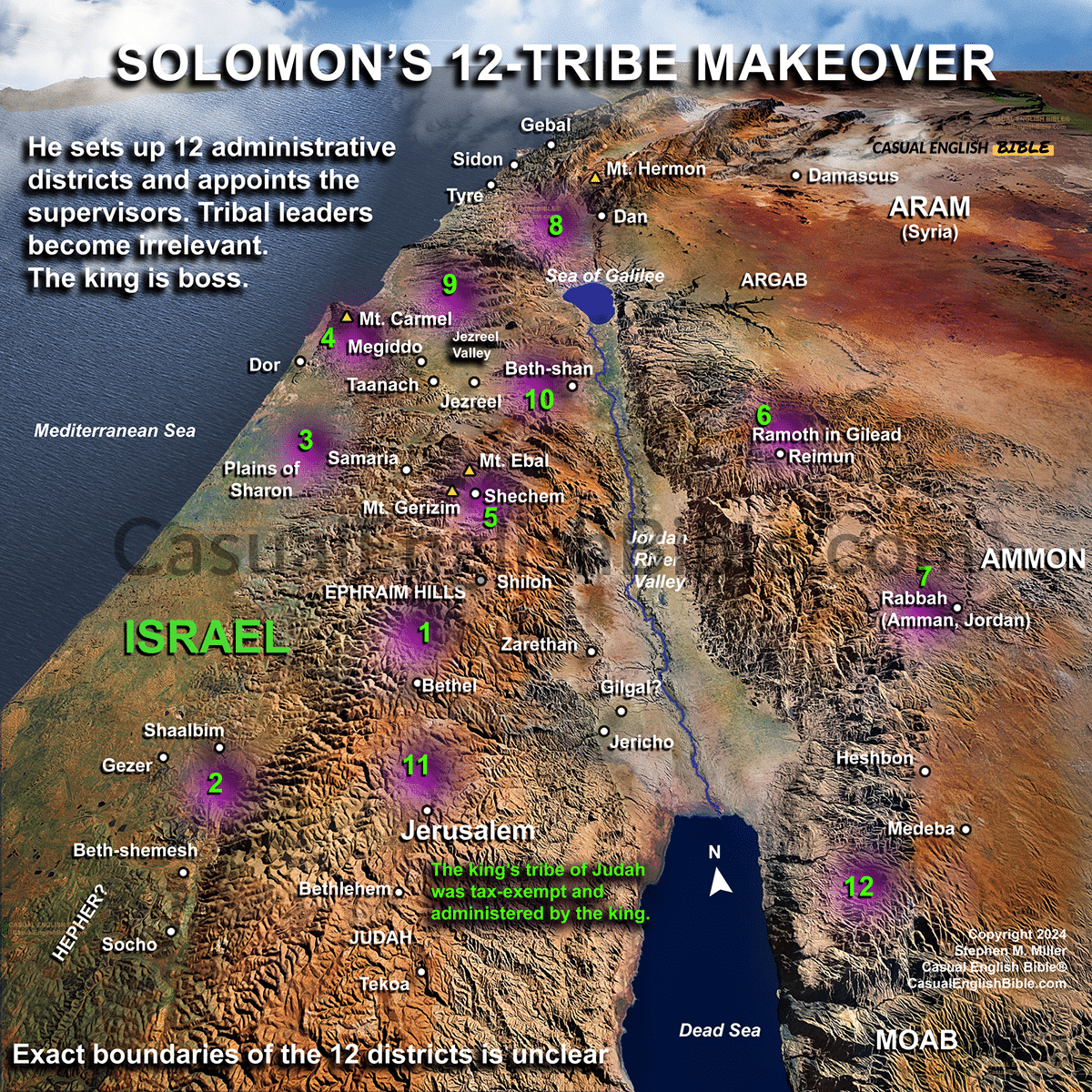
King Solomon reorganized Israel into 12 administrative districts to support his growing kingdom. The system shifted power away from the traditional tribal leaders and placed more responsibility in the hands of royal officials who supplied the king and his household.
Description
How Solomon Organized His Kingdom
Solomon ruled over a large and prosperous kingdom, but keeping it running required more than tribal loyalties. According to 1 Kings 4, he appointed officials over 12 districts throughout Israel. Each district was responsible for providing food and supplies for the king and his household for one month of the year.
The districts stretched across the hill country, coastal plains, Jezreel Valley, Galilee, and areas east of the Jordan River. The map shows the approximate locations of these administrative regions, although the exact boundaries of all 12 districts are uncertain.
This system changed the way Israel was governed. Instead of relying entirely on the traditional tribal structure, Solomon placed royal administrators over geographic regions. Judah received special treatment and was exempt from the same tax burden described for the other districts, reflecting Jerusalem's unique position as the king's capital.
The geography helps explain the scale of Solomon's kingdom. His administration reached from the northern areas around Dan and Galilee to the territory around Jerusalem and southward, while several districts extended east of the Jordan into regions associated with Gilead, Ammon, and Moab. Solomon's 12-district system shows how Israel was becoming a centralized monarchy rather than simply a collection of individual tribes.

The Complete Bible Map Library
Get a feel for the lay of the land
What if you could follow the entire Bible on a map—chapter by chapter?
This is every map we’ve created for the Casual English Bible®, all in one place. If geography shows up in a chapter, there’s a map for it. And as new maps are added, they’re included—no extra cost.
You’re not just reading the story anymore. You’re seeing where it happened.
SALE Original price was: $80.00.$75.00Current price is: $75.00.