
2 Samuel – Map Collection
SALE Original price was: $39.00.$20.00Current price is: $20.00.
Battle of Rabbah: David, Bathsheba, and the Fall of Uriah
$10.00
One battlefield became the setting for one of the Bible’s greatest military victories—and one of its saddest personal failures.
While David’s army surrounded the Ammonite capital of Rabbah, the king remained in Jerusalem. The distance between the battlefield and the palace became the backdrop for a story of temptation, betrayal, and lasting consequences.
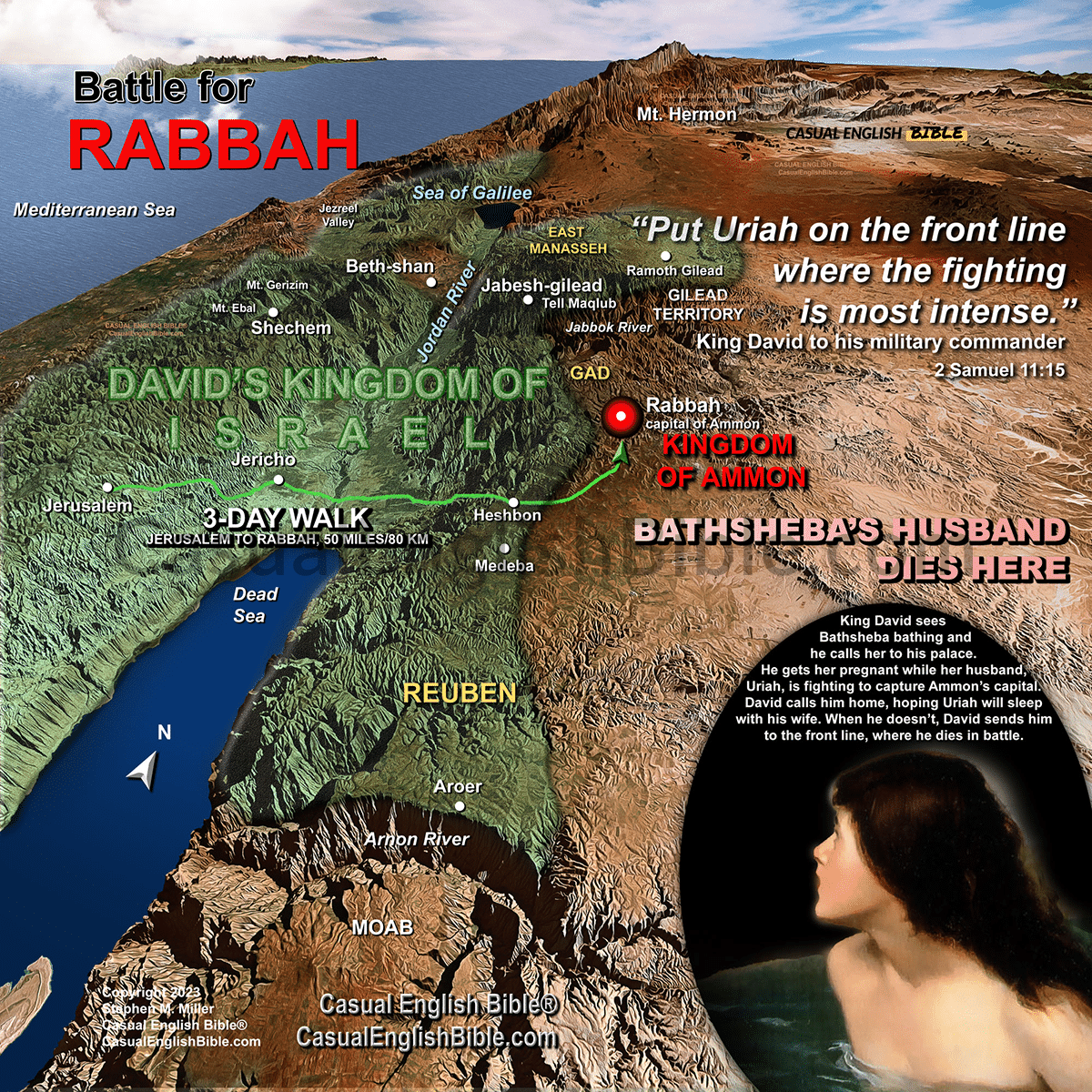
This map connects the siege of Rabbah with the events involving Bathsheba and Uriah, showing how geography helps tell one of Scripture’s most unforgettable stories.
Description
Victory on the Battlefield, Failure at Home
After defeating the Ammonites in earlier battles, David sent Joab and Israel’s army to besiege Rabbah, the capital of Ammon. Instead of leading his troops as kings normally did, David stayed behind in Jerusalem. There he saw Bathsheba, the wife of Uriah the Hittite, one of his loyal soldiers fighting at Rabbah.
When Bathsheba became pregnant, David tried to hide his sin by bringing Uriah home from the battlefield. Uriah refused to enjoy the comforts of home while his fellow soldiers remained in danger. David then ordered Joab to place Uriah where the fighting was fiercest and withdraw support, leading to Uriah’s death. Later, Israel captured Rabbah, but David’s personal victory had already become a spiritual defeat that brought painful consequences to his family and kingdom.
The geography highlights the contrast between Jerusalem and Rabbah, about a three-day journey apart. Seeing where Uriah fought while David remained in the capital helps readers understand the historical setting of these events and why the siege of Rabbah became forever linked with one of the Bible’s most sobering lessons about power, repentance, and God’s justice.