Work on the Temple begins in springtime
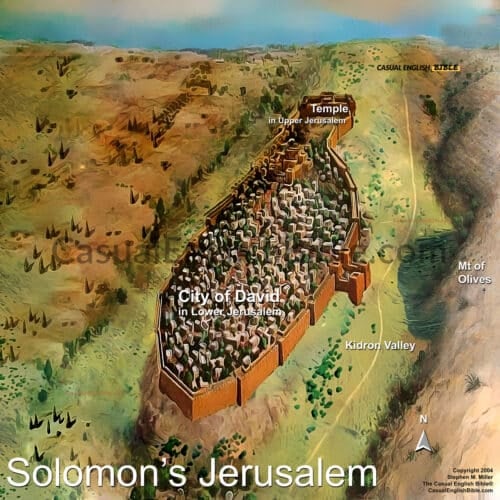
1Solomon started work on the Jerusalem Temple 480 [1] years after his Israelite ancestors escaped slavery in Egypt. Solomon was into his fourth year as king when work began in the springtime month of Ziv. [2]2Jerusalem’s first Temple measured 30 yards long, 10 yards wide, and 15 yards high. [3] 3Builders added a front porch 5 yards [4] deep, stretching all the way across the front of the building, for 10 yards.
4Solomon’s workers installed recessed window openings—wide on the outside and narrow on the inside.
Storage buildings attached to the Temple
5Workers wrapped three sides of the Temple—both sides and the back—with narrow buildings three stories high. 6Stoneworkers and carpenters built ground-floor rooms 7 ½ feet [5] wide. That was from the outside Temple wall to the opposite walls in the rooms. Second-floor rooms were 9 feet wide, and third-floor rooms 10 ½ feet wide.No hammering at the Temple
7Stone workers built the Temple walls with cut stone. When they worked onsite, where the Temple was located, they worked as quietly as possible. There were no sounds of a hammer, ax, or any other thundering iron tools. Stonecutters had to chisel their stones to fit offsite.8Priests went into the outer buildings through a doorway on the south side of the Temple, ground floor. Inside, a winding staircase led them to the upper floors. 9When stone artisans finished building the outside of the Temple, carpenters roofed it with cedar beams and planks across the beams. 10Workers used cedar timber to tie the three-story outer buildings to the main part of the Temple. They built each story 7 ½ feet high. [6]
God’s promise to stay with Israel
11God gave Solomon a message. 12“This is about the sacred house you built for me. I’ll make the same promise to you that I made to your father, David. 13If you live by the rules I’ve given you, and obey those laws, I’ll live here among the people of Israel. I won’t abandon them.”14Solomon finished the Temple.
Inside the Temple
2 Chronicles 3:8-14 15His builders used cedar boards to lay the Temple floor, line the inside walls, and place the rafters. 16Folks called the main room in the Temple the Holy Place. And in the back of the Holy Place, Solomon had them build a small room, the Most Holy Place. [7] It was a cedar-lined cube, 30 feet [8] on all sides. It had a separate entrance, which made it a private room. 17 The Holy Place was the largest room in the Temple, the sanctuary, 60 feet [9] long. It was the room in front of the Most Holy Place.
18Artisans decorated the cedar paneling inside the room with engraved art from nature—gourds and blooming flowers. From the floor to the top of the walls, every stone was draped in cedar. 19The Most Holy Room was most holy because it held the chest with the Ten Commandments, known as the Ark of the Covenant of the LORD. [10] The golden room
20Solomon had the inside of that room paneled with gold. The room was a cube, 30 feet on every side, floor to ceiling. [11] 21In addition to paneling the Most Holy Room with gold, Solomon added gold chains across the doorway into the room.
22He also had workers panel gold throughout the rest of the inside of the Temple. [12] And overlaid [13] gold onto the altar inside the Most Holy Room. Identical twin giant cherubim
23For the Most Holy Room, Solomon added two identical cherubim, [14] 15-feet high, [15] carved from the hard wood of olive trees. 24The cherubim had wings, with a wingspan as wide as they were tall. Each wing measured 7 ½ feet to the tip. 25Each cherub looked like the other. Identical twins with wings. 26One cherub was 15 feet tall, and so was the other.
27Solomon took the cherubim out of public view. He put them inside the Most Holy Place. The cherubim stood so close together that their wings tips touched. 28Solomon had the cherubim overlaid with gold. 29He also had the walls of both rooms inside the Temple decorated with wood engravings: cherubim, palm trees, and blooming flowers. 30Solomon also ordered the workers to add gold plates into the floors of both rooms. Most Holy Door
31For the doorway into the back room, the Most Holy Place, Solomon ordered two hardwood doors made from olive trees. The doorposts and the lintel beam above the door were shaped like five-sided pillars. 32He had the two olivewood doors decorated with carved pictures of cherubim, palm trees, and blooming flowers. And then he had them overlaid with gold leaf. Front door
33Solomon ordered four-sided olive wood doorposts for the front of the Temple. 34These doorposts helped frame the Temple’s two cypress doors, which opened into the main room—the Holy Place. Carpenters built each door to fold in on itself.
35Artisans decorated the door with carved cherubim, palm trees, and blooming flowers. Workers overlaid this art with an even layer of gold leaf. 36Three layers of cut stone and cedar beams formed the wall around the inner courtyard on the Temple complex—the courtyard closest to the front doors. Two layers were stone, one was cedar.
37Solomon ordered the Temple foundation built in the fourth year of his reign, in the springtime month of Ziv. [16] 38Workers finished the Temple a little more than seven years later, in the late-autumn month of Bul. [17] This was during Solomon’s eleventh year of reign.
Related maps
15His builders used cedar boards to lay the Temple floor, line the inside walls, and place the rafters. 16Folks called the main room in the Temple the Holy Place. And in the back of the Holy Place, Solomon had them build a small room, the Most Holy Place. [7] It was a cedar-lined cube, 30 feet [8] on all sides. It had a separate entrance, which made it a private room. 17 The Holy Place was the largest room in the Temple, the sanctuary, 60 feet [9] long. It was the room in front of the Most Holy Place.
18Artisans decorated the cedar paneling inside the room with engraved art from nature—gourds and blooming flowers. From the floor to the top of the walls, every stone was draped in cedar. 19The Most Holy Room was most holy because it held the chest with the Ten Commandments, known as the Ark of the Covenant of the LORD. [10]
22He also had workers panel gold throughout the rest of the inside of the Temple. [12] And overlaid [13] gold onto the altar inside the Most Holy Room.
27Solomon took the cherubim out of public view. He put them inside the Most Holy Place. The cherubim stood so close together that their wings tips touched. 28Solomon had the cherubim overlaid with gold. 29He also had the walls of both rooms inside the Temple decorated with wood engravings: cherubim, palm trees, and blooming flowers. 30Solomon also ordered the workers to add gold plates into the floors of both rooms.
35Artisans decorated the door with carved cherubim, palm trees, and blooming flowers. Workers overlaid this art with an even layer of gold leaf. 36Three layers of cut stone and cedar beams formed the wall around the inner courtyard on the Temple complex—the courtyard closest to the front doors. Two layers were stone, one was cedar.
37Solomon ordered the Temple foundation built in the fourth year of his reign, in the springtime month of Ziv. [16] 38Workers finished the Temple a little more than seven years later, in the late-autumn month of Bul. [17] This was during Solomon’s eleventh year of reign.
18Artisans decorated the cedar paneling inside the room with engraved art from nature—gourds and blooming flowers. From the floor to the top of the walls, every stone was draped in cedar. 19The Most Holy Room was most holy because it held the chest with the Ten Commandments, known as the Ark of the Covenant of the LORD. [10]
The golden room
20Solomon had the inside of that room paneled with gold. The room was a cube, 30 feet on every side, floor to ceiling. [11] 21In addition to paneling the Most Holy Room with gold, Solomon added gold chains across the doorway into the room.22He also had workers panel gold throughout the rest of the inside of the Temple. [12] And overlaid [13] gold onto the altar inside the Most Holy Room.
Identical twin giant cherubim
23For the Most Holy Room, Solomon added two identical cherubim, [14] 15-feet high, [15] carved from the hard wood of olive trees. 24The cherubim had wings, with a wingspan as wide as they were tall. Each wing measured 7 ½ feet to the tip. 25Each cherub looked like the other. Identical twins with wings. 26One cherub was 15 feet tall, and so was the other.27Solomon took the cherubim out of public view. He put them inside the Most Holy Place. The cherubim stood so close together that their wings tips touched. 28Solomon had the cherubim overlaid with gold. 29He also had the walls of both rooms inside the Temple decorated with wood engravings: cherubim, palm trees, and blooming flowers. 30Solomon also ordered the workers to add gold plates into the floors of both rooms.
Most Holy Door
31For the doorway into the back room, the Most Holy Place, Solomon ordered two hardwood doors made from olive trees. The doorposts and the lintel beam above the door were shaped like five-sided pillars. 32He had the two olivewood doors decorated with carved pictures of cherubim, palm trees, and blooming flowers. And then he had them overlaid with gold leaf.Front door
33Solomon ordered four-sided olive wood doorposts for the front of the Temple. 34These doorposts helped frame the Temple’s two cypress doors, which opened into the main room—the Holy Place. Carpenters built each door to fold in on itself.35Artisans decorated the door with carved cherubim, palm trees, and blooming flowers. Workers overlaid this art with an even layer of gold leaf. 36Three layers of cut stone and cedar beams formed the wall around the inner courtyard on the Temple complex—the courtyard closest to the front doors. Two layers were stone, one was cedar.
37Solomon ordered the Temple foundation built in the fourth year of his reign, in the springtime month of Ziv. [16] 38Workers finished the Temple a little more than seven years later, in the late-autumn month of Bul. [17] This was during Solomon’s eleventh year of reign.