A sampling of sins
1The LORD told Moses: 2I’m going to give you some examples of how a person might commit a sin against the LORD. You might cheat someone out of a security deposit or steal something someone entrusted you to protect. You might rob or extort someone. 3You might find something that someone lost, and then lie about it. You might lie under oath during a trial, inquiry, or a similar situation.4If you’ve done any of this, you’re guilty. You have to make it right. Return what you stole or extorted. Give back the security deposit you withheld or whatever was entrusted to you that you kept. Return any lost property you found to its owner.
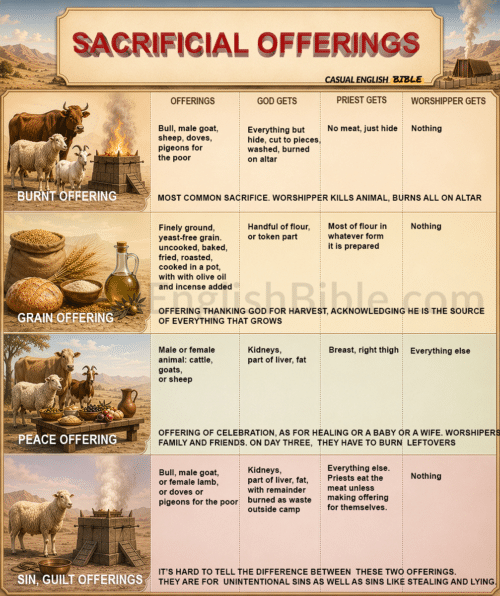
5If you lied and someone took a loss because of it, pay the full value of their loss. In any of these situations, make full restitution, and then give the people you hurt 20 percent on top of it. Do this before you take a guilt offering [1] to the worship center. 6Only then should you bring your guilt offering to the priest. Your offering should be a male sheep—a ram from your flock. It shouldn’t have anything wrong with it as far as you can tell. 7Then the priest will present the offering to the LORD. That atones for your sin. You’ll be forgiven.
PS on burnt offerings
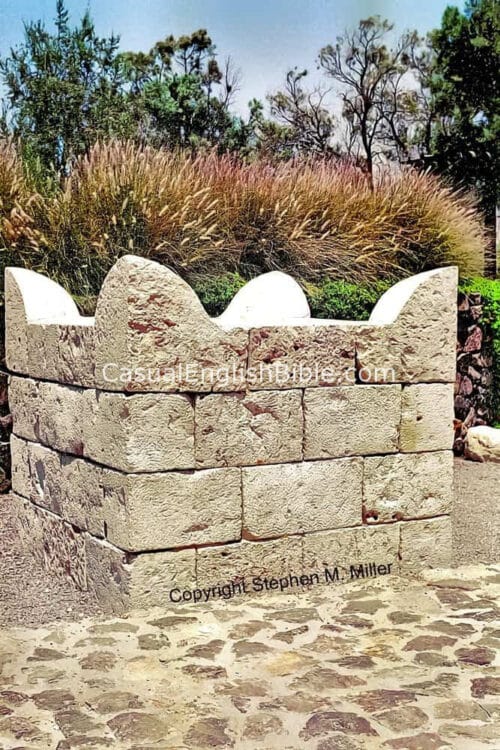
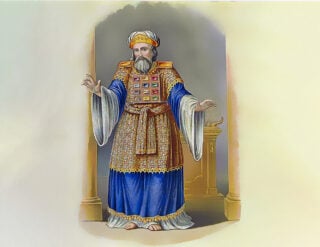
8Next, the LORD told Moses: 9I want you to tell Aaron about these laws he needs to enforce about burnt offerings. [2] When he burns the animal, he needs to keep it on the fire all night. And he needs to keep the fire burning until morning. 10Then in the morning one of the priests should wear his formal priestly clothing—from his underwear to his linen robe. Then he should go to the altar and remove the ashes of the burnt offering. He should put them on the ground beside the altar.11Then he should change into his less formal clothing, shovel up the ashes, and carry them to a ritually clean site outside the camp, to the designated ash heap for sacrificed animals. 12Don’t let the fire go out on the altar. Put wood on it every morning. Then add your burnt offerings, followed by any peace offerings. [3] 13Keep the fire on the altar burning all the time. Day and night.
PS on grain offerings
14When it comes to grain offerings, [4] one of Aaron’s sons should stand in front of the altar and present it to the LORD.15If the grain comes in the form of fine flour, mixed with olive oil and incense, one priest should take a handful of the flour and burn it on the altar. It will go up in smoke as a sweet smell to the LORD. 16The rest of the flour goes to Aaron and his sons to share equally. [5] Here’s what they should do with it. Bake the flour into yeast-free biscuits and eat them in a sacred space: in the courtyard of the tent worship center. [6]
17I’ll say it again: no yeast. This food is my gift to the priests. I’m letting them share in this offering. It’s a sacred offering, like the sin offering [7] and the guilt offering. 18Any of Aaron’s male descendants throughout the generations ahead are allowed to eat from this offering. The parts of any sacrifices that go to the priests are sacred. Only people fully devoted [8] to the LORD can touch these servings, which are reserved for the priests.
A priest’s offering when becoming a priest
19The LORD told Moses: 20Aaron and his sons have to bring an offering to the LORD when they’re anointed and ordained for ministry as priests. It should be the normal grain offering, which is two quarts (about 2 liters) of fine flour. They should present half of it in the morning and the other half that evening. 21They should mix olive oil into the flour and fry the dough on a frying pan. Tear the fried bread into pieces and present it to the LORD as a sweet-smelling offering.22In the future, whenever a descendant of Aaron becomes high priest, he has to present the same offering Aaron just did. Burn the entire offering to the LORD, sending it all up in smoke. Don’t eat any of it. 23In fact, every grain offering a priest makes should be completely burned and never eaten.
PS about sin offerings
24The LORD told Moses: 25I want you to tell this to Aaron and his sons: A sin offering is sacred to the LORD. These are the rules for offering one. You should sacrifice a sin offering in the same place you sacrifice burnt offerings.26The priest who officiates at the sin offering and presents it to me is the same priest who gets to eat the portion of the meat designated for priests. [9] The priest should eat it in the courtyard of the tent worship center.
27Only people fully devoted to the LORD can touch this meat. And if the animal’s blood splatters on your clothes, you have to wash the clothes in a sacred place. 28Break the clay pot you use to boil the meat. [10] If you use a bronze pot, scrub it thoroughly and rinse it with water. 29Any priest of Israel is allowed to eat the priest’s share of this sacrificed animal.
30With one exception: When a priest brings some blood of the animal into the Meeting Tent to present it to the LORD in the Sacred Room, seeking forgiveness there. In that case, don’t eat any of it. Burn the entire animal as an offering.