
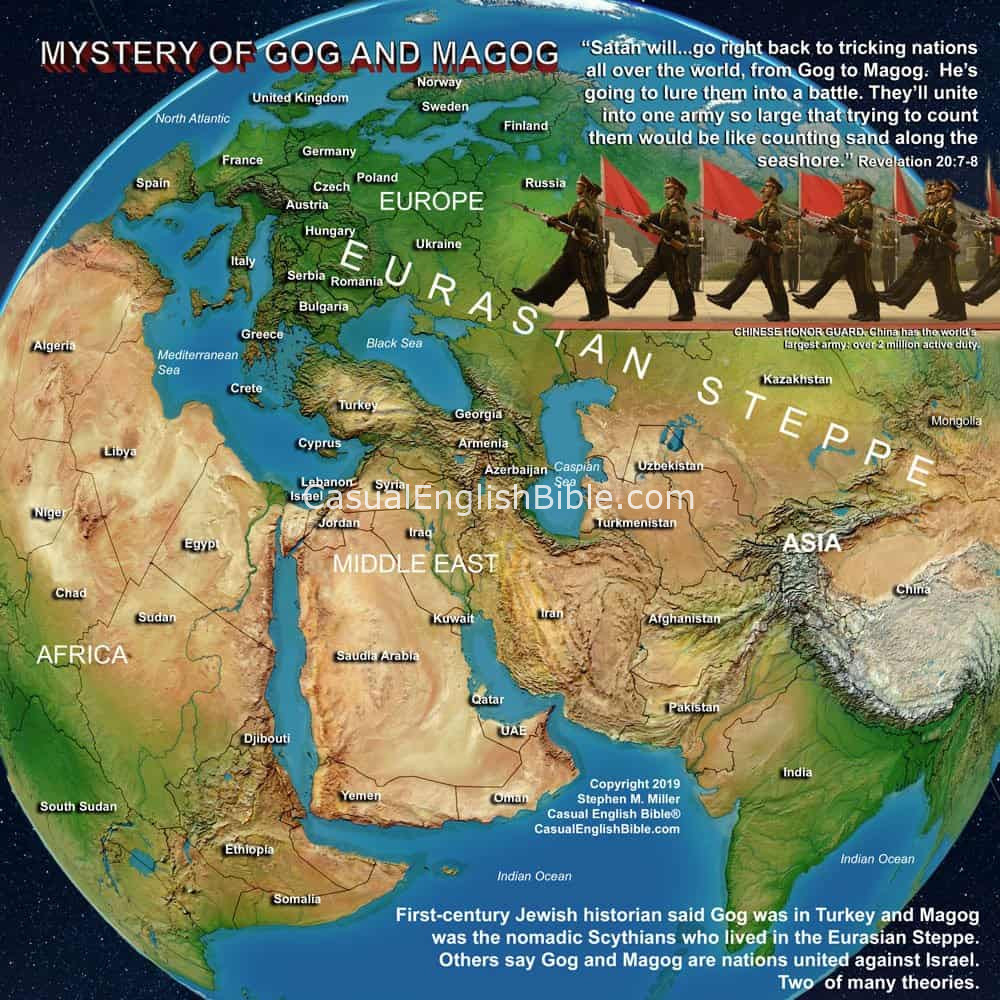
"Satan will go back to tricking nations all over the world, from Gog to Magog." Revelation 20:7-8
Who Are Gog and Magog?
For centuries, readers have scratched their heads over the Bible’s mysterious names Gog and Magog. They show up in two places—Ezekiel 38–39 and Revelation 20:7-8—but the settings are worlds apart.
Ezekiel pictures a huge northern army led by a ruler named Gog from the land of Magog. This force invades Israel “in the last days.” Centuries later, John in Revelation borrows those same names to describe a worldwide rebellion against God. Whether the two writers were talking about the same event—or just using the same symbols—is one of the Bible’s great puzzles.
Where Were They From?
Geography doesn’t clear things up much. The first-century Jewish historian Josephus said Magog was the land of the Scythians—horse-riding tribes who roamed the wide plains stretching from the Black Sea to Central Asia.
The map follows that trail, showing a vast region north of Israel. Some scholars say Gog ruled parts of modern-day Turkey, leading allies such as Meshech and Tubal, which Ezekiel also names. Others point farther north, toward what we now call Russia or Ukraine.
Still others say the names were never meant to pinpoint a modern nation at all, but to stand for any coalition of countries threatening God’s people.
Two Writers, Two Eras
Ezekiel’s vision seems aimed at his own world, warning that nations around Israel would rise up but ultimately fall. John’s vision, written during the brutal Roman Empire, may echo that theme—using Gog and Magog as symbols of Rome’s global oppression or humanity’s stubborn rebellion against God.
In both cases, the message is bigger than geography or timeline: when the world gangs up against God’s purpose, God wins.
Evil doesn't win
Speculation about Gog and Magog will keep Bible students busy for a long time. But the point remains clear. Evil doesn’t get the last word.
Whether these were ancient tribes, symbolic names, or glimpses of some final battle, the story ends the same way—God steps in, the violence stops, and peace returns.
