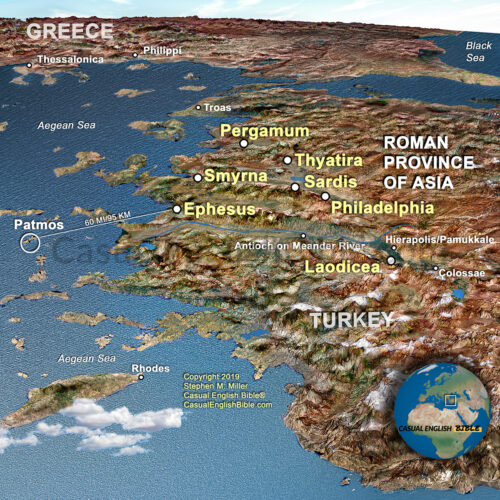
“Gog and Magog” are words that Bible writers used in different ways. Here, many scholars say, it’s a way for John to repeat and emphasize what he had just said. It means “nations all over the world.” It would be a bit like someone today saying, “nations everywhere, high and low, from the Antarctic to the North Pole.” But these nations unite in their hostility toward God’s people. The prophet Ezekiel used these names as a phrase to predict that northern invaders would attack the Jewish homeland (Ezekiel 38). Ezekiel identifies Gog as a prince over territories that seem to have been in what is now Turkey. First-century Jewish historian Josephus was writing history books at the same time many scholars say John wrote Revelation. Josephus said Gog was the Galatians, a territory in what is now central Turkey. He said Magog was the Scythians, a nomadic people living in parts of the Eurasian Steppe, which includes a wide strip of many countries north of Israel, from Ukraine and Russia along the Black Sea and stretching to China in the East (Antiquities of the Jews 1.123). Jewish writers in ancient times used the phrase “Gog and Magog” to refer to a coalition of non-Jewish countries attacking Israel in the end times (3 Enoch 45:5).