
Here is the article rewritten with the SEO-friendly headings inserted and the text slightly refined to read smoothly under each section. This is ready to paste directly into WordPress.
The Fall of Jerusalem in 586 BC
Babylon’s Siege and the Breach of Jerusalem’s Walls
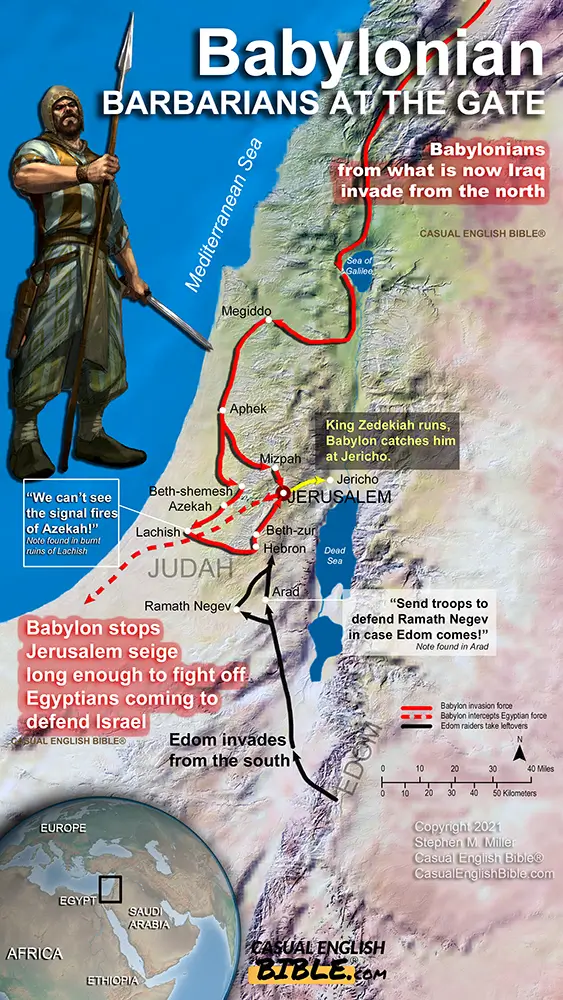
When Jerusalem fell to the Babylonians in 586 BC, it marked the end of a prolonged and exhausting siege led by King Nebuchadnezzar II. After months of famine, disease, and shrinking defenses, Babylonian forces finally breached the city walls. Their entry triggered chaos as defenders collapsed and civilians were overwhelmed. Much of Jerusalem—including the royal palace and the Temple, the spiritual heart of Judah—was burned or demolished, leaving the city devastated.
Destruction of the Temple and Royal Quarter
How Babylon’s Assault Reshaped the City
The burning of the Temple signaled not only physical destruction but also a religious and cultural crisis. The royal quarter and administrative buildings were dismantled to eliminate Judah’s political autonomy. The fall of Jerusalem effectively ended the kingdom and reshaped the region under Babylonian control.
Sorting the Survivors
Executions at Riblah
After the city’s capture, survivors were gathered and sorted by rank and perceived loyalty. Many high-ranking officials and members of the royal family were transported to Riblah, Nebuchadnezzar’s military headquarters. There, several leaders were executed, including the sons of King Zedekiah. Zedekiah himself was blinded and taken to Babylon in chains.
Deportation to Babylon
Transit Camps and Temporary Holding Sites
The majority of the population—skilled workers, artisans, officials, and soldiers—were deported. Many were first held in temporary staging camps before being assigned to various imperial regions.
Life in Exile Along Babylonian Canals
Exiles were eventually settled in established communities across Babylonia, including areas along canals such as the Chebar. These communities maintained a shared identity while adapting to new surroundings within the empire.
Those Left Behind in Judah
Gedaliah’s Governorship and Local Survival
A smaller group, mostly the poorest inhabitants, was left behind in Judah. Babylon installed Gedaliah as governor at Mizpah to manage the remaining population. His administration aimed to stabilize the region and encourage agricultural recovery.
Collapse of Local Administration
However, Gedaliah was soon assassinated, triggering fear and further instability. Many fled to Egypt, and the fragile order Babylon had attempted to establish quickly unraveled.
Long-Term Impact
How Exile Shaped Jewish Identity
The fall of Jerusalem scattered its people across executions, exile, and a shattered homeland. Yet the exile became a period of profound cultural and spiritual formation. The communities established in Babylon preserved their traditions and developed the foundations of Jewish identity that persisted long after their return.
