
When Famine Drove Abraham to Egypt
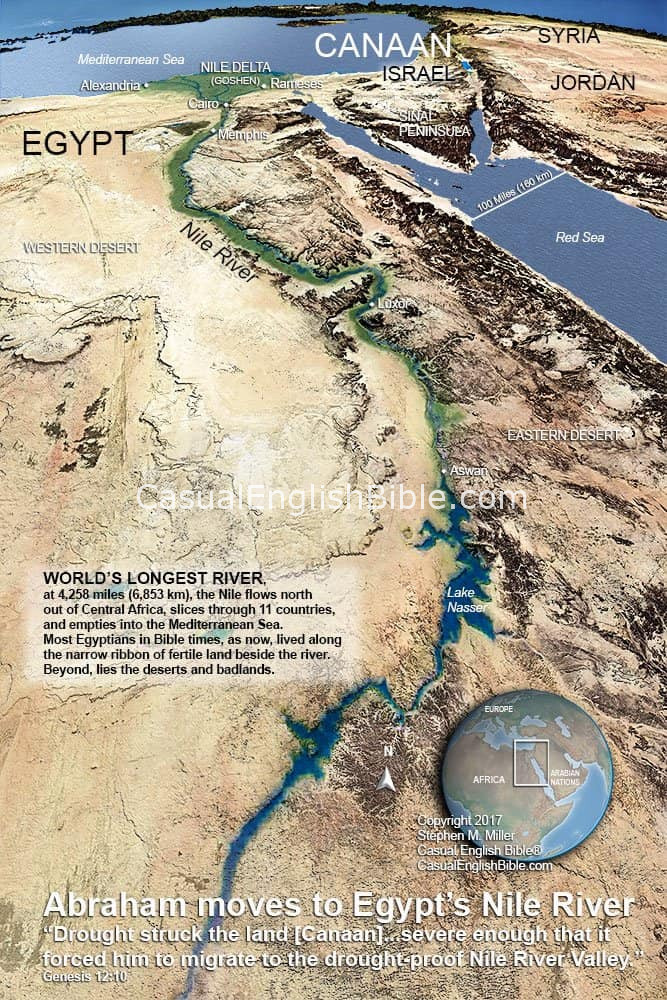
A severe drought in Canaan forced Abraham to leave the Promised Land and travel south to Egypt. This map follows his journey toward the Nile River Valley, one of the ancient world's most fertile and dependable sources of food and water.
From Drought-Stricken Canaan to the Nile
Shortly after arriving in Canaan, Abraham faced a serious problem: famine. Genesis says the drought was severe enough that he left the land and traveled to Egypt, where the Nile River created a long ribbon of fertile farmland through an otherwise dry landscape.
The Nile was the lifeline of ancient Egypt. Flowing north through northeastern Africa, the river supported farms, towns, and cities along its banks before emptying into the Mediterranean Sea. Beyond that narrow fertile valley stretched vast deserts and rugged badlands.
For Abraham and his household, Egypt offered a place to survive when food was scarce in Canaan. The journey south took him away from the land God had promised him and into one of the most powerful civilizations of the ancient world.
This map helps explain why Abraham went to Egypt during the famine. While Canaan depended heavily on rainfall, the Nile River Valley supported a remarkably productive agricultural region. Abraham's temporary move to Egypt became one of the first major journeys in the long story of his family and the people who would eventually become Israel.
