

1-2 Peter, Jude - Leaders Guide and Map Collection
Original price was: $19.00.$15.00Current price is: $15.00. SALE
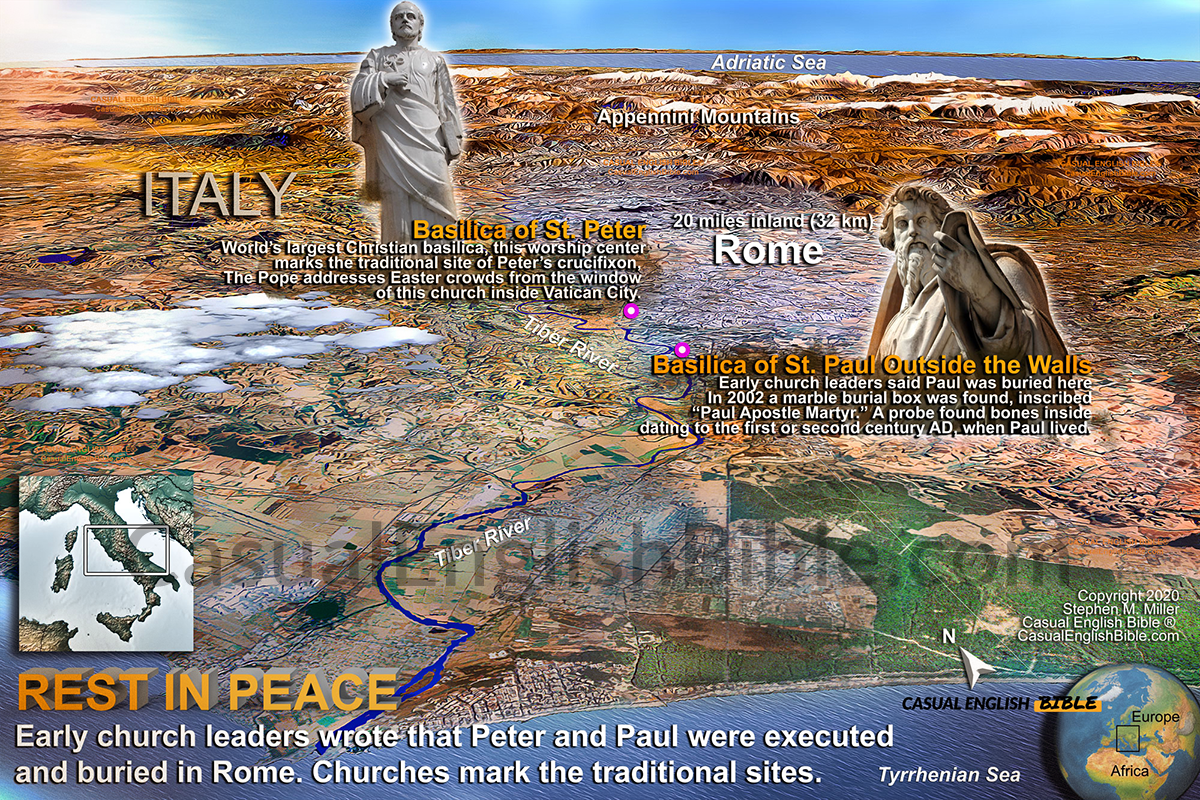
Rome, grave of Paul and Peter
$10.00
What You Get
- High-resolution 3D-style map of Rome
- Immediate download
- Optional licensing available for livestreams, classrooms, blogs
Description
Map of ancient Rome
Paul and Peter executed here
In New Testament times, Rome was a big deal, and it played a major role in stories of the Bible and the early days of Christianity. That's because Rome was the center of the known world, the bustling heart of a vast Mediterranean-wide empire. Its influence reached far and wide, and it left a mark on the Bible and Christian history.
Rome in the Bible
First, let's talk about how Rome shows up in the Bible. In the Gospel of Luke, we read about the famous census decreed by Caesar Augustus, which brought Mary and Joseph to Bethlehem, where Jesus was born. That's a direct connection between Rome and the birth of Jesus.
As we read through the New Testament, we'll find frequent references to Roman authorities. Pontius Pilate, the Roman governor of Judea. He gave the green light for Jesus' crucifixion. And Paul, one of the early Christian leaders, was a Roman citizen, which granted him certain legal privileges. His travels, documented in the Book of Acts, led him to Rome, under arrest, where he eventually faced trial before the emperor. Scholars debate whether he was executed that time or after a later arrest. But early Christian writers report that Romans executed Paul and Peter there. Paul, beheaded. Peter crucified upside down.
Paul's letter to Rome
Paul wrote several letters (or epistles) to early Christian communities, and many of them were sent to Rome. The Letter to the Romans, for instance, addresses theological matters and encourages the Roman Christians in their faith journey. That book is the one that many Christian scholars say was the first theology book. Paul describes what it means to be a Christian, and how Christian behave.
Then there's the Bible's grand finale: the Book of Revelation. This book is full of vivid imagery and apocalyptic visions. It contains messages for seven churches in Asia Minor (western Turkey). And it was written by a man called John, exiled on the island of Patmos, which was under Roman rule. Many scholars say the evil John described was coded language talking about Rome. Many theorize that the Beast and the Mark of the Beast (the number 666) pointed to Emperor Nero. (See Complete Guide to Bible Prophecy or Who's Who & Where's Where in the Bible.)
So, Rome became the backdrop of many Bible stories, and its presence helped shape the early Christian narrative.
Rome's persecution of Christians
The Roman Empire's persecution of Christians was a dark chapter in history. It began sporadically in the first century AD and intensified under Emperor Nero, who blamed Christians for the Great Fire of Rome in 64 AD.
Over the years, Christians faced various forms of persecution, including arrests, torture, and execution. Emperors like Decius and Diocletian issued edicts demanding Christian sacrifices to Roman gods, resulting in widespread suffering.
Despite these hardships, Christianity continued to grow, eventually gaining official recognition and support under Emperor Constantine in the early 4th century, marking a significant turning point in the faith's history within the Roman Empire.


Reviews
There are no reviews yet.