
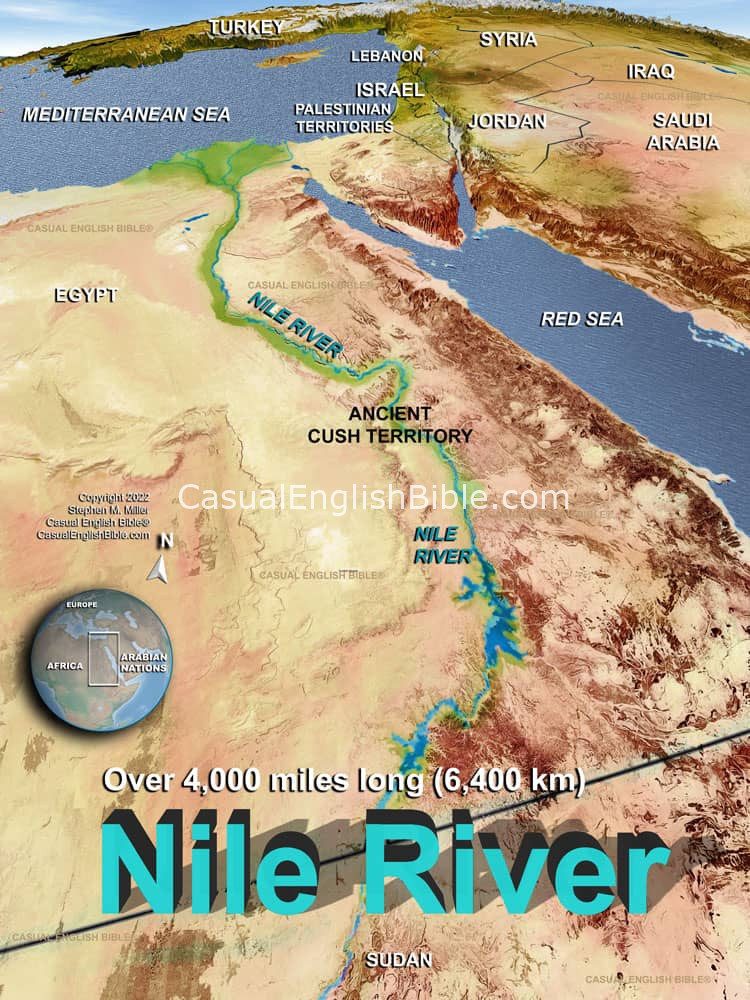
The Nile is Egypt’s lifeline. It flows north through desert, then spreads into many branches at the Delta before reaching the sea. Every year the river flooded. It rose in summer and fell in fall. The water carried dark silt from faraway mountains. That mud fed the fields. It made Egypt a breadbasket in the ancient world.
People lived where the water reached. Villages lined the banks. Farmers dug canals and used a shaduf—basically a pole and bucket—to lift water onto crops. Boats moved grain, stone, and people up and down the river. Papyrus grew thick in the marshes. Folks turned it into paper, rope, mats, and boats.
Egyptians treated the Nile like a god. They thanked it for life and feared it in drought. When the flood failed, hunger followed. Joseph’s story fits this world. He interpreted Pharaoh’s dreams about the river and warned of seven fat years and seven lean ones.
The Bible ties key moments to the Nile. Pharaoh ordered Hebrew baby boys thrown into the river. Moses’ mother hid him there in a basket, among the reeds. Pharaoh’s daughter found him and raised him. Later, when Moses faced Pharaoh, the first plague hit the heart of Egypt. The Nile turned to blood, fish died, and the river stank. That strike showed God could touch Egypt’s source of life.
So when you read “Egypt,” think “Nile.” No river, no empire. With it, fields bloom, boats glide, and history flows.
