
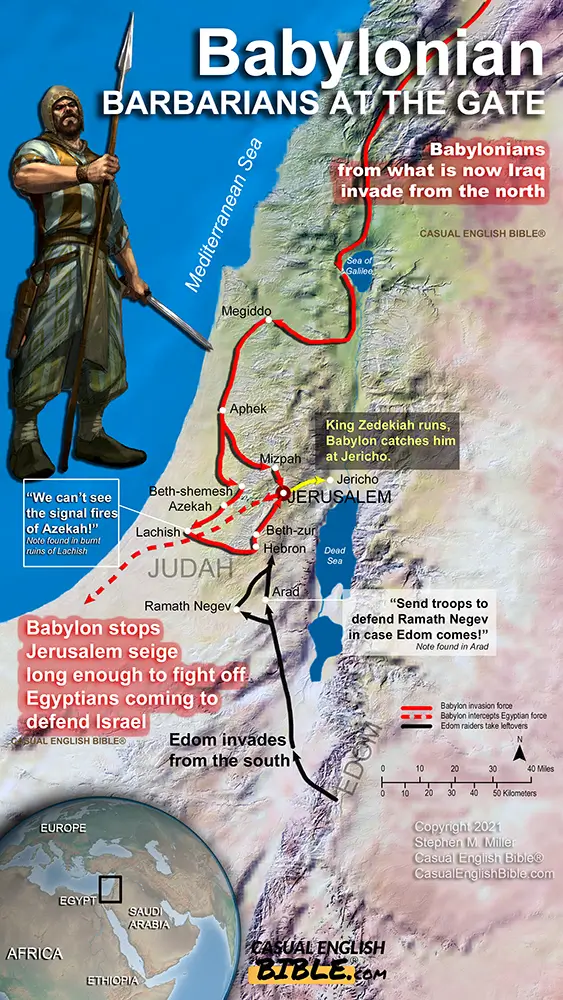
Map of Babylonians conquering Jerusalem
In 586 BC, Babylon’s army under King Nebuchadnezzar II stormed Jerusalem and reduced it to ruins, ending more than four centuries of David’s dynasty. This was the final act of a long siege that had starved the city into collapse. Judah’s last king, Zedekiah, had rebelled against Babylon’s rule despite warnings from prophets like Jeremiah. Nebuchadnezzar responded with overwhelming force, surrounding the city for nearly two years.
Once Babylonian soldiers finally breached the walls, the devastation became total. They burned the royal palace, tore down the city walls, and set fire to the Temple of the Lord — Solomon’s magnificent Temple that had stood for almost 400 years. Gold and bronze furnishings were looted and carried off to Babylon, along with most of Jerusalem’s surviving population. The priests, craftsmen, and leaders were marched east into exile, leaving behind only the poorest farmers to tend the land.
Zedekiah tried to escape through a break in the walls at night but was captured near Jericho. Nebuchadnezzar forced him to watch his sons executed before blinding him and taking him in chains to Babylon.
The destruction of Jerusalem in 586 BC marked one of the darkest moments in Jewish history. It shattered Judah’s independence, scattered its people, and silenced the Temple sacrifices. Yet it also sparked a theological awakening — a time of reflection and writing that produced some of the most profound portions of the Hebrew Bible, including the book of Lamentations and many of Ezekiel’s prophecies.
