Jewish families join Jerusalem caravan
1Babylonian King Nebuchadnezzar invaded Judah and took Jews captive to Babylon. [1] But now, people from those same families decided to return to Jerusalem and to other towns of Judah.2Here’s the list of Jewish men [2] whose families returned to Judah. Caravan leaders included Zerubbabel, [3] Jeshua, Nehemiah, Seraiah, Reelaiah, Mordecai, Bilshan, Mispar, Bigvai, Rehum, and Baanah.
3Parosh 2,172
4Shephatiah 372
5Arah 775
6Pahath-moab (descendants of Jeshua and Joab) 2,812
7Elam 1,254
8Zattu 945
9Zaccai 760
10Bani 642
11Bebai 623
12Azgad 1,222
13Adonikam 666
14Bigvai 2,056
15Adin 454
16Ater (descendants of Hezekiah) 98
17Bezai 323
18Jorah 112
19Hashum 223
20Gibbar 95
Family groups from Judah’s cities
21Men of Bethlehem 12322Men of Netophah, 56
23Men of Anathoth, 128
24Men of Azmaveth 42
25Men of Kiriath-arim, Chephirah, and Beeroth 743
26Men of Ramah and Geba 621
27Men of Micmash 122
28Men of Bethel and Ai 223
29Men of Nebo 52
30Men of Magbish 156
31Men of the other Elam [4] 1,254
32Men of Harim 320
33Men of Lod, Hadid, and Ono 725
34Men of Jericho 345
35Men of Senaah 3,630
Four families of priests join the trip
36Jedaiah (descended from Jeshua) 97337Immer 1,052
38Pashhur 1,247
39Harim 1,027
Levite associates of priests
40Jeshua, Kadmiel (descendants of Hodaviah) 7441Asaph, the singers 128
42Shallum, Ater, Talmon, Akkub, Hatita, and Shobai, temple guards at the gates 139
43Ziha, Hasupha, Tabbaoth,
44Keros, Siaha, Padon,
45Lebanah, Hagabah, Akkub,
46Hagab, Shalmai, [5] Hanan,
47Giddel, Gahar, Reaiah,
48Rezin, Nekoda, Gazzam,
49Uzza, Paseah, Besai,
50Asnah, Meunim, Nephusim,
51Bakbuk, Hakupha, Harhur,
52Bazluth, Mehida, Harsha,
53Barkos, Sisera, Temah,
54Neziah, and Hatipha.
Descendants of men who worked for Solomon
55These are descendants of men who worked for Solomon and who made the trip back from exile. Sotai, Hassophereth, Peruda,56Jaalah, Darkon, Giddel,
57Shephatiah, Hattil, Pokereth-hazzebaim, and Ami.
58Total workers at the Temple, including those descended from Solomon 392.
Other returning families
59Some people who joined the caravan to Judah couldn’t prove they were Jews. [6] They came from the Babylonian towns of Tel-melah, Tel-harsha, Cherub, Addan, and Immer. [7] 60Families from these towns included Delaiah, Tobiah, and Nekoda, for a total of 652.61Three families claimed to be priests: Habaiah, Hakkoz, and Barzillai. But Barzillai borrowed this family name from his wife. She was a daughter of the Barzillai’s from Gilead. 62Jewish leaders searched the genealogical records but couldn’t find any mention of these three families of priests. So, leaders disqualified them from working as priests.
63The Persian-appointed governor ordered them not to practice as priests and not to eat the priest’s share of meat offered in sacrifices. [8] He said they had to wait until a legitimate priest could consult the LORD and get an answer from the two sacred objects called Lights and Perfection. [9]
64In all, 42,360 people were returning to Judah. 65That doesn’t count the 7,337 temple workers and the 200 singers—men and women.
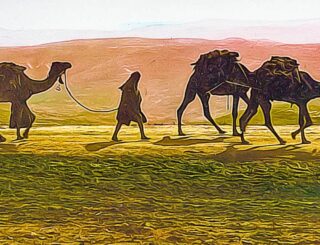
66The caravan included 736 horses, 245 mules, 67435 camels, and 6,720 donkeys.
Coming home to Jerusalem in ruins
68When the people finally arrived at the Jerusalem hilltop where the Temple once stood, some family leaders gave donations to rebuild the worship center. 69The men donated 1,100 pounds [10] of gold, 6,250 pounds of silver, and 100 robes for the priests.70People who settled in villages near Jerusalem were mostly priests and their Levite associates, along with other Temple workers, guards, and singers. Some others not involved in Temple work settled there, too. The rest of the Jews settled into their hometowns scattered throughout Israel. [11]